

"Captivated by the ebb and flow of nature, I capture this state of flux by exploring mediums and techniques that reveal altered appearances from different angles. From sweeping landscapes and wispy cloudscapes to microscopic details and figurative harmonies, my work depicts not only the beauty of the natural environment but also draws attention to its fragility and deterioration."
Read a Q&A with Diane Kazakis
Talk to us about your work featured here. What are the main themes and ideas you explore in it?
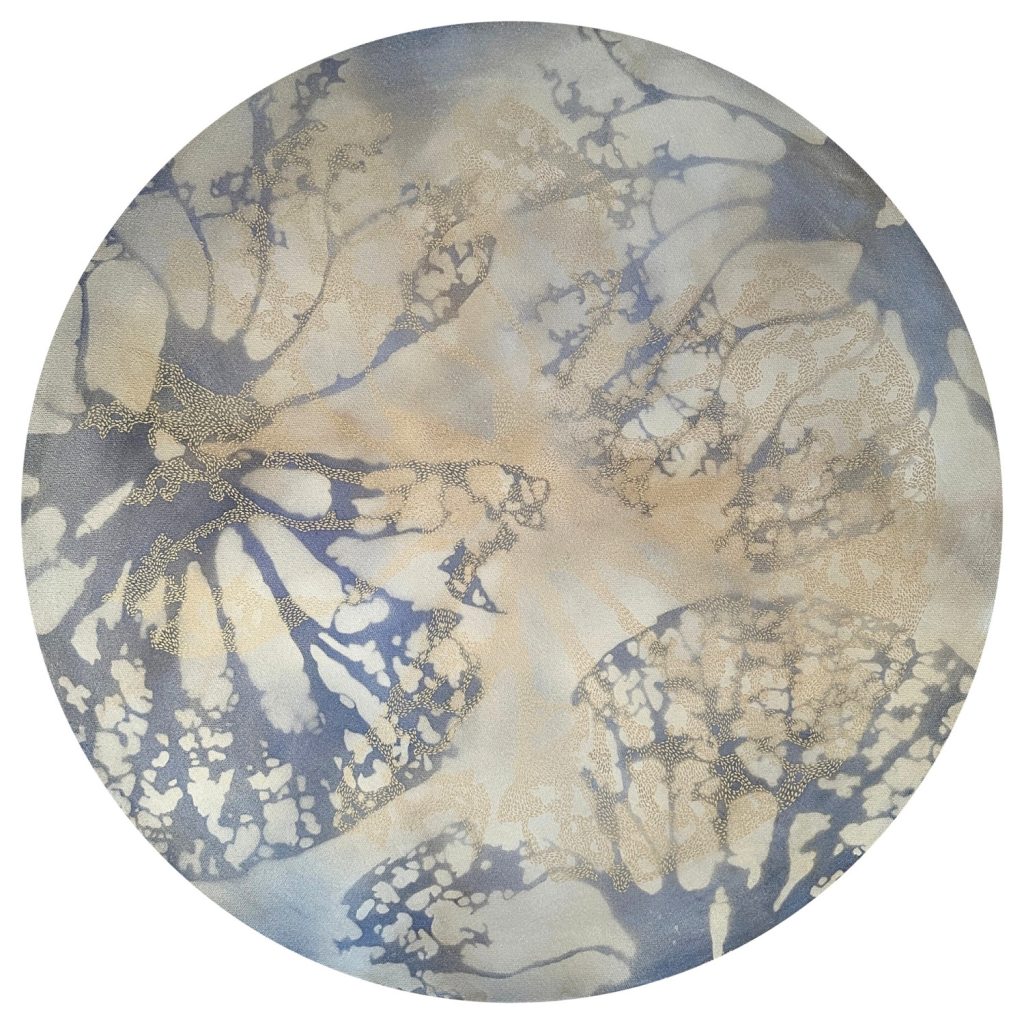
"Anatomy of Change" is part of my “ETHEREAL” series, which explores the otherworldly beauty in the delicate decay of lotus leaves from around the lake where I live.
The term “ethereal” embodies something light and beautiful, almost too perfect for this world, and belonging to a more spiritual realm. Through this exploration, I aim to evoke wonder and contemplation about the delicate balance of life and decay.
I reflect on the cycle of life and nature's intricate transformations, capturing a state of flux with various mediums that reveal different perspectives and altered appearances from multiple angles. This approach invites viewers to immerse themselves in the serene elegance of nature's details, encouraging a deeper connection to the transient world around us.
The term “ethereal” embodies something light and beautiful, almost too perfect for this world, and belonging to a more spiritual realm. Through this exploration, I aim to evoke wonder and contemplation about the delicate balance of life and decay.
I reflect on the cycle of life and nature's intricate transformations, capturing a state of flux with various mediums that reveal different perspectives and altered appearances from multiple angles. This approach invites viewers to immerse themselves in the serene elegance of nature's details, encouraging a deeper connection to the transient world around us.
Describe your creative process.
A continually evolving journey of exploration and discovery, deeply inspired by the intricate details found in nature.
This particular series was a lengthy endeavor that began with collecting decaying lotus leaves, which I dried and pressed, then scanned and utilized digital drawing techniques to refine and smooth out the lines, creating vector files for laser cutting the leaf designs into watercolor paper.
The painting process commenced with layering background colours, followed by the application of the laser-cut pieces as stencils. This allowed me to paint multiple layers, integrating the delicate cutouts into the artwork. For this particular painting, I then used a stencil to create a semi-transparent layer of a lotus leaf, detailed with small hand drawn lines in metallic ink.
This particular series was a lengthy endeavor that began with collecting decaying lotus leaves, which I dried and pressed, then scanned and utilized digital drawing techniques to refine and smooth out the lines, creating vector files for laser cutting the leaf designs into watercolor paper.
The painting process commenced with layering background colours, followed by the application of the laser-cut pieces as stencils. This allowed me to paint multiple layers, integrating the delicate cutouts into the artwork. For this particular painting, I then used a stencil to create a semi-transparent layer of a lotus leaf, detailed with small hand drawn lines in metallic ink.
What are the main influences and inspirations behind your art?
Having lived and worked in Australia, Europe, Africa, the Middle East, and now Asia, my art is profoundly shaped by the diverse experiences and environments I have encountered. Each region has contributed unique elements that inspire my creative process.
I find continual inspiration in the harmonious relationship between nature and the human experience, which motivates me to delve into themes of tranquility and balance in my art.
Overall, my experiences across these diverse environments have enriched my artistic vision, allowing me to weave together elements from different cultures and landscapes into a cohesive narrative that reflects the beauty and complexity of our world.
I find continual inspiration in the harmonious relationship between nature and the human experience, which motivates me to delve into themes of tranquility and balance in my art.
Overall, my experiences across these diverse environments have enriched my artistic vision, allowing me to weave together elements from different cultures and landscapes into a cohesive narrative that reflects the beauty and complexity of our world.
What do you consider the strongest aspect of your work?
Embracing serendipitous moments in my creative process adds spontaneity, transforming each piece into a reflection of the journey rather than just the destination. By allowing unexpected discoveries to inform my work, I create space for organic flow and unique outcomes.
I often work with layers, using diverse techniques and media, which enhances visual complexity and invites viewers to engage on multiple levels.
My art is characterised by a deep connection to the environments I’ve encountered. This fusion of personal experience and artistic exploration creates a distinctive narrative that resonates with viewers, encouraging dialogue about nature, transformation, and the beauty of imperfection.
I often work with layers, using diverse techniques and media, which enhances visual complexity and invites viewers to engage on multiple levels.
My art is characterised by a deep connection to the environments I’ve encountered. This fusion of personal experience and artistic exploration creates a distinctive narrative that resonates with viewers, encouraging dialogue about nature, transformation, and the beauty of imperfection.
What message or emotion do you hope viewers take away from experiencing your art?
My work synthesizes various mediums to explore the interplay between nature and perception. I aim to capture the essence of the natural world, inviting viewers to find beauty in unexpected places and contemplate their own relationship with the passage of time, evoking a sense of wonder and reverence for nature.
My time spent observing, collecting, and interpreting organic forms fosters a rhythm where intention and spontaneity coexist, prompting reflection on impermanence.
Creating my work is a very meditative experience, and I hope viewers can find a similar calmness when viewing it.
My time spent observing, collecting, and interpreting organic forms fosters a rhythm where intention and spontaneity coexist, prompting reflection on impermanence.
Creating my work is a very meditative experience, and I hope viewers can find a similar calmness when viewing it.
What is the biggest challenge for an artist? What is the hardest part of this job?
For me it's establishing a consistent routine that allocates dedicated time for art.
Whilst having a home studio is incredibly convenient, it often leads to other commitments encroaching on the time I wish to devote to my creative work.
Whilst having a home studio is incredibly convenient, it often leads to other commitments encroaching on the time I wish to devote to my creative work.
What is the most rewarding part of being an artist?
The moment I step back and see how my concept has evolved is profoundly fulfilling. It’s not just about the final product; it’s the entire process - the challenges faced, the experimentations, the techniques learned, and the emotions expressed along the way.
This sense of accomplishment and connection to my work makes the artistic journey incredibly rewarding.
This sense of accomplishment and connection to my work makes the artistic journey incredibly rewarding.
How do you balance tradition and innovation in your practice?
Being traditionally trained at art school, I always use this knowledge and experience to inform my technique, but I have a passion for pushing the boundaries of and combining unexpected materials to create new and interesting aesthetics.
What does "good art" mean to you? What makes a piece of art great?
Good art is that which resonates on a personal level, evoking emotions and prompting reflection. It is important for it to invite viewers to engage with it, sparking curiosity and encouraging a deeper exploration of its themes.
Artwork that embodies a sense of authenticity and originality, reflecting the artist's unique perspective while also tapping into universal truths has the most impact. It has the power to challenge perceptions, provoke thought, and foster a sense of connection among viewers, allowing them to see the world through a different lens.
Artwork that embodies a sense of authenticity and originality, reflecting the artist's unique perspective while also tapping into universal truths has the most impact. It has the power to challenge perceptions, provoke thought, and foster a sense of connection among viewers, allowing them to see the world through a different lens.
What is the role of the artist today?
Artists serve as cultural commentators, reflecting societal issues and human experiences through their work. They have the ability to challenge norms, provoke discussions, and inspire change by highlighting themes such as environmental sustainability, social justice, and personal identity.
In an age dominated by technology and digital media, artists are also innovators, pushing the boundaries of traditional art forms and exploring new mediums to express their ideas. They create spaces for dialogue and connection, fostering a sense of community and shared experience. Ultimately, artists play a crucial role in enriching our lives, encouraging us to contemplate our surroundings, and helping us navigate the complexities of contemporary existence.
In an age dominated by technology and digital media, artists are also innovators, pushing the boundaries of traditional art forms and exploring new mediums to express their ideas. They create spaces for dialogue and connection, fostering a sense of community and shared experience. Ultimately, artists play a crucial role in enriching our lives, encouraging us to contemplate our surroundings, and helping us navigate the complexities of contemporary existence.