
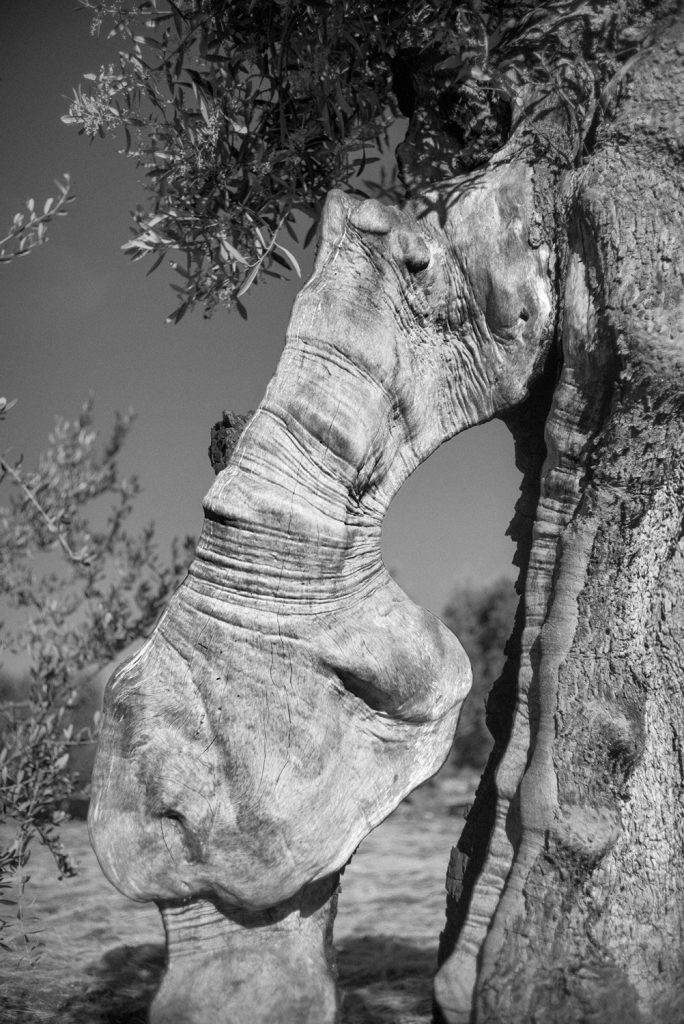
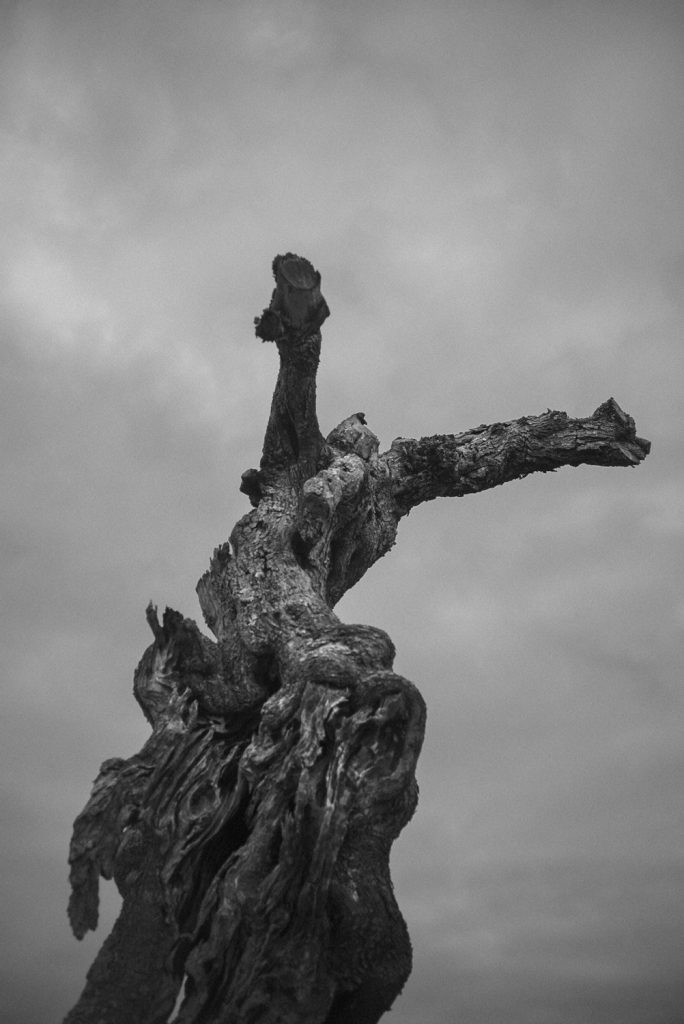
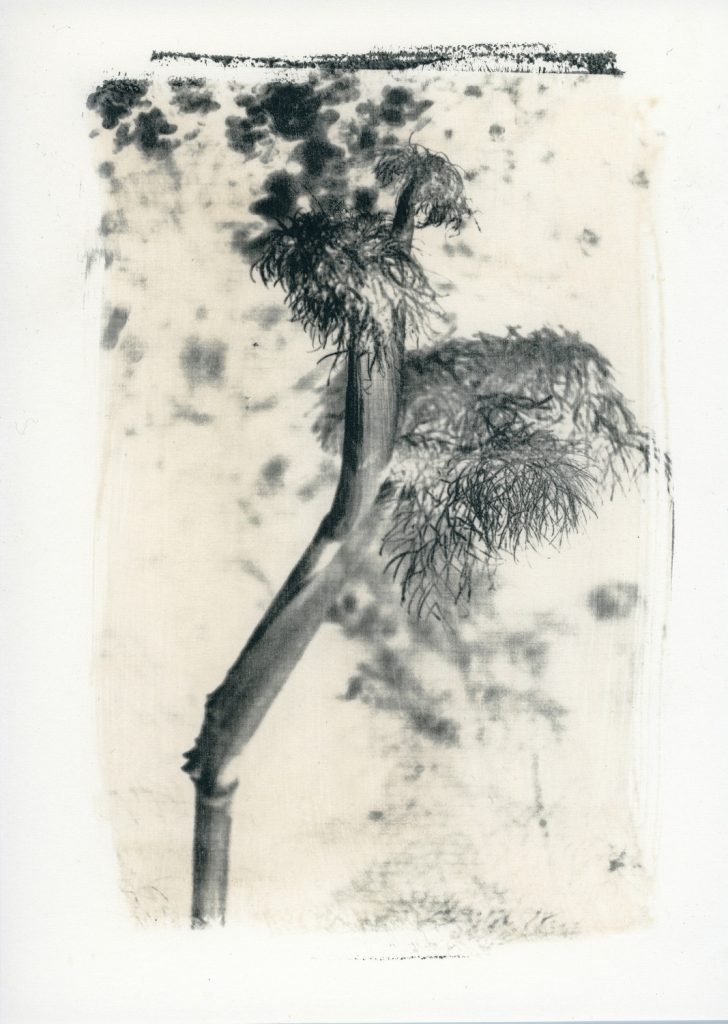
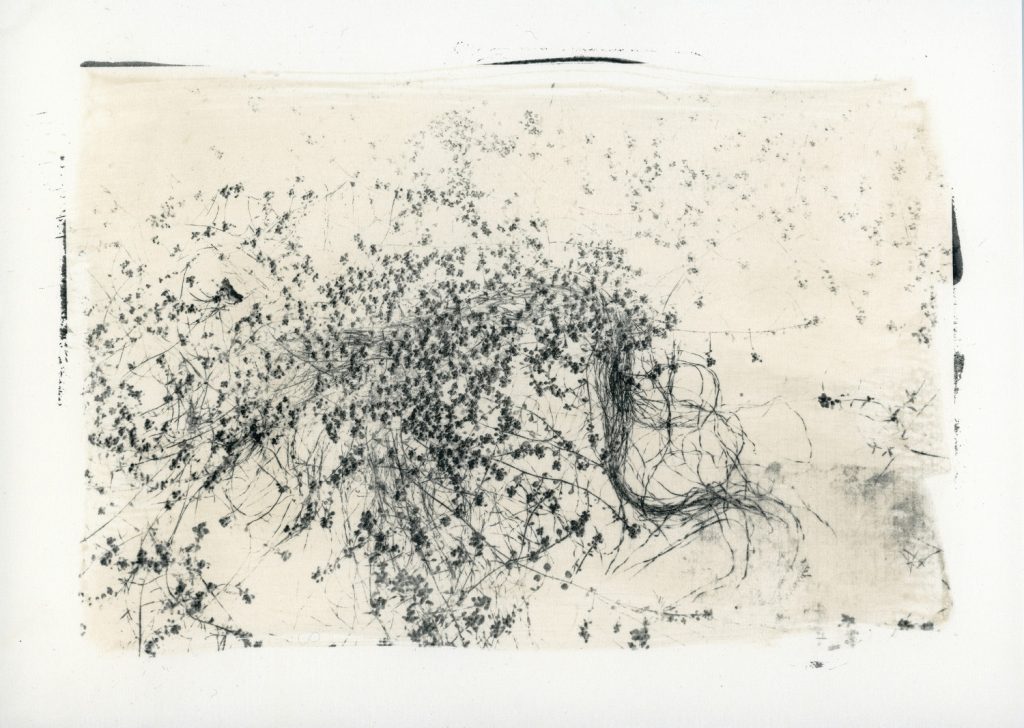


'Never be afraid of the shadow, there is a light that illuminates.' - R.E. Renkel. "This phrase inspires my research into mystery, the energy of forms, and the fusion of oriental tradition and contemporary photography. With experimental techniques, I dissolve the real to evoke the human essence and its deep connection. To quote Umberto Eco, 'The precision of the mechanism led me to the imprecise."
Read a Q&A with Stefano Paradiso
Talk to us about your work featured here. What are the main themes and ideas you explore in it?
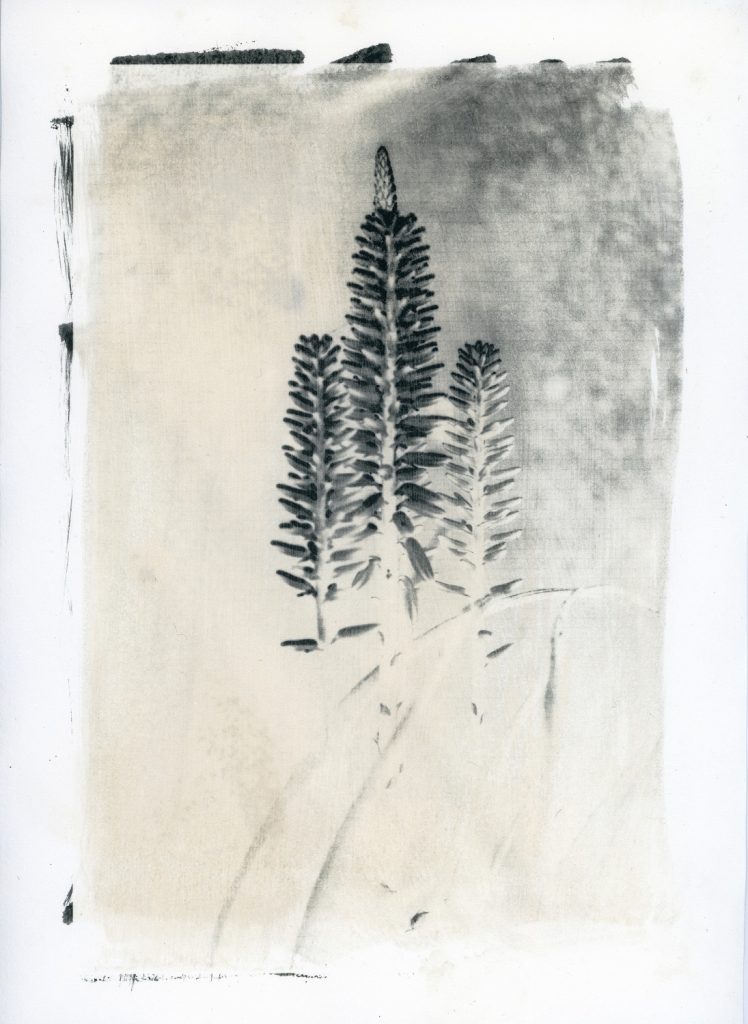
Fior d'Aloe
Observation of nature has always inspired human beings, who through poetry and the creation of symbols, have brought simple observation to reflections that have acted on every level of existence, human and spiritual. Haiku are a prime example of this, as they encapsulate the entire complexity of the world and emotions in a few simple lines. My work, which starts with a simple snapshot, is then processed in the darkroom, where my experience tries to abstract itself from reality , in a transfiguration in which I try to transform reality, making the image a graphic sign as in a form of writing, in which the very symbols of language recall the thought that is transformed into words. "Haiku must be able to create, in the mind of the reader, a small image." (J. Kerouac).
Observation of nature has always inspired human beings, who through poetry and the creation of symbols, have brought simple observation to reflections that have acted on every level of existence, human and spiritual. Haiku are a prime example of this, as they encapsulate the entire complexity of the world and emotions in a few simple lines. My work, which starts with a simple snapshot, is then processed in the darkroom, where my experience tries to abstract itself from reality , in a transfiguration in which I try to transform reality, making the image a graphic sign as in a form of writing, in which the very symbols of language recall the thought that is transformed into words. "Haiku must be able to create, in the mind of the reader, a small image." (J. Kerouac).
Describe your creative process.
I don't follow a precise process. When I have an idea I let it mature on its own. I let my unconscious side play its part. Sometimes I start from a shot, sometimes from a word, or I think of a theme and look for a way to deal with it. Experiments in the darkroom can also be a source of inspiration. It is very difficult to establish a rule to define when a work is really finished. I always leave a door open, especially in nature-related projects. I like to create sub-themes that deepen and enrich the main theme, just like in a melody, where a counterpoint can amplify the emotion and depth of the listening and, in our case, the vision.
What are the main influences and inspirations behind your art?
Certainly cinema has played a key role in my path, as I have been working as a cinematographer for many years. Literature is also an inexhaustible source of inspiration for me: books have the power to trigger the imagination and fuel creativity. And then there is music-no less. Melody and rhythm are essential elements not only in music, but also in thinking, taking photographs and, above all, working in the darkroom. I have many artistic references that have inspired me, even when far from my own vision. Among them, I could mention Luigi Ghirri, Josef Koudelka and many others.Finally, my passion for the Orient is a constant drive to seek contaminations between the Western vision and equally ancient and fascinating artistic traditions, such as Japanese Nihonga painting and Chinese Guóhuà.
What do you consider the strongest aspect of your work?
Perhaps the most interesting aspect of my work is the ability to integrate digital and analogue, trying to fuse them to achieve unprecedented results. For example, if I shoot with a digital Leica Monochrom, I then create a negative that I print by contact using a bromograph that is over 60 years old.
What message or emotion do you hope viewers take away from experiencing your art?
Everyone has different perceptions, cultures and experiences. What I hope is that my images can provoke the most diverse reactions, emotions and thoughts. When a viewer catches something in my photography that I had not seen myself, I consider it a great compliment. I believe that there must always be a part of mystery and that is what is most fascinating. There is one common thread running through all my projects: a constant reference to an ecological culture, to nature and the way we perceive it.
What is the biggest challenge for an artist? What is the hardest part of this job?
There is a fundamental aspect in our work that is closely related to time. Let me explain: studying, researching and then going into the field requires resources, and in some projects time can be essential. Going back to certain places, even distant ones, is sometimes necessary. There are occasions when everything happens in a hurry, but for me these are quite rare. Ultimately, time, as we know, equals money.
What is the most rewarding part of being an artist?
The most fascinating part of my job is travelling, understood not only in a physical sense, but also in an intellectual sense. Every move, every new place explored, is not only a geographical change, but also an opportunity to discover new perspectives, cultures and ways of seeing the world. At the same time, the inner journey is equally important: the immersion in research, the deepening of a theme, the confrontation with other forms of art and thought are all paths that enrich my work as much as the experience in the field. It is this continuous dialogue between the outer world and the inner world that makes each project unique and constantly evolving.
How do you balance tradition and innovation in your practice?
As I said before, I constantly try to combine the new and the old: it is the foundation of my working method. On the one hand, I carefully study technical innovations, on the other hand I explore old techniques, vintage lenses and the interaction between film and digital.
This process, however, happens instinctively. Once I have assimilated the knowledge, I let it settle within me, allowing it to influence my work in a natural way, without forcing too much reasoning.
This process, however, happens instinctively. Once I have assimilated the knowledge, I let it settle within me, allowing it to influence my work in a natural way, without forcing too much reasoning.
What does "good art" mean to you? What makes a piece of art great?
I will answer this question simply and directly: for me, emotion is everything, in all its nuances. It is what allows me to understand/feel whether a work of art is extraordinary or not.
What is the role of the artist today?
The role of the artist is, first and foremost, to provoke a thought, a vision, an emotion. I do not believe that art can change the world on its own, but I am convinced that it can, little by little, make people aware of important issues, such as social issues, the environment and politics.