
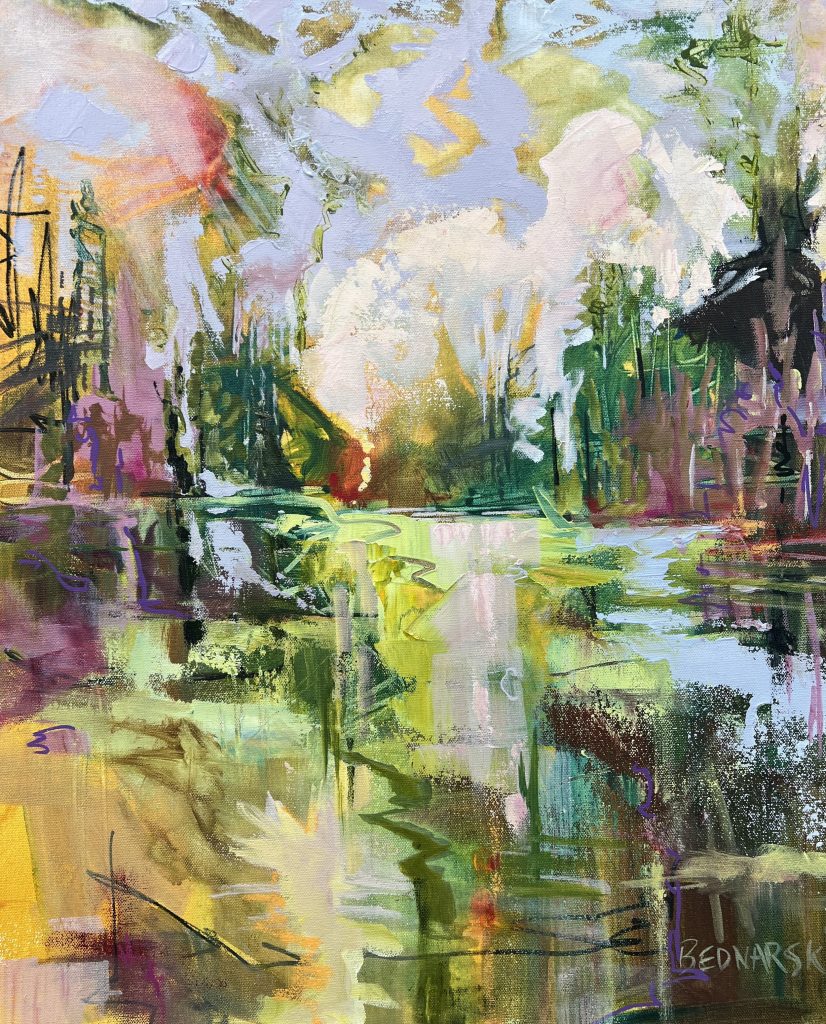
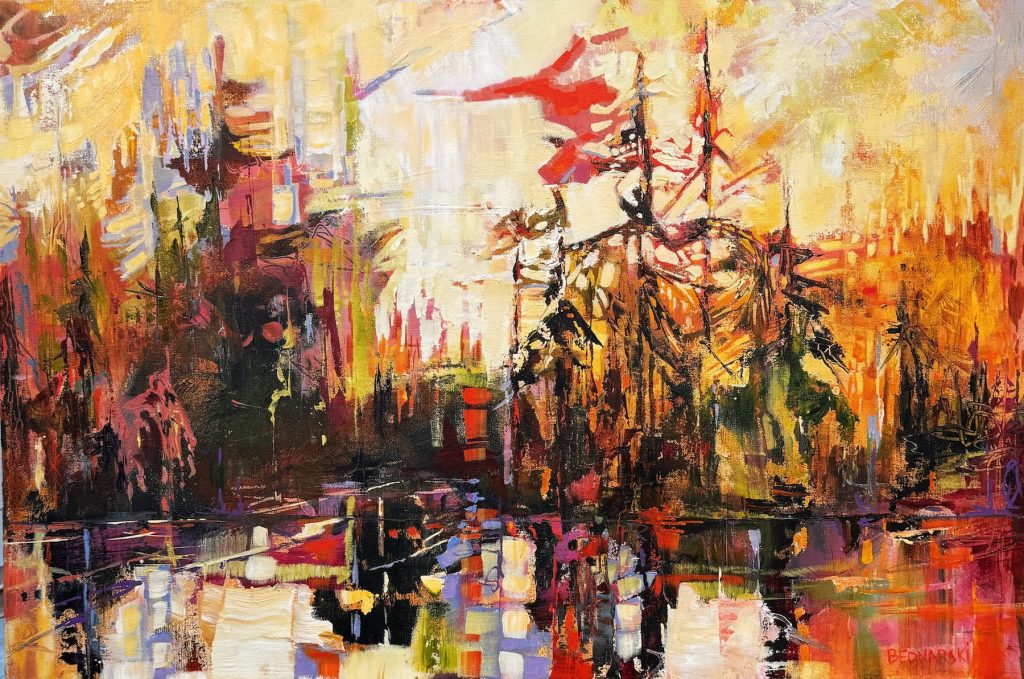
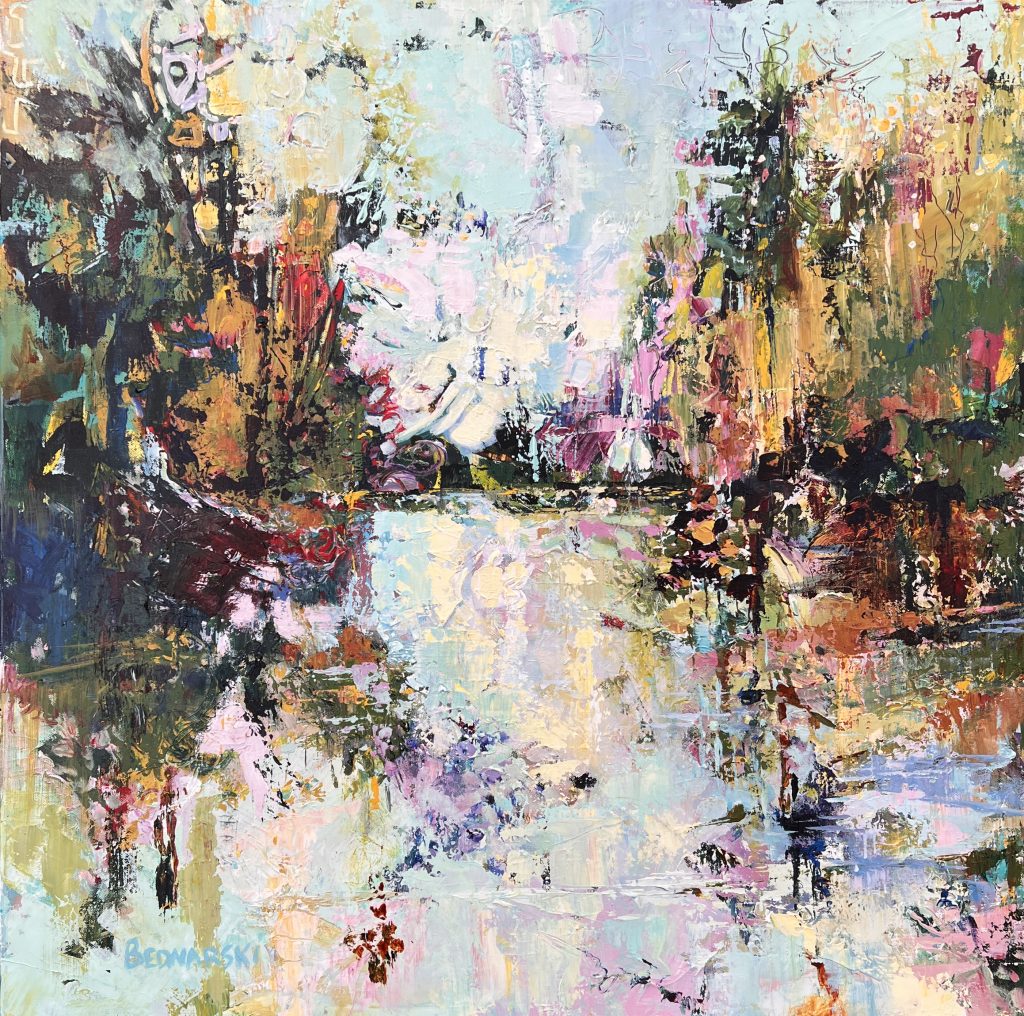
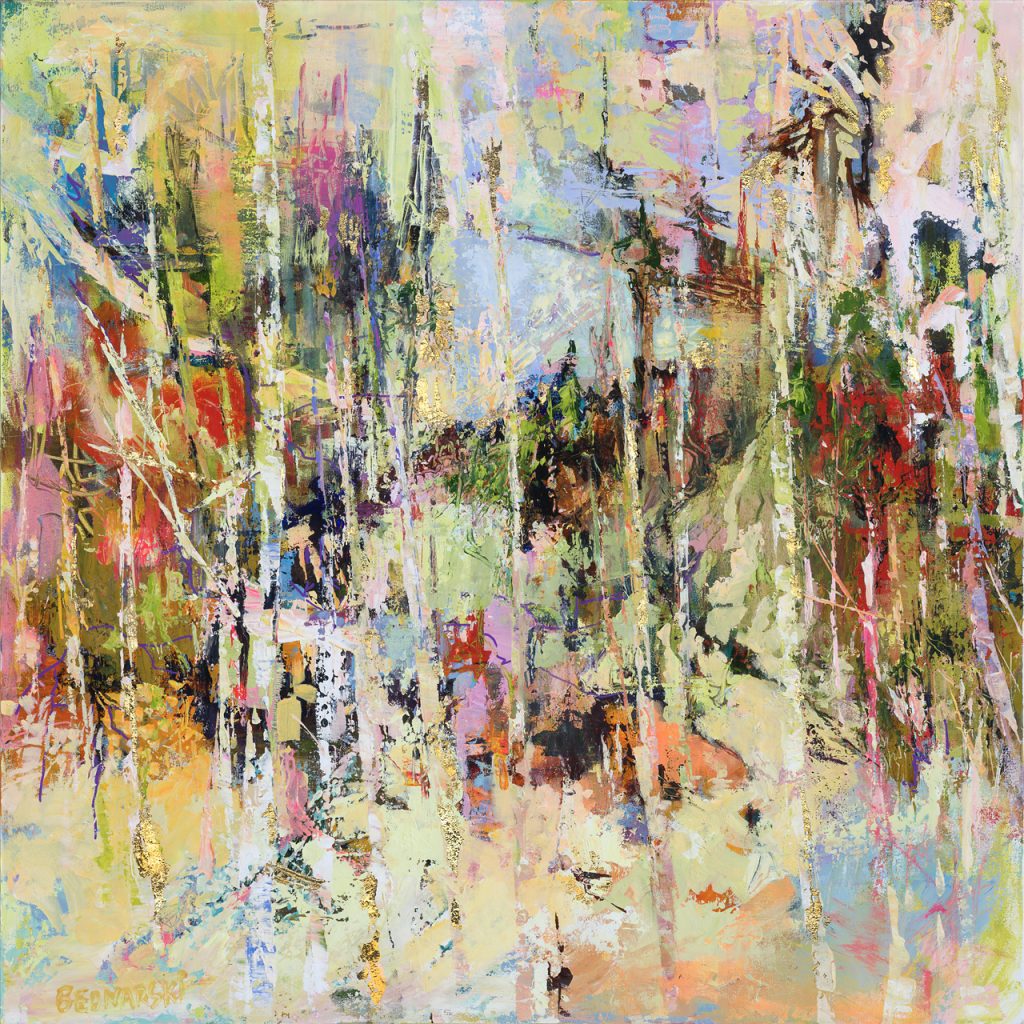
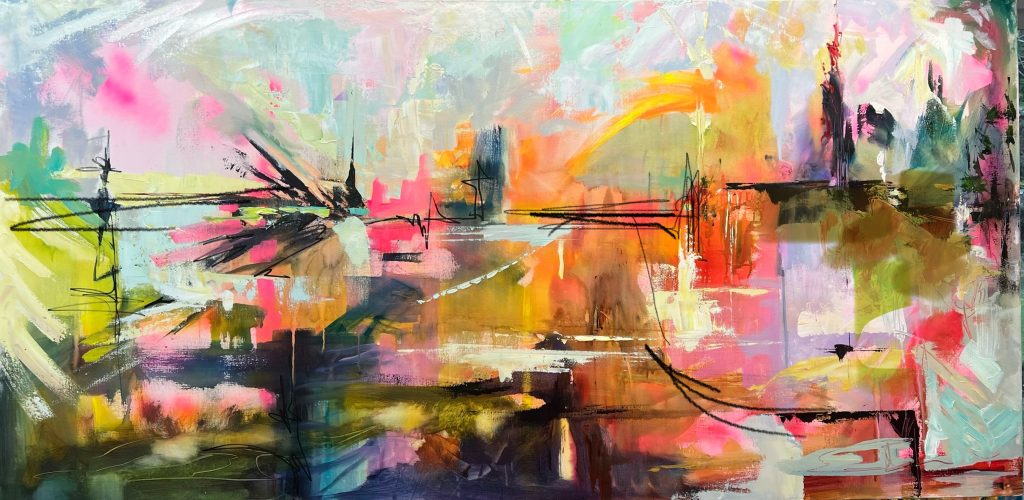


"I often start a painting by playing with colour, line and texture. I just allow my intuitive urges to guide me. At some point the painting shows me something, the hint of a place, an image, or just a mood. I get a feeling that I react to and that’s when the painting starts to take shape. The rest of the journey is a dance between intuition and controlled response."
Read a Q&A with Carol Bednarski
Talk to us about your work featured here.
What are the main themes and ideas explored?
What are the main themes and ideas explored?
My art is an exploration of my own emotions and a quest to find complete freedom from ego. Learning to trust myself in the moment is what I am learning. As I journey along with the art, as it is evolving, my hope and my goal is that I can abandon my critical mind and allow my intuition to direct me. I'm not as concerned about the outcome, it's more about the personal journey of discovery that the painting reflects.
Describe your creative process.
I like to start a painting with no intention or plan, laying down colours, shapes and lines, responding in the moment. I will add layers, scrapping into the paint, until I start to see something take shape. Often a landscape, sometimes a floral emerges. This is when I get excited and start to pull the image up from the canvas, still trying not to think too much and allow it to flow without force. I generally don't use any references but allow each stroke and each colour determine the next.
What are the main influences and inspirations behind your art?
Colour and beauty in all it's expressions influence my work. Also the quality of light and how it transforms everything it touches. Since I never know what I'm going to paint when I start suppose the painting itself inspires me as I go along.
What is unique about your art? What do you consider the strongest aspect of your work?
I've been told that my colours are unique and used in unexpected ways. I love to explore colour and texture and never lock myself into one palette. I'm always experimenting and the results are exciting. The strongest aspect of work may be the emotion it contains.
What message or emotion do you hope viewers take away from experiencing your art?
I don't seek to perfectly render a scene or capture exact detail, but rather to capture a feeling and emotion. My hope is that I can express what is authentic, true and beautiful in the world I experience, whether it is internal or external, and in so doing create connection with the viewer. I believe my artwork conveys joy and hope and lifts the spirit.
What is the biggest challenge for an artist?
What is the hardest part of your job?
What is the hardest part of your job?
I think for me it is getting my art in front of the right people. It's a lot of work to do the studio tours, art fairs etc. When you aren't in a gallery it's all on you to make it happen.
What is the most rewarding part of being an artist?
Definitely the most rewarding for me is showing my artwork in person, seeing their reaction and hearing how it makes them feel. This is something I would really miss if I were letting a gallery show my work.
How do you balance tradition and innovation in your work?
Since I am self taught and a fairly new artist I must say I'm not really affected at all by tradition. I've always done my own thing and I resist rules and prefer to find my own way. I feel this is more authentically me.
What does "good art" mean to you?
What makes a piece of art great?
What makes a piece of art great?
Although a good composition goes a long way, as does the right values, I would say a really great piece of art will show the heart of the artist and evoke an emotional response that can't be denied. It takes you somewhere, in your heart or in your mind.
What is the role of the artist today?
To bring beauty, hope and joy to our troubled world.
See More Art by Carol Bednarski
This interview was published by Circle Foundation for the Arts © CFA Press ∙ Images are courtesy of the artist