
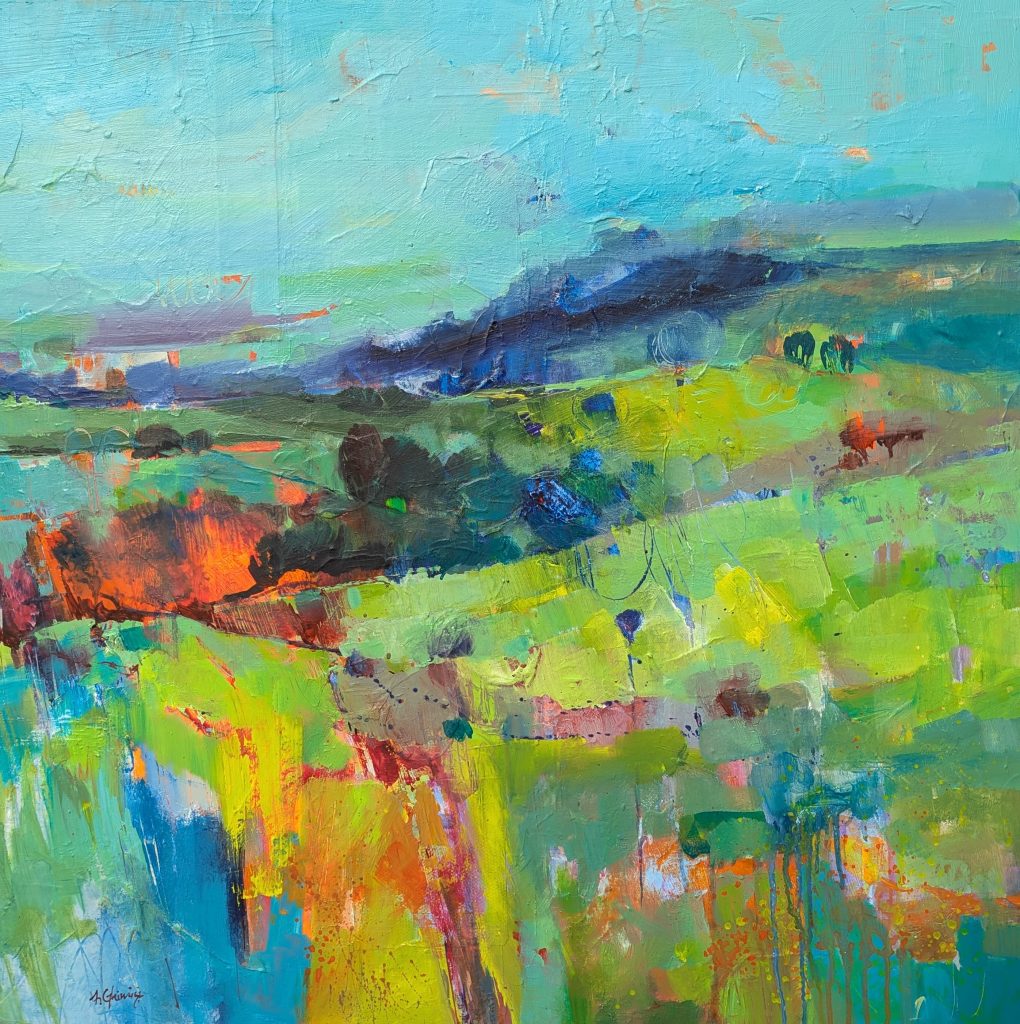
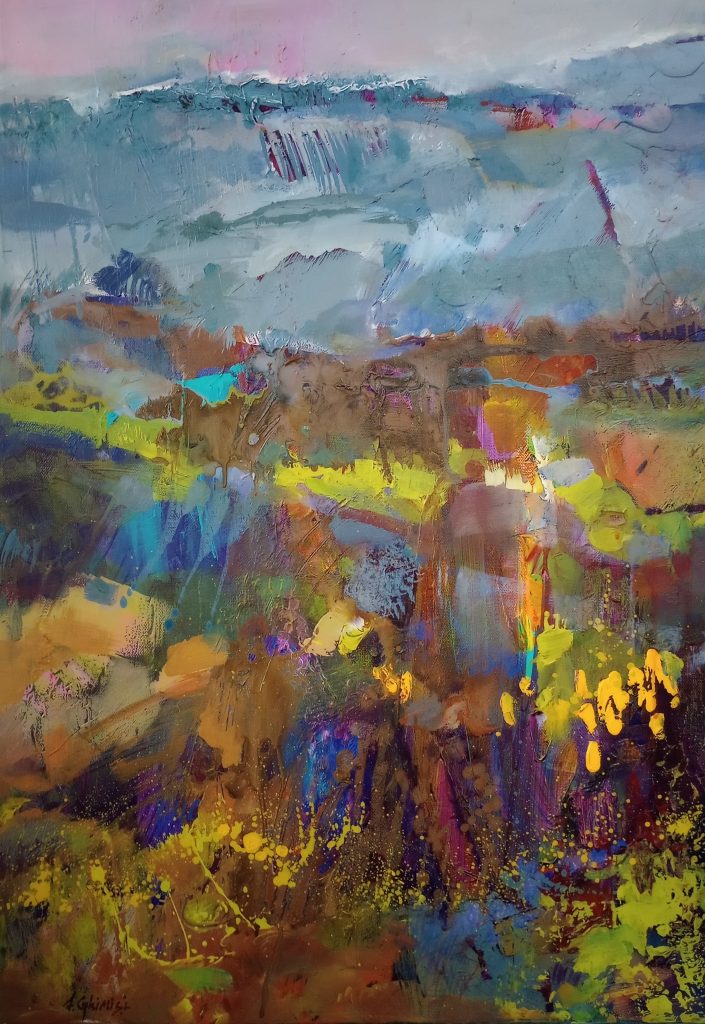
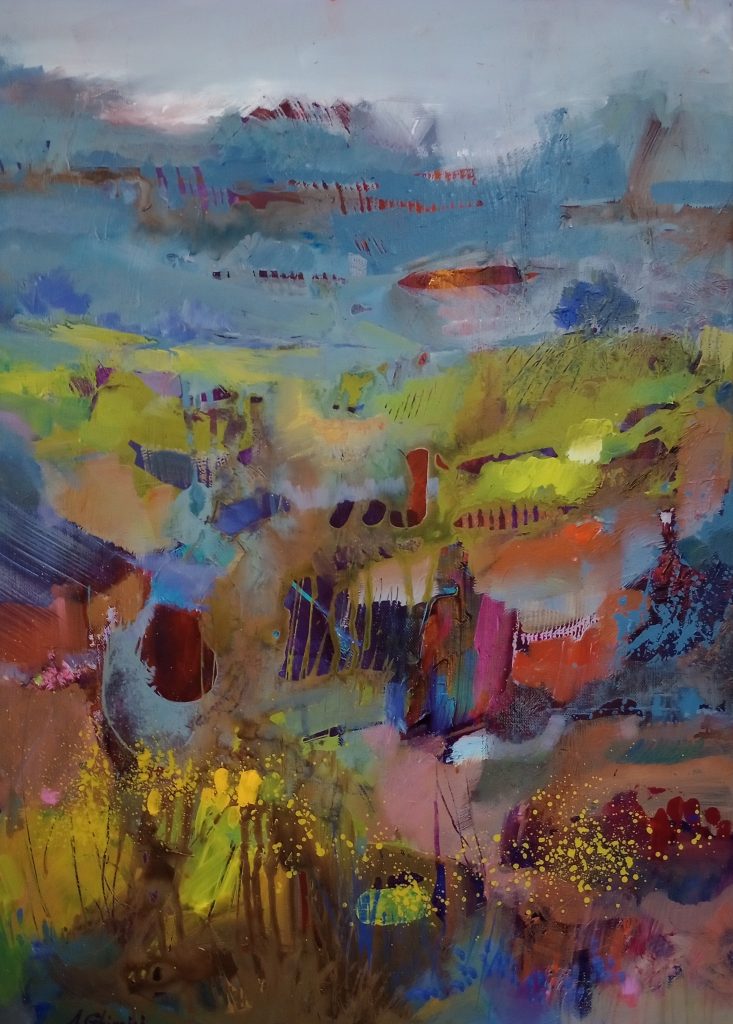
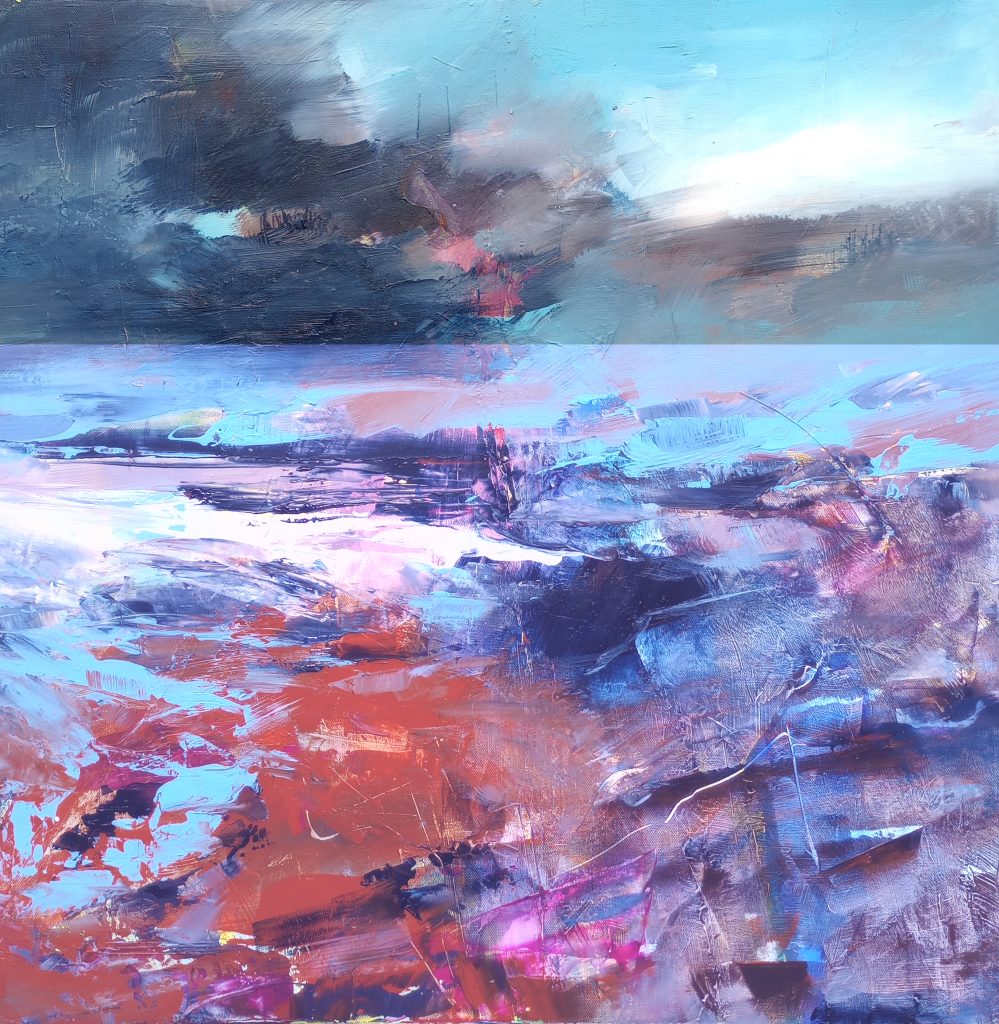


As a contemporary fine artist, I focus on capturing the essence of natural landscapes through vivid acrylic paintings. Using bold, saturated colors, my work evokes emotional responses, exploring the delicate relationship between humanity and nature, offering fresh perspectives on landscapes.
Read a Q&A with Alexandra Ghimisi
Talk to us about your work featured here. What are the main themes and ideas you explore in it?
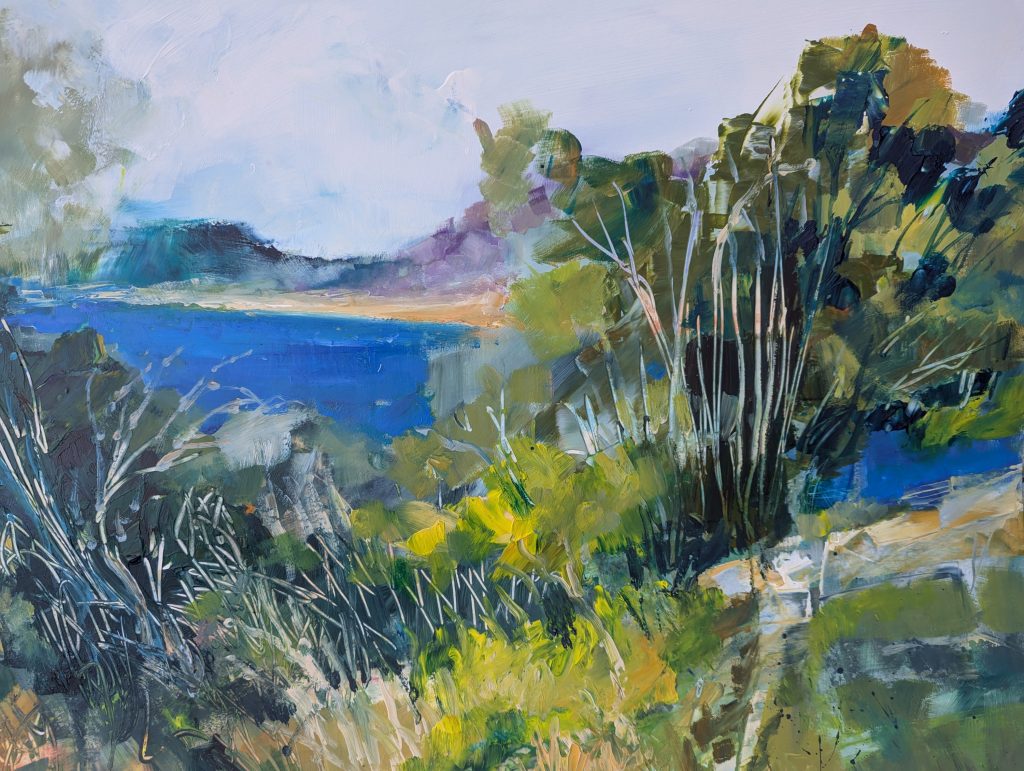
Mediterranean Memories is a vibrant semi-abstract painting that captures the essence of the Mediterranean landscape. In the distance, the calm sea shimmers, while the lush, layered vegetation in the foreground is brought to life through varied hues of green. Using acrylic on canvas and incorporating the sgraffito technique, I create depth and texture, allowing the viewer to sense the warmth and vitality of the scene. The rich, expressive palette reflects the memory of sun-soaked days, where nature thrives in its full, colourful glory, blending the tranquillity of the sea with the richness of the land.
Describe your creative process.
My creative process is intuitive and driven by my deep connection to nature. I begin by layering acrylic paint on canvas, allowing the colours and textures to evolve organically. The sgraffito technique is a crucial part of my process, where I carve into the paint to reveal hidden layers and create intricate details, adding depth and movement. I focus on expressing the energy of natural landscapes, blending abstract forms with recognizable elements to evoke both familiarity and imagination.
I consider a painting finished when it feels balanced—when the layers of colour, texture, and form come together to convey the mood I’m aiming for. It's a moment when the painting no longer asks for more, and its story feels complete.
I consider a painting finished when it feels balanced—when the layers of colour, texture, and form come together to convey the mood I’m aiming for. It's a moment when the painting no longer asks for more, and its story feels complete.
What are the main influences and inspirations behind your art?
The main influences behind my art stem from the natural world, particularly the changing seasons and the intricate beauty found in landscapes. Nature serves as my primary source of inspiration—its rhythms, textures, and vibrant colour palettes guide my creative process. I’m deeply drawn to how light, weather, and time of year transform familiar scenes into something new, and I explore this constant state of flux in my work.
In addition to nature, I’m influenced by the emotional resonance that certain environments evoke. My art often reflects a personal response to the landscapes I’ve experienced, The semi-abstract nature of my work allows me to blend these inspirations, inviting viewers to see the world through a layered, emotive lens.
In addition to nature, I’m influenced by the emotional resonance that certain environments evoke. My art often reflects a personal response to the landscapes I’ve experienced, The semi-abstract nature of my work allows me to blend these inspirations, inviting viewers to see the world through a layered, emotive lens.
What do you consider the strongest aspect of your work?
The creative process itself is central to my work—it's not just about the final piece, but the act of creation, the energy, and the sense of discovery I feel while painting. Each piece is a journey, an experiment where layers of acrylic, colour, and texture come together in unexpected ways.
The strongest aspect of my work is this sense of spontaneity and exploration. I thrive on the buzz of creating, where intuition guides me as I experiment with materials, marks, and forms. The sgraffito technique plays a key role, as it allows me to physically engage with the surface, revealing hidden layers and adding depth and texture. This process of carving into the paint becomes a metaphor for uncovering nature’s subtleties and complexities.
The strongest aspect of my work is this sense of spontaneity and exploration. I thrive on the buzz of creating, where intuition guides me as I experiment with materials, marks, and forms. The sgraffito technique plays a key role, as it allows me to physically engage with the surface, revealing hidden layers and adding depth and texture. This process of carving into the paint becomes a metaphor for uncovering nature’s subtleties and complexities.
What message or emotion do you hope viewers take away from experiencing your art?
Through my art, I hope viewers feel a deep connection to the natural world and its constant state of transformation. I aim to evoke a sense of wonder, inviting them to look beyond the surface and appreciate the subtle beauty and vitality present in nature, even during its quieter moments. My work reflects the cycles of growth, change, and renewal, encouraging viewers to see the hidden energy and life in landscapes that may often go unnoticed.
Emotionally, I hope my paintings spark a feeling of calm and reflection, balanced with the vibrancy of life. I want viewers to sense the harmony between movement and stillness, as well as the interplay of light and colour.
I hope my art inspires contemplation, inviting people to pause and reconnect with the natural rhythms that surround us.
Emotionally, I hope my paintings spark a feeling of calm and reflection, balanced with the vibrancy of life. I want viewers to sense the harmony between movement and stillness, as well as the interplay of light and colour.
I hope my art inspires contemplation, inviting people to pause and reconnect with the natural rhythms that surround us.
What is the biggest challenge for an artist? What is the hardest part of this job?
One of the biggest challenges for an artist is finding the balance between creativity and practical realities. As artists, we often "walk with our heads in the clouds," fully immersed in the creative process, where ideas, inspiration, and experimentation take over. This space is essential for producing meaningful work, but it can clash with the realities of life—managing bills, meeting responsibilities, and staying grounded in commitments.
For me, the hardest part of being an artist is maintaining this equilibrium between artistic freedom and the demands of everyday life. Balancing time between creative flow and administrative tasks like promoting my work, meeting deadlines, or managing finances can be tricky.
For me, the hardest part of being an artist is maintaining this equilibrium between artistic freedom and the demands of everyday life. Balancing time between creative flow and administrative tasks like promoting my work, meeting deadlines, or managing finances can be tricky.
What is the most rewarding part of being an artist?
The most rewarding part of being an artist is the ability to express myself freely and share that creative energy with others. There’s a deep sense of fulfilment in bringing an idea, emotion, or vision to life through the act of creating. The process of painting—experimenting with colour, texture, and technique—gives me a buzz of excitement and discovery. Every piece I create is a reflection of my own journey, and the joy lies in seeing where that journey takes me.
One of the greatest rewards is the connection I build with others through my art. When viewers engage with my work, feel moved by it, or find a personal connection to the story or emotion it conveys, it’s incredibly fulfilling. Art has the ability to resonate, uplift, and connect us across personal and shared experiences.
One of the greatest rewards is the connection I build with others through my art. When viewers engage with my work, feel moved by it, or find a personal connection to the story or emotion it conveys, it’s incredibly fulfilling. Art has the ability to resonate, uplift, and connect us across personal and shared experiences.
How do you balance tradition and innovation in your practice?
Balancing tradition and innovation is a core aspect of my artistic practice. With over 10 years of formal training, the fundamentals of visual art—composition, colour theory, drawing, and painting techniques—are deeply ingrained in me. These traditional principles form the foundation of everything I create, giving me a strong technical base and a deep understanding of the language of art.
At the same time, the innovative side of my work comes from my desire to push boundaries and explore new ways of expressing myself. I love experimenting with different media and tools. This constant experimentation allows me to develop fresh ideas and reinterpret traditional themes. For me, innovation is about embracing the unknown, taking risks, and allowing my creativity to evolve.
At the same time, the innovative side of my work comes from my desire to push boundaries and explore new ways of expressing myself. I love experimenting with different media and tools. This constant experimentation allows me to develop fresh ideas and reinterpret traditional themes. For me, innovation is about embracing the unknown, taking risks, and allowing my creativity to evolve.
What does "good art" mean to you? What makes a piece of art great?
To me, "good art" is art that communicates something beyond the surface, evoking an emotional response or sparking reflection. It doesn't have to be perfect in technique; what matters is its ability to connect with the viewer, whether through colour, form, or concept. Good art is honest and authentic, a reflection of the artist's vision, and it leaves room for the viewer to interpret and find their own meaning within it. It's about creating an experience that resonates, whether through beauty, provocation, or a quiet sense of contemplation. What makes a piece of art great, however, is its lasting impact. Great art transcends time and trends; it not only connects with people but challenges them, offers new perspectives, or speaks to universal truths.
What is the role of the artist today?
The role of the artist today is multifaceted, serving as a creator, communicator, and catalyst for change. In a world that is constantly shifting, artists have the ability to reflect, interpret, and respond to the complexities of modern life. Through their work, artists offer unique perspectives on culture, society, nature, and the human experience, giving voice to ideas and emotions that words alone may not fully express.
Beyond this, artists provide a sense of connection and hope. In a fast-paced, often disconnected world, art can serve as a means of slowing down, prompting people to engage with deeper emotions or ideas. Whether through beauty, provocation, or contemplation, artists help create a sense of shared experience, fostering understanding and empathy.
Beyond this, artists provide a sense of connection and hope. In a fast-paced, often disconnected world, art can serve as a means of slowing down, prompting people to engage with deeper emotions or ideas. Whether through beauty, provocation, or contemplation, artists help create a sense of shared experience, fostering understanding and empathy.