American artist Gary Aagaard, born in 1949, has built a distinguished career spanning editorial illustration and fine art painting. With a Bachelor of Arts from Western Washington University, Aagaard began his journey in Brooklyn during the 1980s, freelancing across the turbulent world of publishing. His sharp, conceptual illustrations soon earned placements in major outlets including The New York Times, The Village Voice, Barron’s, and The Los Angeles Times. Over the years, Aagaard has received honors from American Illustration, 3x3 Magazine, the Society of Illustrators, and other leading institutions. Today, his paintings are exhibited nationally at venues such as the Hera Gallery, Blackboard Gallery, Gallery 110, and the Center for Contemporary Political Art in Washington D.C.
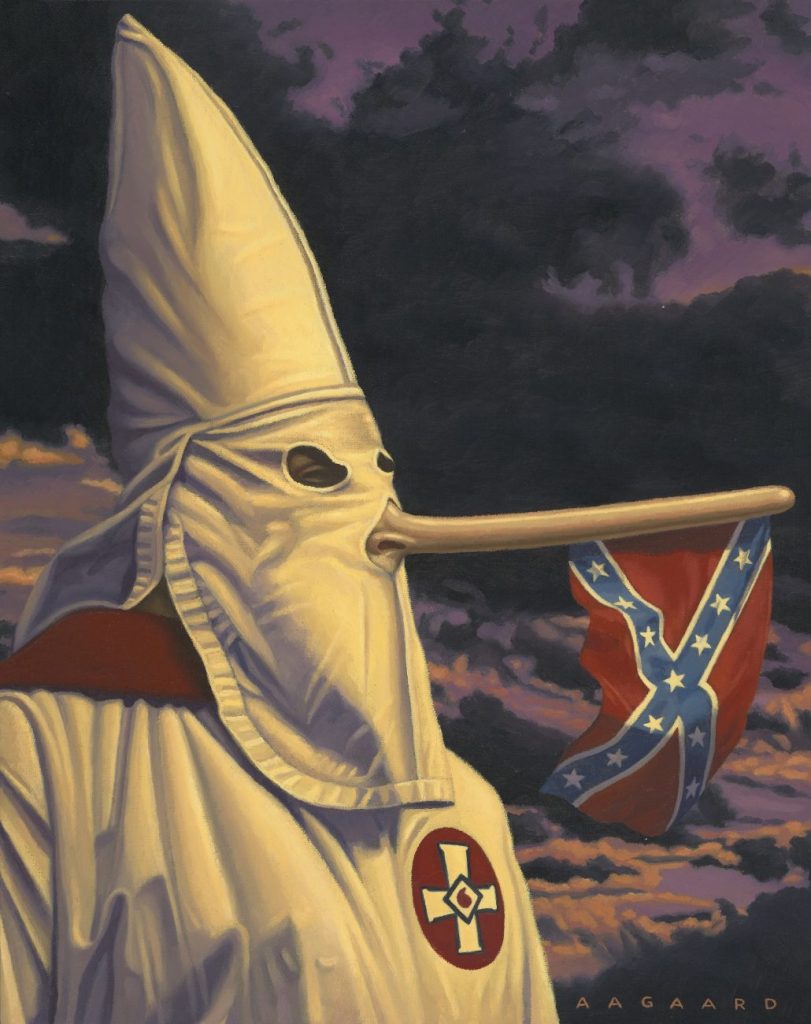
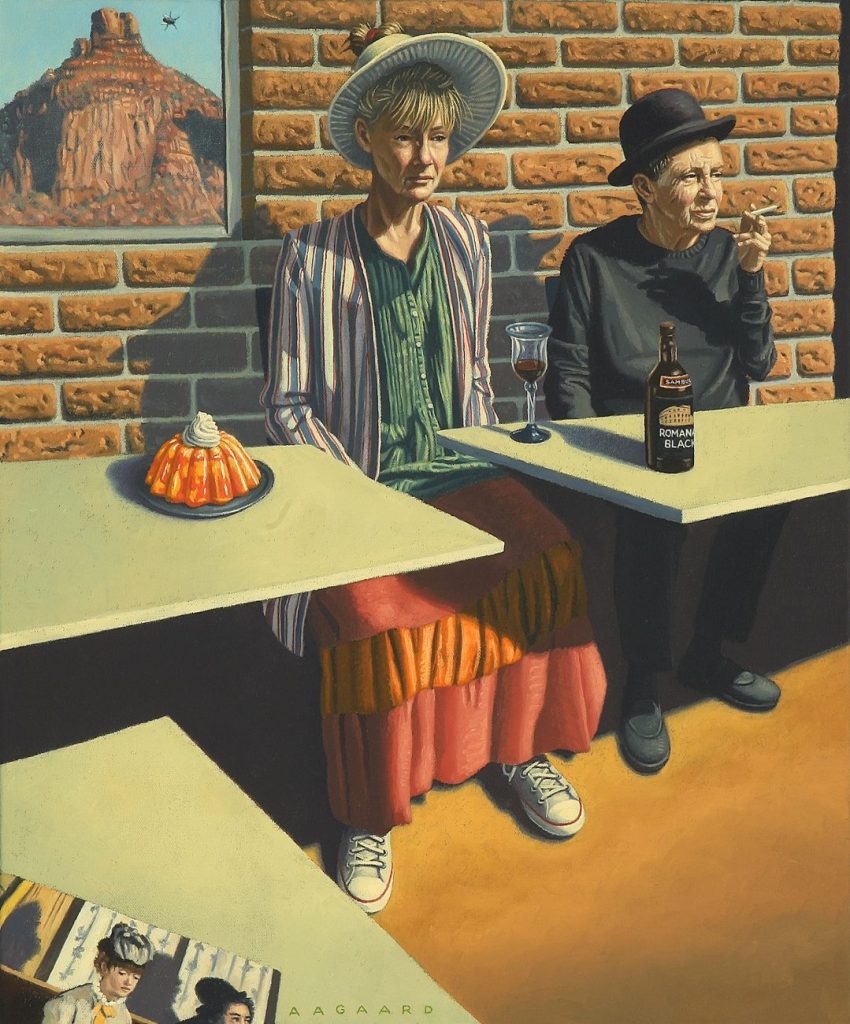
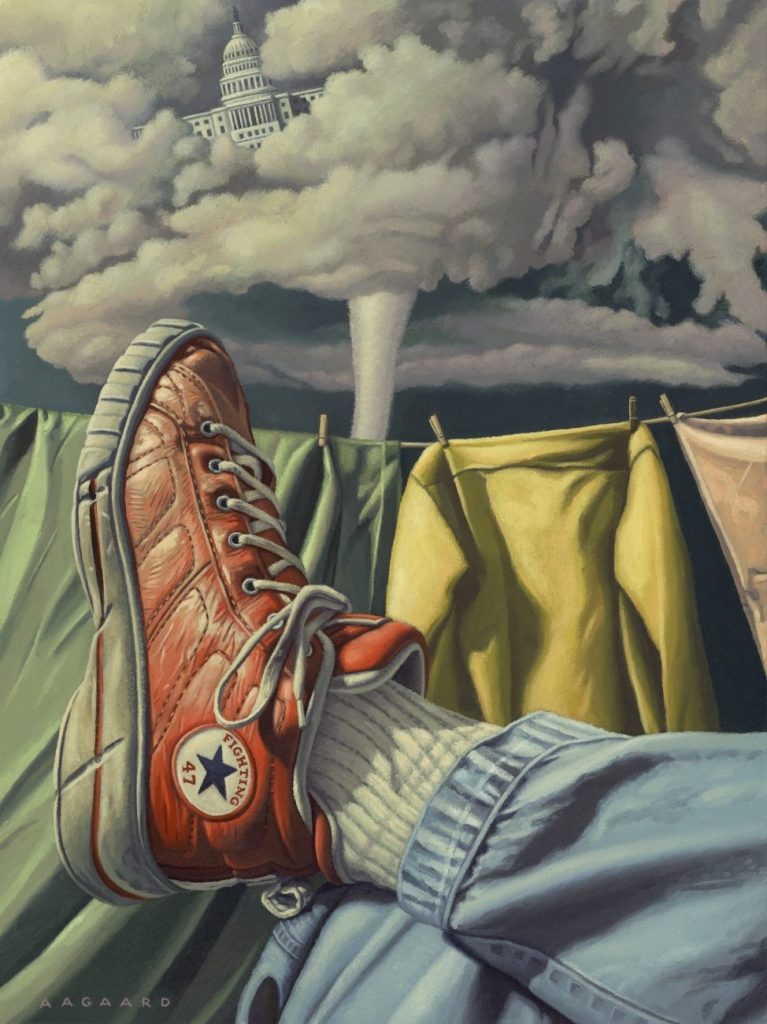
Aagaard’s paintings retain the conceptual depth and directness of his editorial background. Since the early 2000s, his focus has shifted to large-format oil works that channel his frustration and concern into pointed visual critiques of contemporary politics, media manipulation, and public spectacle. His subjects often include political leaders, media personalities, and religious figures who perpetuate division and disinformation. Employing a visual style rooted in realism and heightened by symbolic and surreal elements, Aagaard’s work articulates the contradictions, hypocrisies, and absurdities of modern American life.
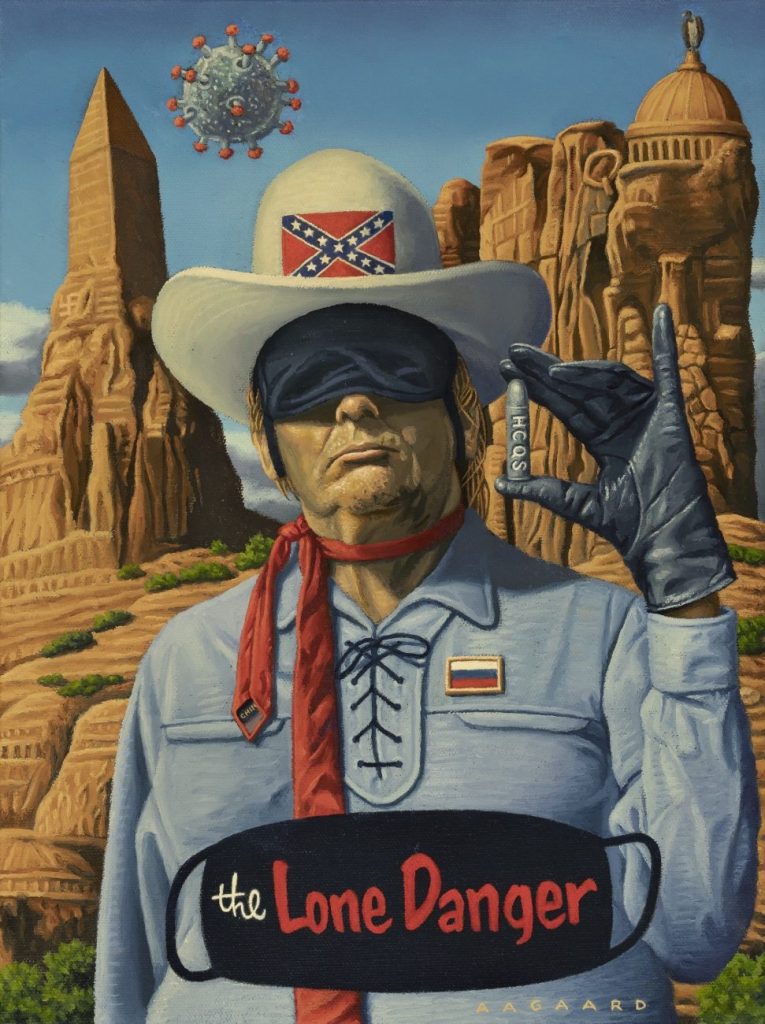
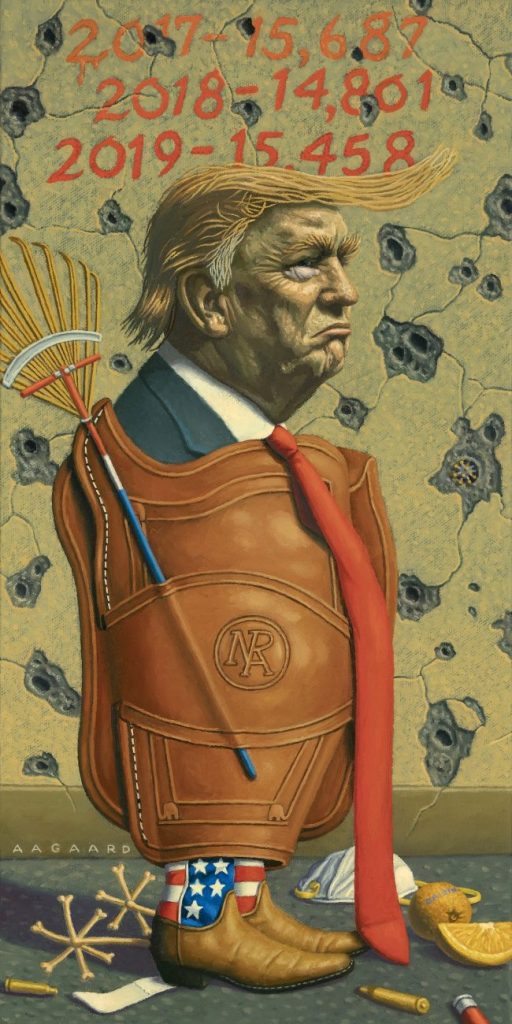
In "The Lone Danger", Aagaard subverts the American cowboy mythos, presenting a figure warped by overblown notions of authority and self-reliance. Set against a backdrop charged with patriotic overtones, the painting interrogates how cultural icons are used to justify dangerous ideologies. Similarly, "Half-Cocked & Loaded" offers a sharp reflection on gun culture and the normalization of violence. Figures in Aagaard’s paintings are often distorted or exaggerated, heightening their psychological impact and drawing attention to the spectacle of power. While his work can recall the biting visual commentary of George Grosz or the unsettling ambiguity of Philip Guston, Aagaard’s vision is distinct in its grounding in contemporary American media and political discourse.
What sets Aagaard’s practice apart is his understanding of art as a vital space for critical thinkers to express dissent and question dominant narratives. His paintings are not simply political—they are visual arguments, composed with care and conviction, that invite reflection and resistance. In an age of escalating polarization and performative outrage, Aagaard’s work offers clarity and purpose. Through visual critique, he gives form to discomfort, disillusionment, and the persistent demand for accountability—proving that painting remains a powerful tool for those who choose to think deeply and speak out.