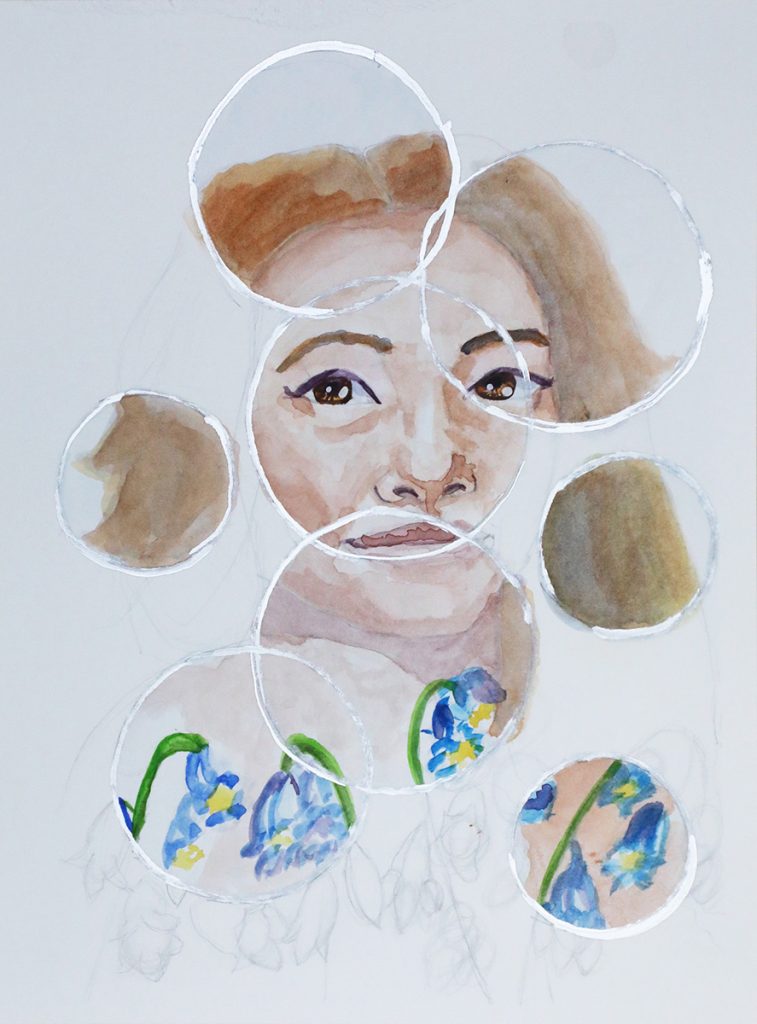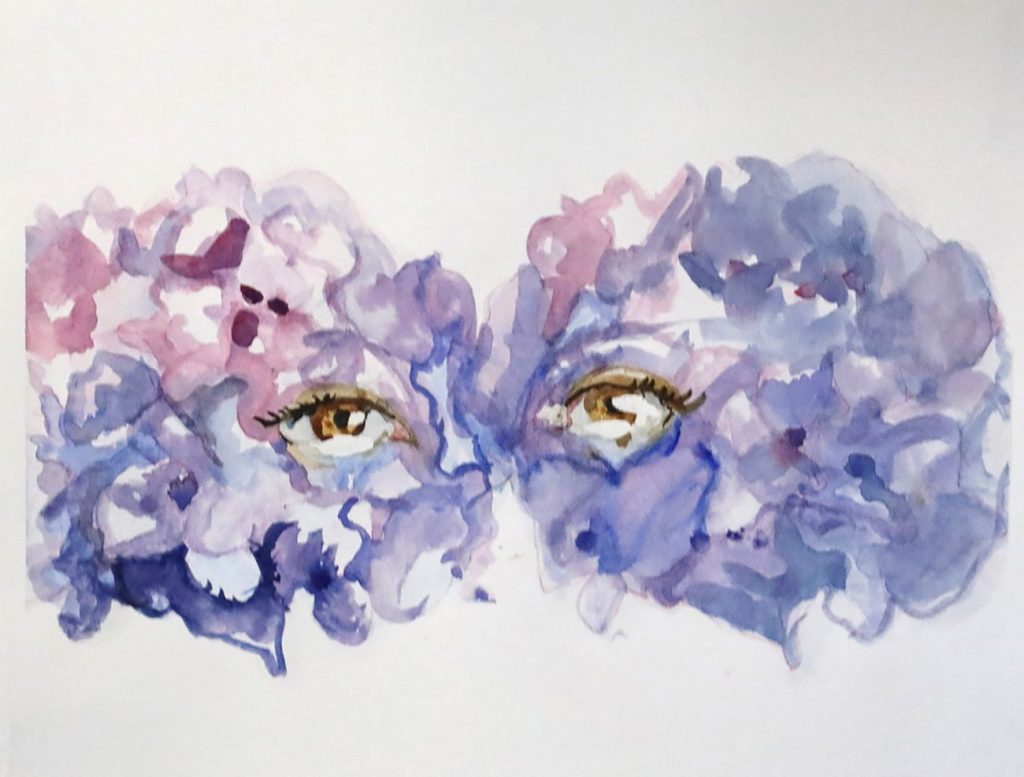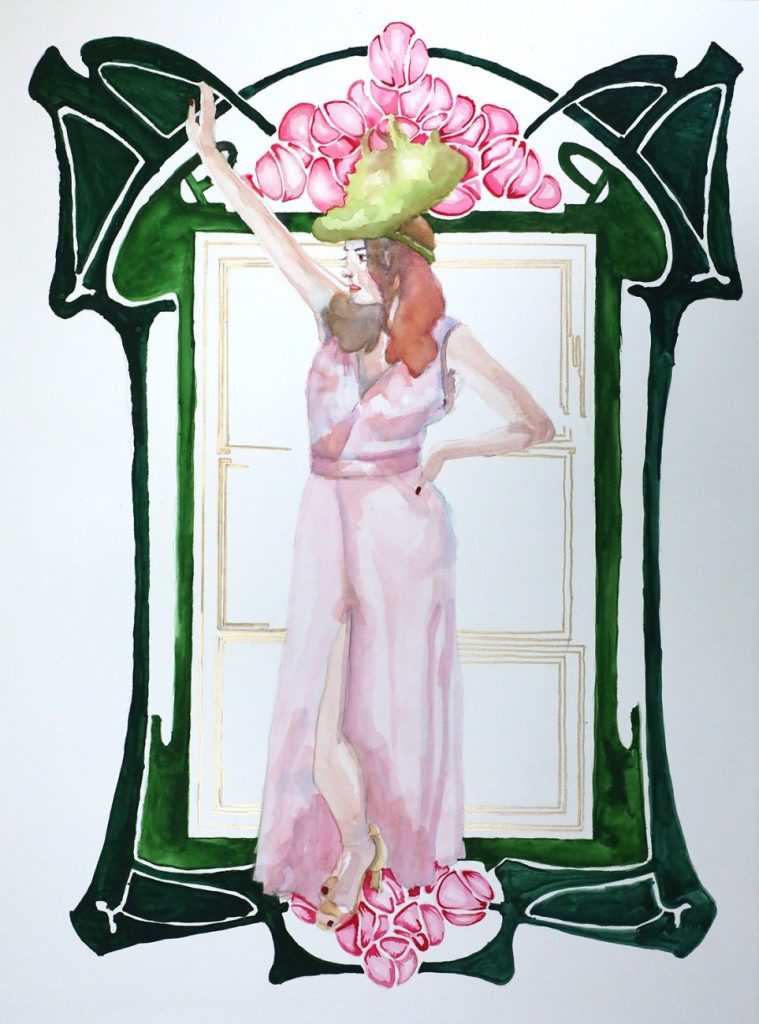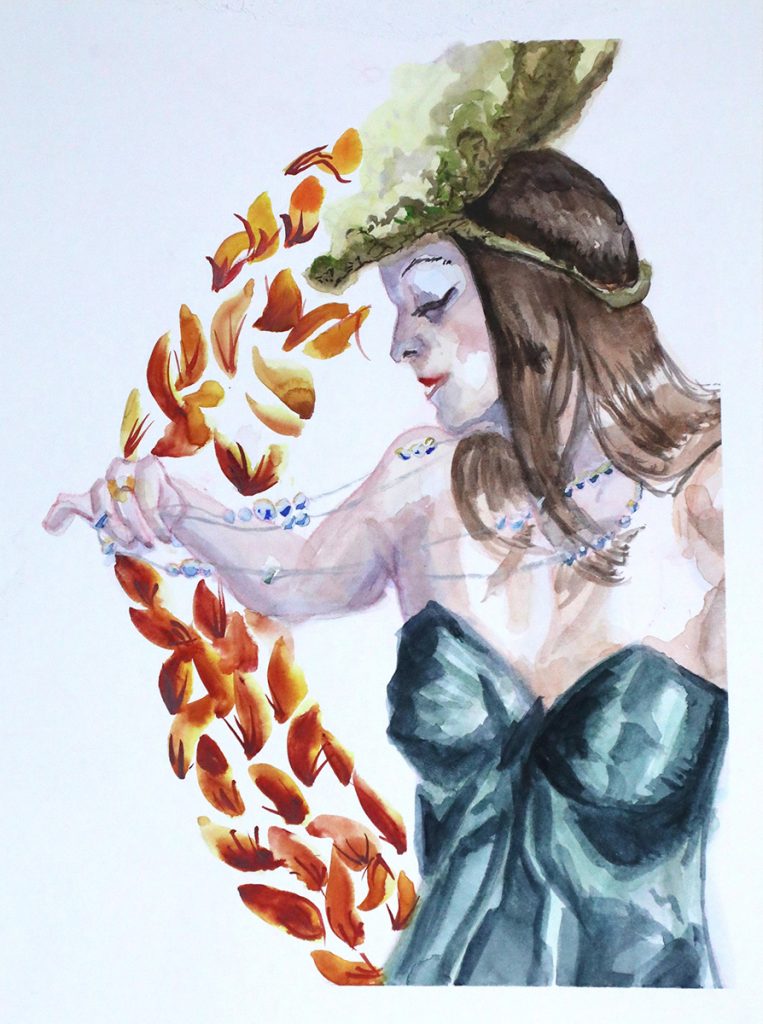
American artist Alycia Thompson, born in 1985 in Indiana, has established a distinct voice in contemporary watercolor painting. Based in New York City, Thompson holds a BFA from the University of Louisville, an MFA from the New York Academy of Art, and a Master’s in Art and Art Education from Teachers College, Columbia University. Her work has been exhibited internationally, with participation in shows such as the New York Expo, Superfine Art Fair, and Tokyo Tower Art Fair. A member of the historic Salmagundi Club since 2017, she has also contributed as both exhibiting artist and curator, reflecting her deep engagement with the broader art community.
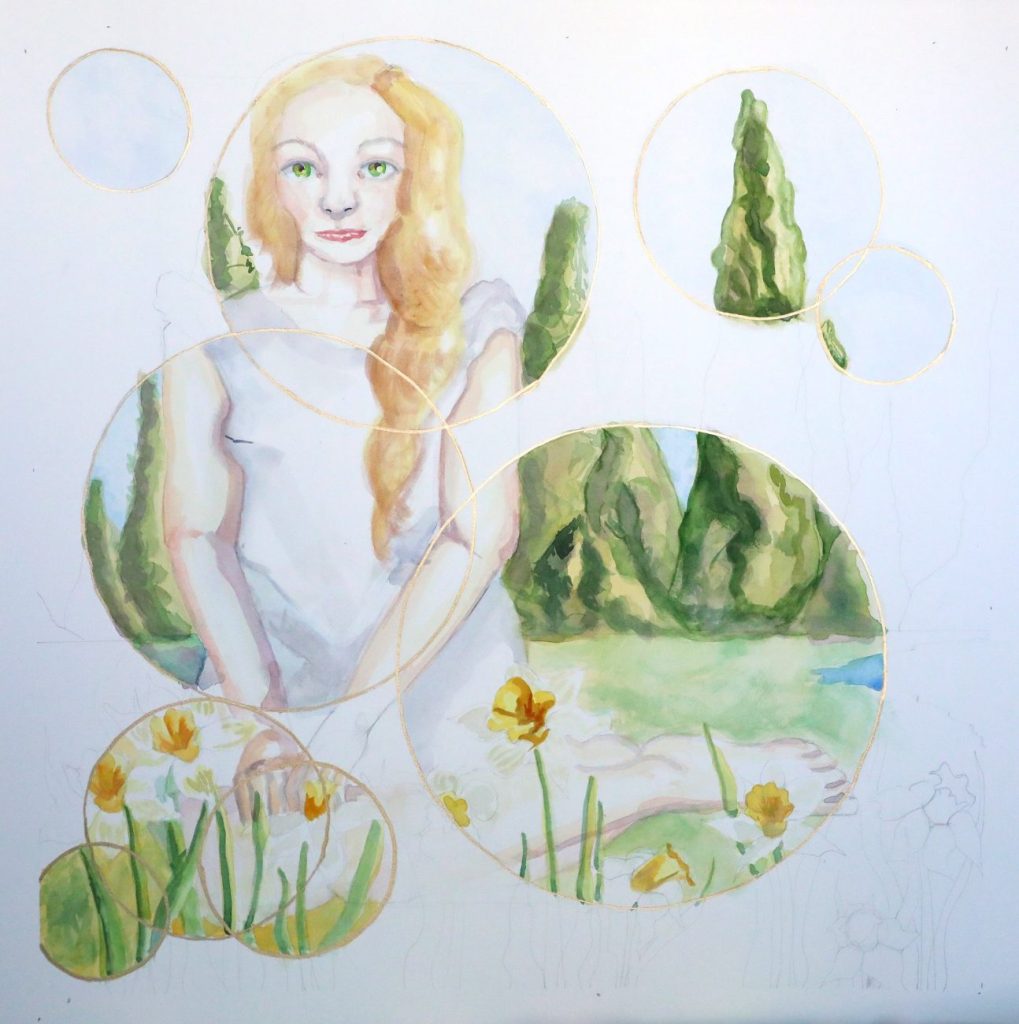
Thompson’s paintings are visual meditations on memory, presence, and sensory experience. Working primarily in watercolor and graphite, she captures the elusive interplay between interior emotional landscapes and external environments. Her creative impulse often originates in small, visceral moments—like the sudden return of a scent on a spring walk—that stir long-dormant memories. These moments become starting points for lyrical compositions that are at once intimate and expansive, where form and emotion coalesce through delicate washes and precise linework. The result is a body of work that is deeply personal yet universally resonant, grounded in the power of sense memory and the act of looking closely.
Her compositions often hover between realism and abstraction, allowing the viewer to enter a liminal space where narrative fragments drift through light and shadow. Thompson’s use of negative space, restrained palette, and diffused edges suggest both presence and absence, echoing the way memories surface—not with clarity, but with emotional texture. Her paintings evoke the ethereal qualities of Agnes Pelton or María Berrío, yet remain firmly rooted in watercolor’s tradition of impermanence and transparency. The fluidity of her chosen medium becomes a metaphor for the transient nature of thought and feeling, each mark a fleeting trace of lived experience.
What makes Thompson’s practice especially compelling is the way she balances conceptual intent with sensory nuance. Her paintings are not illustrations of memory but rather translations—visual echoes of internal shifts and atmospheric states. In a world increasingly oversaturated with visual noise, Thompson’s work invites quietude and reflection. It rewards the patient viewer, offering a contemplative space where the boundaries between self, memory, and environment begin to dissolve. Through her sensitive handling of materials and her introspective approach, she positions watercolor not just as a technique, but as a vessel for presence, awareness, and poetic expression.