



"Seek the true models within life and customs, and draw from them the language rooted in lived experience."
Read a Q&A with Junpeng Liang
Talk to us about your work featured here.
What are the main themes and ideas explored?
What are the main themes and ideas explored?
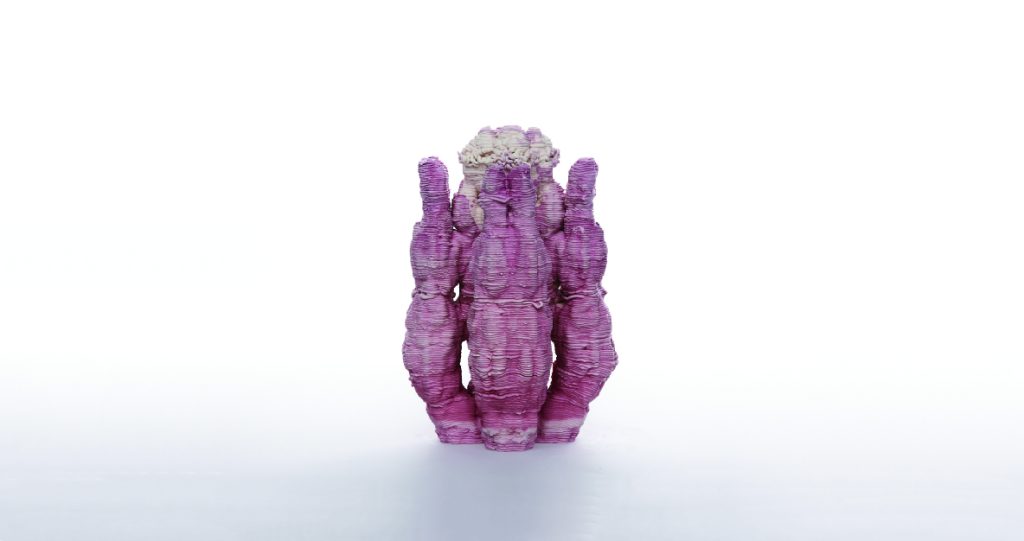
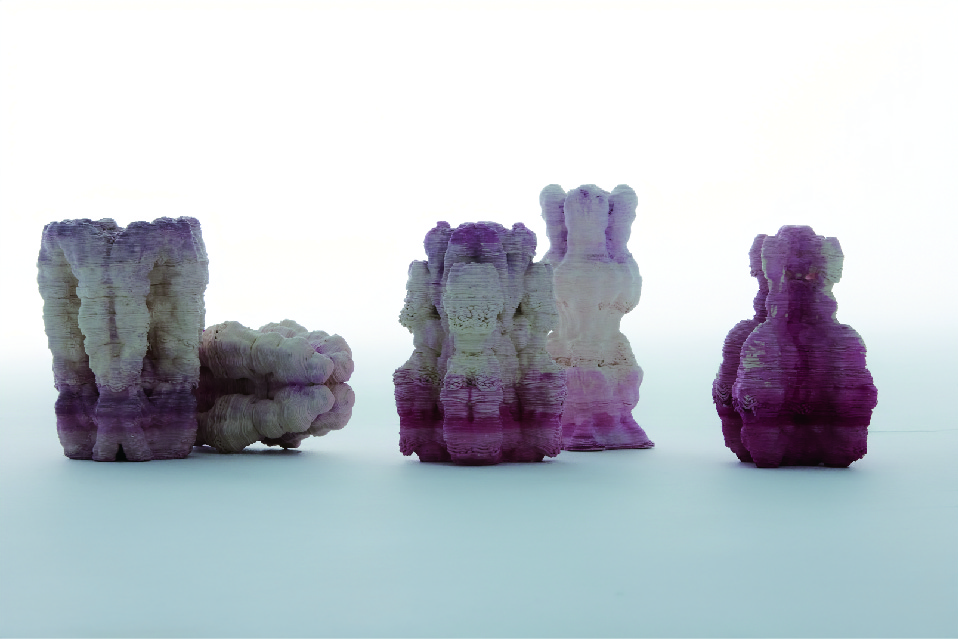
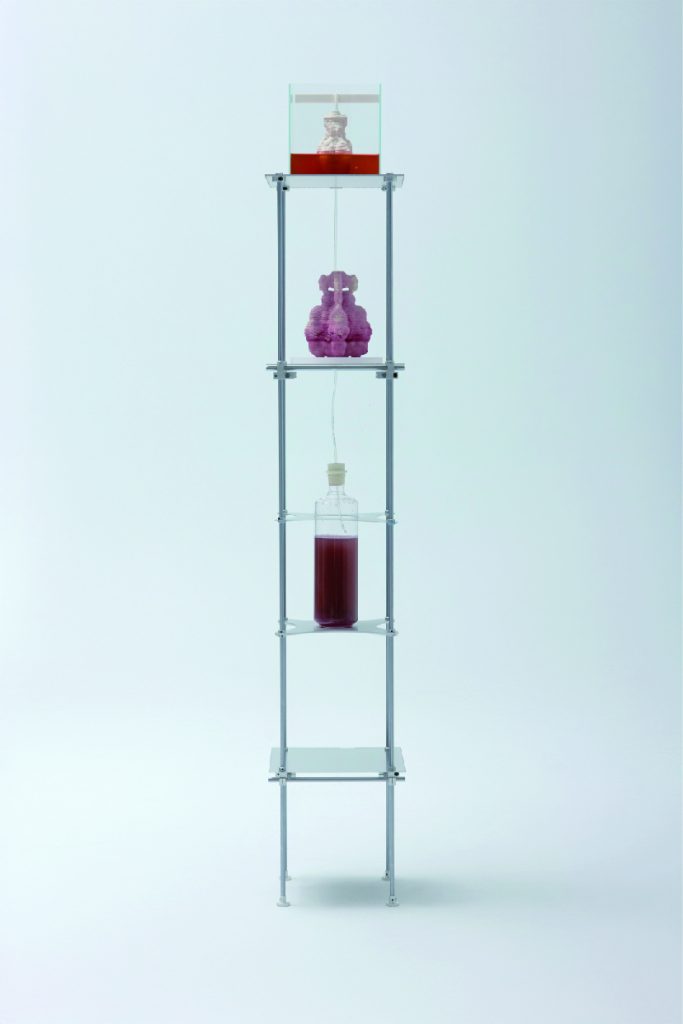
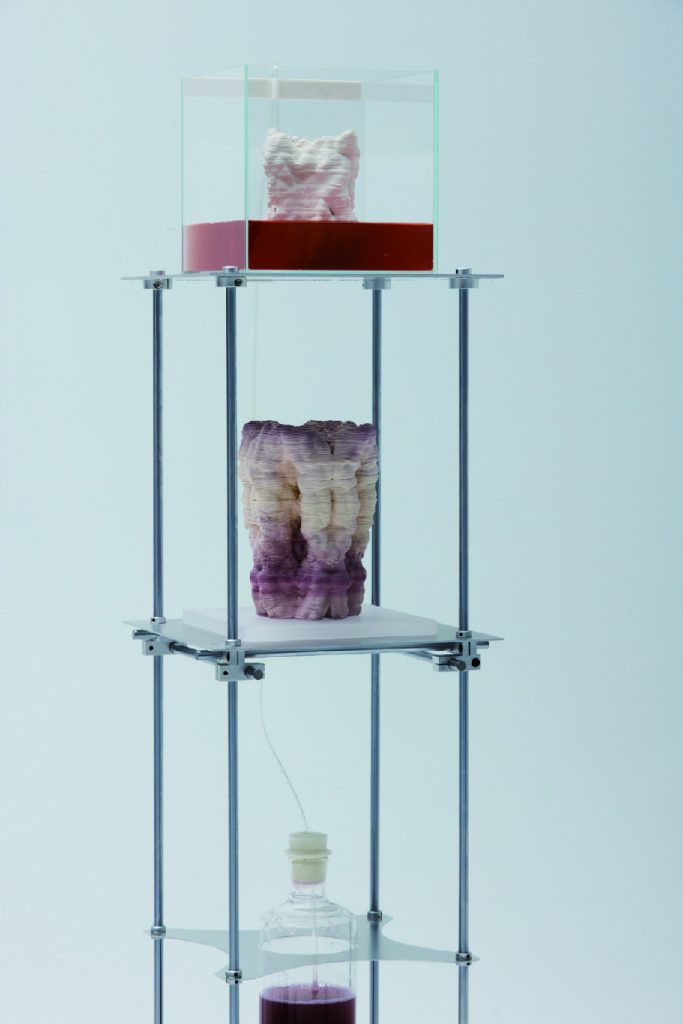
This project explores the generative potential of human microbiota through microbial pigmentation and digital simulation. It asks: What forms of life can be defined by microbial communities? Using algorithmic modeling and a custom 3D bioprinter, it visualizes how human-associated microbes shape non-human entities, infusing inorganic matter with organic vitality. The resulting biopolymer objects embody microbiome-derived colors, textures, and forms. By translating invisible microbial data into tangible materials, the work reveals the human body as a multispecies ecosystem and reflects on the creative, ecological, and ethical dimensions of designing with living systems.
Describe your creative process.
In this project, the creative process began with a speculative exploration of the microbial world - carried out from the perspectives of biology, philosophy and technology. We developed algorithms to simulate the speculated life forms shaped by microbial patterns. At the same time, we constructed a bioprinter and conducted microbial staining experiments on various materials. In the final stage, the printed forms were placed in microbial cultures for incubation, allowing them to evolve over time. We believe that this is a snapshot of the continuous symbiosis between biological processes and human intervention when studying the life system.
What are the main influences and inspirations behind your art?
My work is deeply influenced by the intersection of science, technology, and design, especially the thinking of Neri Oxman and Anthony Dune. Oxman’s approach to material ecology and the blending of biology with design inspires me to explore how living systems can inform new aesthetics and functions. Dunne’s speculative design, on the other hand, has shaped my interest in using design as a tool to ask questions rather than solve problems—to open up debates about possible futures.
What is unique about your art? What do you consider the strongest aspect of your work?
Through design, I bring back speculative fragments from these futures—evidence that invites people to reflect on the present. What makes my practice unique is its engagement with rapidly evolving fields like genetics and synthetic biology. These technologies challenge our understanding of nature and open new realms of design—where life itself, from microorganisms to humans, can be reshaped. The strongest aspect of my work lies in using design as a tool for critical inquiry. I’m interested in how these shifts redefine what it means to be human, and how they affect our relationships, values, and imagination. Rather than offering answers, I aim to create moments of reflection—where science becomes emotional, and design becomes a way to question what kind of futures we are creating.
What message or emotion do you hope viewers take away from experiencing your art?
In my artistic practice, I hope viewers experience a deep sense of reflection and questioning. With the rapid advancement and industrialization of emerging technologies—especially digital and biotechnologies—we are facing an unprecedented social laboratory. Through my work, I aim to provoke thought about whether we are truly prepared to face these technologies with openness. Can we critically examine the ideas and ideals behind them? More importantly, what profound impacts will these technologies have on human society, culture, and individual identity once they become widespread in daily life? I hope my art encourages viewers to reconsider our relationship with technology, reflect on where we come from, redefine who we are, and suggest possible directions for our future.
What is the biggest challenge for an artist?
What is the hardest part of your job?
What is the hardest part of your job?
The biggest challenge for an artist is turning complex ideas—like scientific concepts—into designs that are not only visually compelling but also meaningful and functional. It’s more about communication and transformation. The hardest part of the job is sustaining a true feedback loop between the scientific and the creative. Science can provide the data, the structure, the insight—but design must respond, reshape it, and return something tangible that can be tested, validated, or rethought. It’s an ongoing, iterative process, where neither side leads all the time. Instead, they evolve together—like two spheres spiraling upward, each pushing the other forward. Keeping that loop alive is both intellectually and emotionally demanding—but also what makes the work deeply rewarding.
What is the most rewarding part of being an artist?
As an artist, the most rewarding part lies in confronting unavoidable yet unsettling futures. Through continuous experimentation, practice, and collaboration with diverse communities, we accumulate tangible creative experiences that help bridge the disconnect between the present and what is to come. Art allows us to place ourselves within different future scenarios, embracing the uncertainties and discomfort that such exploration entails. In doing so, we not only reexamine existing issues but also envision new possibilities, injecting hope through technological progress and shifts in mindset. This ability to engage in a dialogue with the future through artistic practice is what gives me the deepest sense of fulfillment as an artist.
How do you balance tradition and innovation in your work?
Balancing tradition and innovation in my work is a continuous process of exploration. Conceptually, I tend to focus more on emerging design practices. For example, I start by developing a close relationship with technology or selecting a specific scientific field as a point of entry. Then, I imagine the possible issues that might arise when research from that field moves out of the laboratory and into everyday life. Finally, I materialize these issues in my design proposals, using them as a driving force for innovation. While technology is often seen as the answer, as a designer and artist, I prefer to ask questions. What is the essence of the problem? This ongoing inquiry is at the core of my creative process.
What does "good art" mean to you?
What makes a piece of art great?
What makes a piece of art great?
To me, good art is something that surprises and enlightens—it offers a fresh perspective on topics that feel new and relevant. Great art uncovers what is often overlooked in everyday life, making the invisible visible. It approaches grand, complex themes in a way that feels light and accessible, inviting viewers to engage without feeling overwhelmed. In essence, great art opens our eyes to something unexpected and meaningful, sparking curiosity and reflection through innovative ideas and approachable expression.
What is the role of the artist today?
The role of the artist today is to challenge perceptions and inspire critical thinking about the future. Beyond creating visuals or objects, artists navigate the complex intersections between technology, ethics, and society—raising questions rather than offering fixed answers. By offering fresh perspectives and making the invisible visible, artists create spaces where people can reflect, feel, and imagine alternatives to the present. In a world driven by speed and utility, art slows us down, invites dialogue, and makes room for uncertainty and possibility.
See More Art by Junpeng Liang
This interview was published by Circle Foundation for the Arts © CFA Press ∙ Images are courtesy of the artist