


Jin is a contemporary painter and illustrator from China. A SCAD Fine Arts graduate, she blends delicate brushwork, rich colors, and emotional depth in her art. Influenced by Maxfield Parrish and childhood book illustrations, her work has been featured in American Illustration 43, Artistonish Magazine, and AI Tiba9.
Read a Q&A with Jin
Talk to us about your work featured here.
What are the main themes and ideas explored?
What are the main themes and ideas explored?
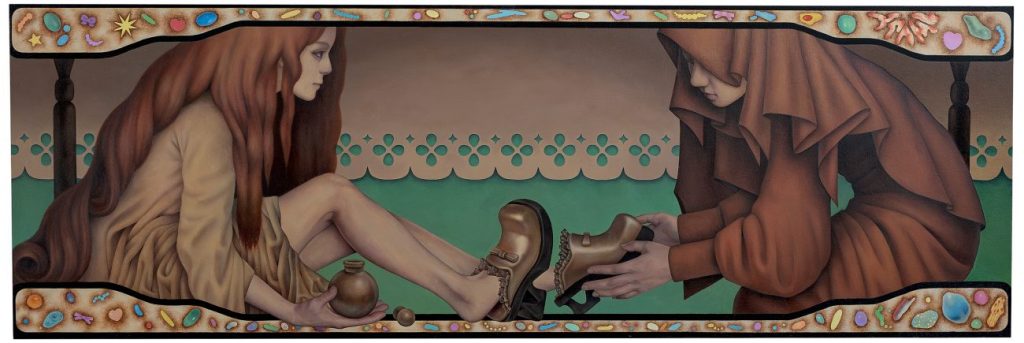
My recent works revolve around dreams and the visual fragments I retrieve from my dream experiences. These serve as the foundation, which I then merge with inspirations drawn from my fascination and close observation of everyday objects.
Describe your creative process.
I usually begin by capturing a partially formed scene from a dream, then enhance it with my imagination and design to bring a sense of realism. Often, I collect elements from dreams that don’t form a complete image and record them for future use. Later, I combine and refine them to construct a full composition. It’s a deeply engaging and enjoyable process.
What are the main influences and inspirations behind your art?
A major influence is my desire to constantly explore and uncover new possibilities within my own work. Through this process, I not only examine myself objectively but also gain a deeper understanding of the world.
What is unique about your art? What do you consider the strongest aspect of your work?
What sets my work apart is a visual language that merges the surreal with the intimately familiar. I create tension between reality and imagination through precise rendering and unexpected compositions.
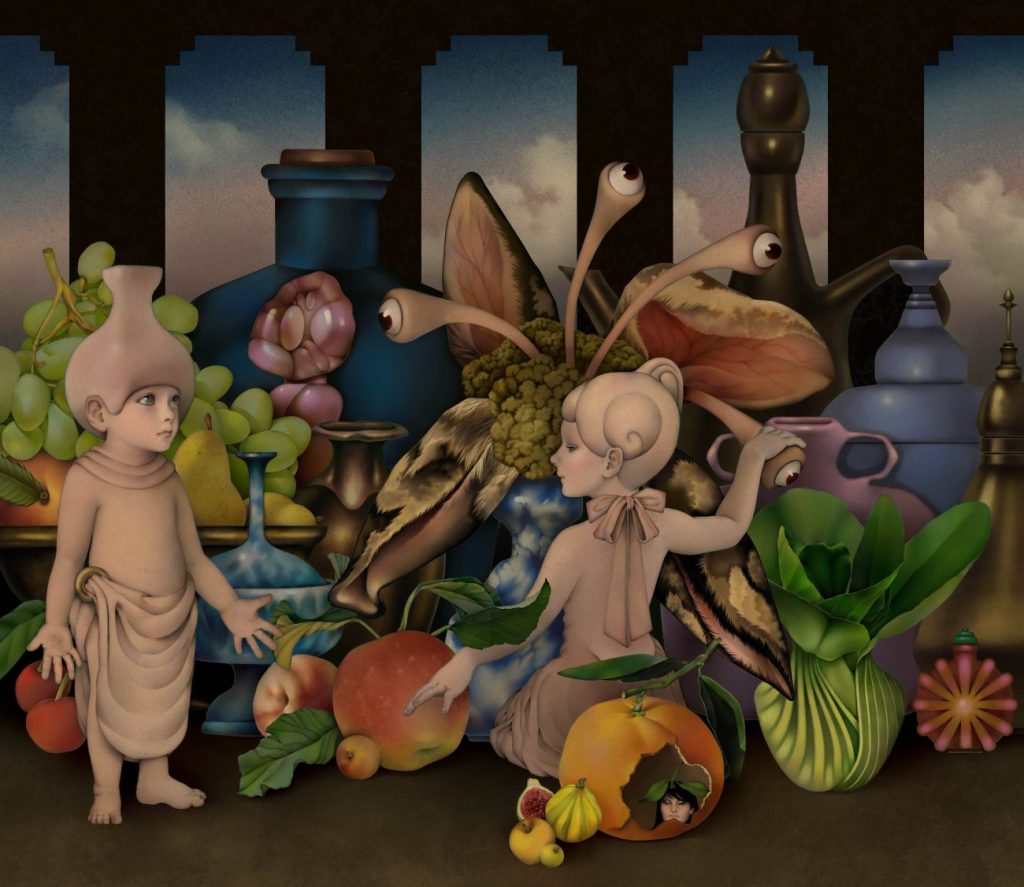
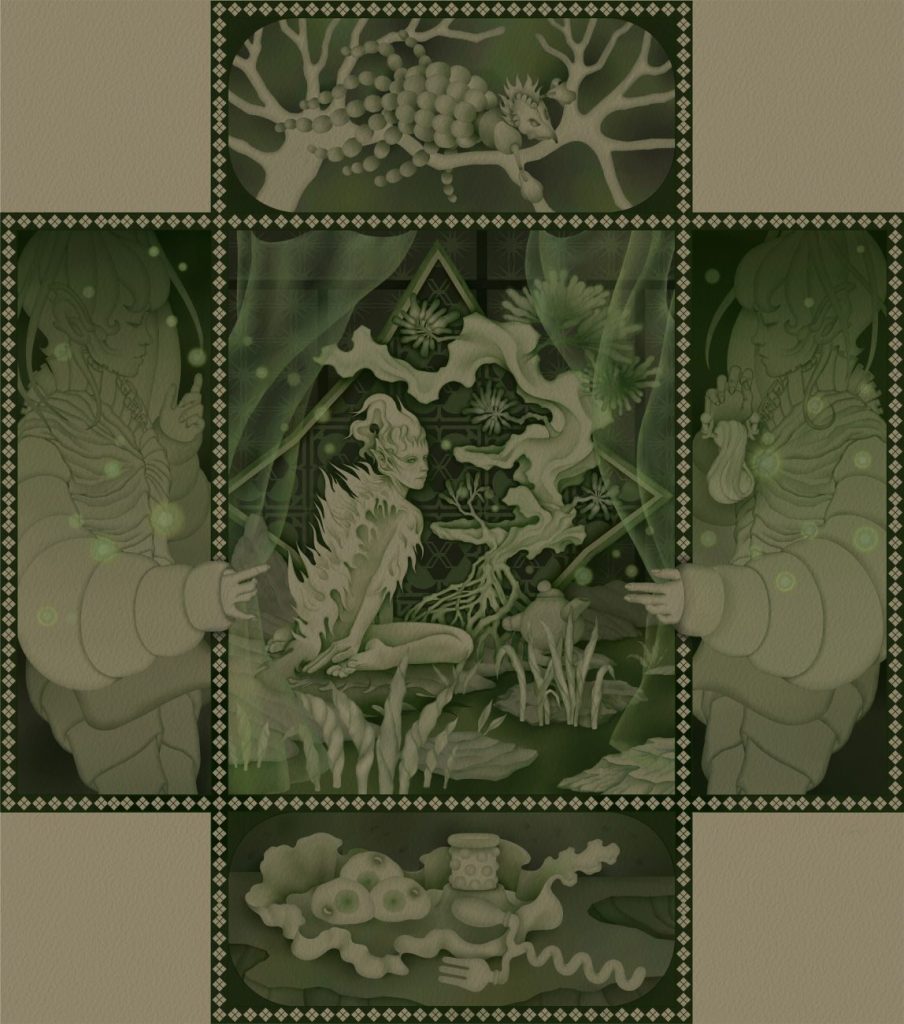
This is especially evident in Dining Table and Siren’s Boudoir, featured on the covers of Divide Magazine. Dining Table, also a Selected Winner in American Illustration 43, depicts a quiet domestic scene that feels subtly uncanny—suggesting control or an unseen shift. Siren’s Boudoir contrasts softness with spatial unease, evoking a dreamlike atmosphere. Both works explore the boundary between containment and release.
I see my strength in holding such contradictions in tension while preserving unity. In that space—between clarity and ambiguity—my artistic voice takes shape.
This is especially evident in Dining Table and Siren’s Boudoir, featured on the covers of Divide Magazine. Dining Table, also a Selected Winner in American Illustration 43, depicts a quiet domestic scene that feels subtly uncanny—suggesting control or an unseen shift. Siren’s Boudoir contrasts softness with spatial unease, evoking a dreamlike atmosphere. Both works explore the boundary between containment and release.
I see my strength in holding such contradictions in tension while preserving unity. In that space—between clarity and ambiguity—my artistic voice takes shape.
What message or emotion do you hope viewers take away from experiencing your art?
I want my art to be an invitation—an open space where viewers can bring their own feelings and thoughts. Rather than delivering a fixed message, my work encourages a personal dialogue, where each person might discover different emotions or stories within the imagery.
While there is often a subtle sense of tension or imbalance beneath the surface, I also hope viewers simply enjoy the sensory experience—the textures, colors, and forms that invite immersion. The goal is for the artwork to provide a conversation that doesn’t require my physical presence—offering people a brief mental escape from the busy realities of everyday life.
While there is often a subtle sense of tension or imbalance beneath the surface, I also hope viewers simply enjoy the sensory experience—the textures, colors, and forms that invite immersion. The goal is for the artwork to provide a conversation that doesn’t require my physical presence—offering people a brief mental escape from the busy realities of everyday life.
What is the biggest challenge for an artist?
What is the hardest part of your job?
What is the hardest part of your job?
For me, the greatest challenge lies in both building and breaking down structures in my work. Sometimes these processes happen simultaneously, and I must stay mindful of where the “ground” or foundation of the piece lies. This is often a cyclical process, and the hardest part is finding my own way to simplify and subtract from my work while keeping its essence.
What is the most rewarding part of being an artist?
The most direct and rewarding experience is having my work appreciated and recognized. For instance, my pieces were selected as winners in both the 43rd and 44th editions of American Illustration, and have been featured in magazines such as Artistonish, Spotlight, Create! Magazine, and Artist Portfolio. A particularly meaningful moment was when my artwork was chosen as both the front and back cover of Divide Magazine. Positive feedback from the outside world provides immense encouragement and motivates me to keep creating and exploring further.
How do you balance tradition and innovation in your work?
For me, tradition and innovation are complementary forces in my artistic practice. Tradition lies in the disciplined painting techniques and respect for classical methods that ground my work in tangible reality, providing a solid foundation.
Innovation appears in how I conceive and arrange elements within my compositions—through imagination, experimentation, and personal narrative—to create new visual dialogues. By clearly separating these aspects, I push boundaries without losing the precision that tradition offers.
This balance is dynamic, a constant negotiation that keeps my work both rooted and exploratory. Through this interplay, I maintain artistic integrity while evolving my visual language.
Innovation appears in how I conceive and arrange elements within my compositions—through imagination, experimentation, and personal narrative—to create new visual dialogues. By clearly separating these aspects, I push boundaries without losing the precision that tradition offers.
This balance is dynamic, a constant negotiation that keeps my work both rooted and exploratory. Through this interplay, I maintain artistic integrity while evolving my visual language.
What does "good art" mean to you?
What makes a piece of art great?
What makes a piece of art great?
I admire work that, beyond expressing and connecting, also achieves pure visual beauty. When I can engage in watching, observing, feeling, and reflecting—when a piece allows for this layered experience—it becomes truly good art in my eyes.
What is the role of the artist today?
I believe the artists serve as providers of new perspectives and experiences—offering fresh ways of seeing and being that challenge conventional understanding. In a world saturated with information and noise, artists create spaces for reflection, wonder, and transformation.
Discovering a new artist can feel like encountering a new planet—an unfamiliar world that expands our horizons and deepens our awareness. Through this encounter, both the artist and the viewers are invited to explore broader possibilities, not only visually but also emotionally and intellectually.
Ultimately, the artists’ role is to open doors to unknown territories within and beyond ourselves, helping us navigate the complexities of contemporary life with renewed curiosity and insight.
Discovering a new artist can feel like encountering a new planet—an unfamiliar world that expands our horizons and deepens our awareness. Through this encounter, both the artist and the viewers are invited to explore broader possibilities, not only visually but also emotionally and intellectually.
Ultimately, the artists’ role is to open doors to unknown territories within and beyond ourselves, helping us navigate the complexities of contemporary life with renewed curiosity and insight.