
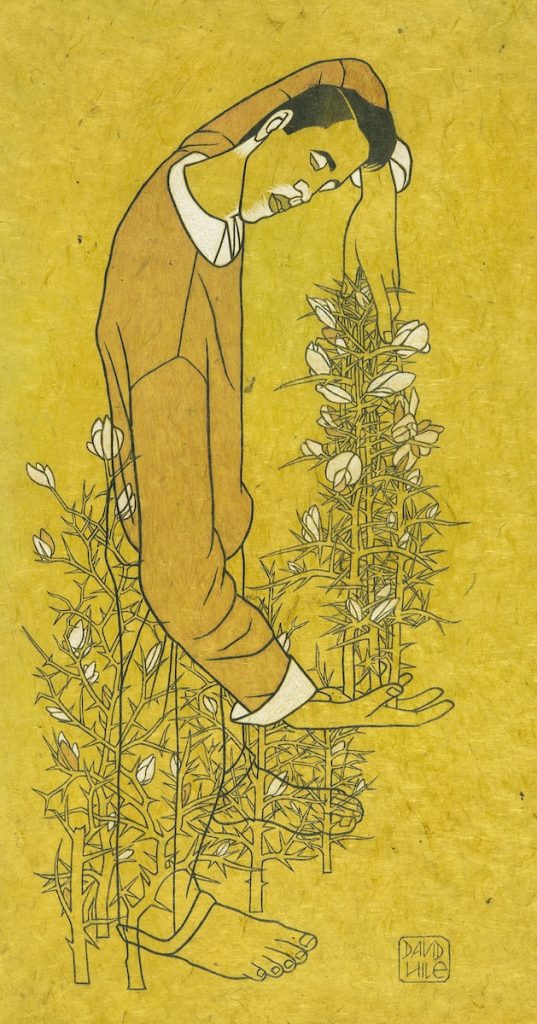
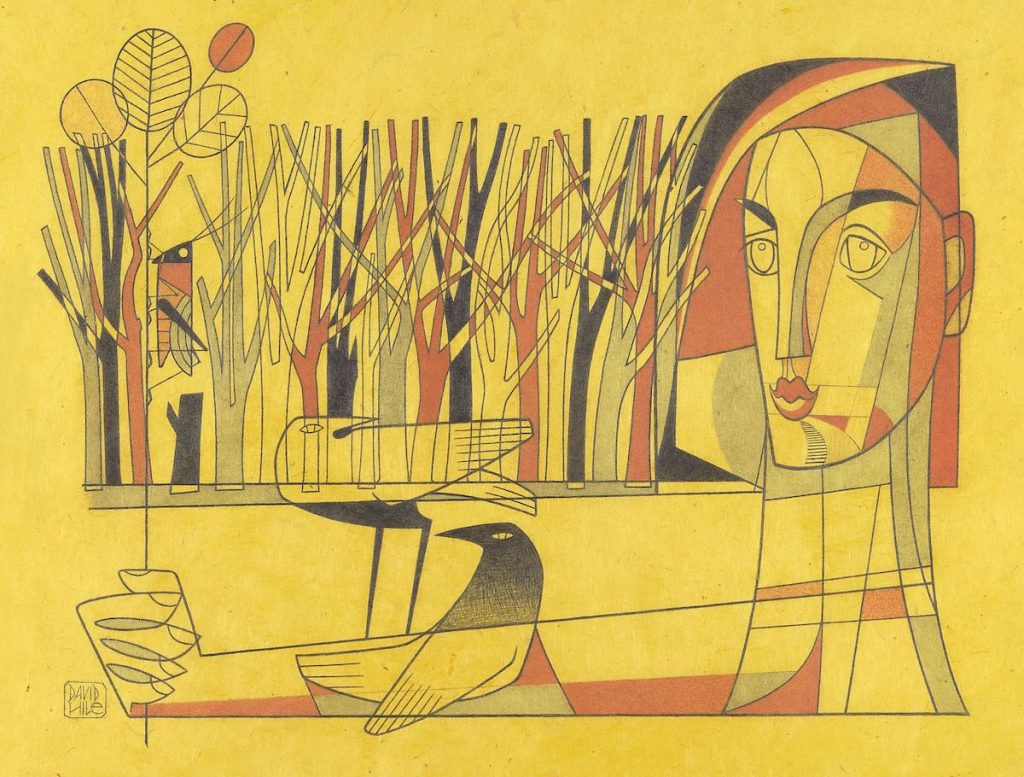
Measuring the Distance Between Flowers and Thorns - Graphite, white charcoal and terracotta pastel 28 1/2 x 18 1/2 in.
Inquire


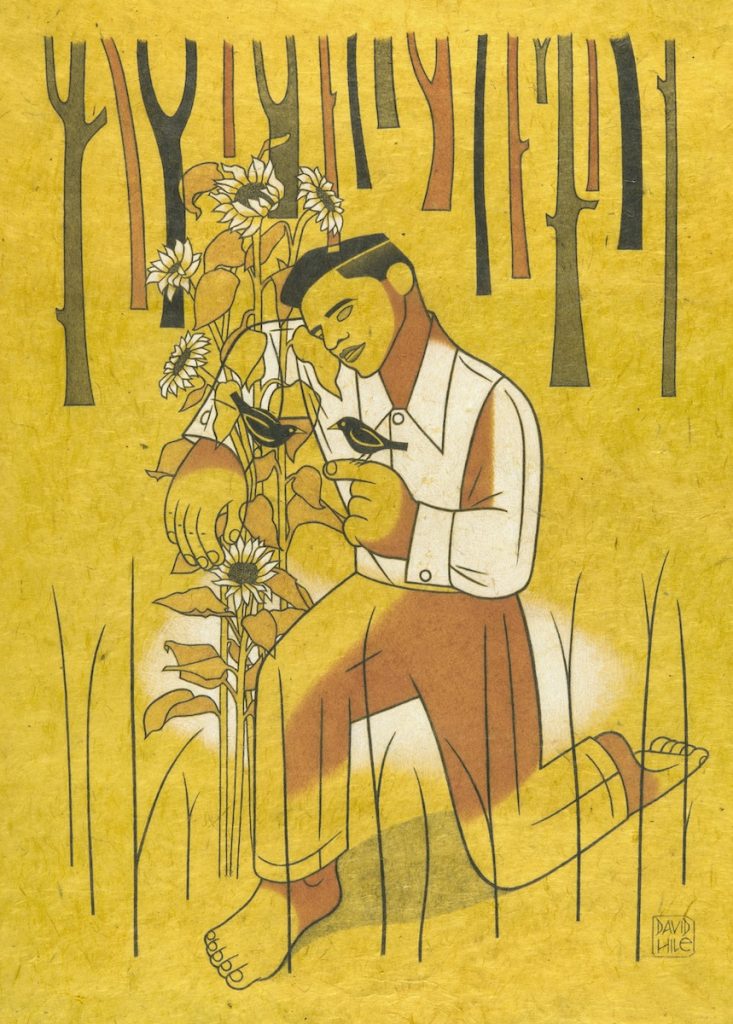
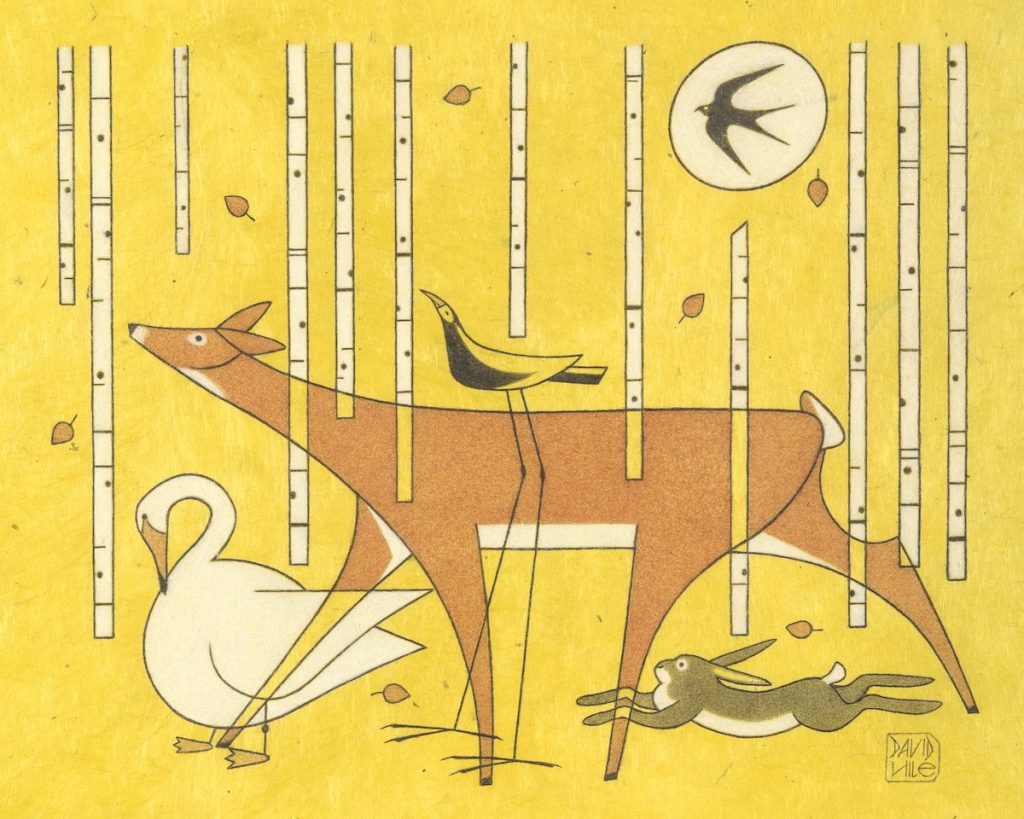
"Using graphite, white charcoal, and pastel I have developed a predominantly linear style for my drawings, with areas of flat color. Though simple, I aim to create fully realized works that are universally appealing, highlighting the dignity of humanity and a unity with the earth and the creatures we share the planet with. Mostly I strive for a sense of emotion, symbol and psychological depth."
Read a Q&A with David Hile Fine Art
Talk to us about your work featured here.
What are the main themes and ideas explored?
What are the main themes and ideas explored?
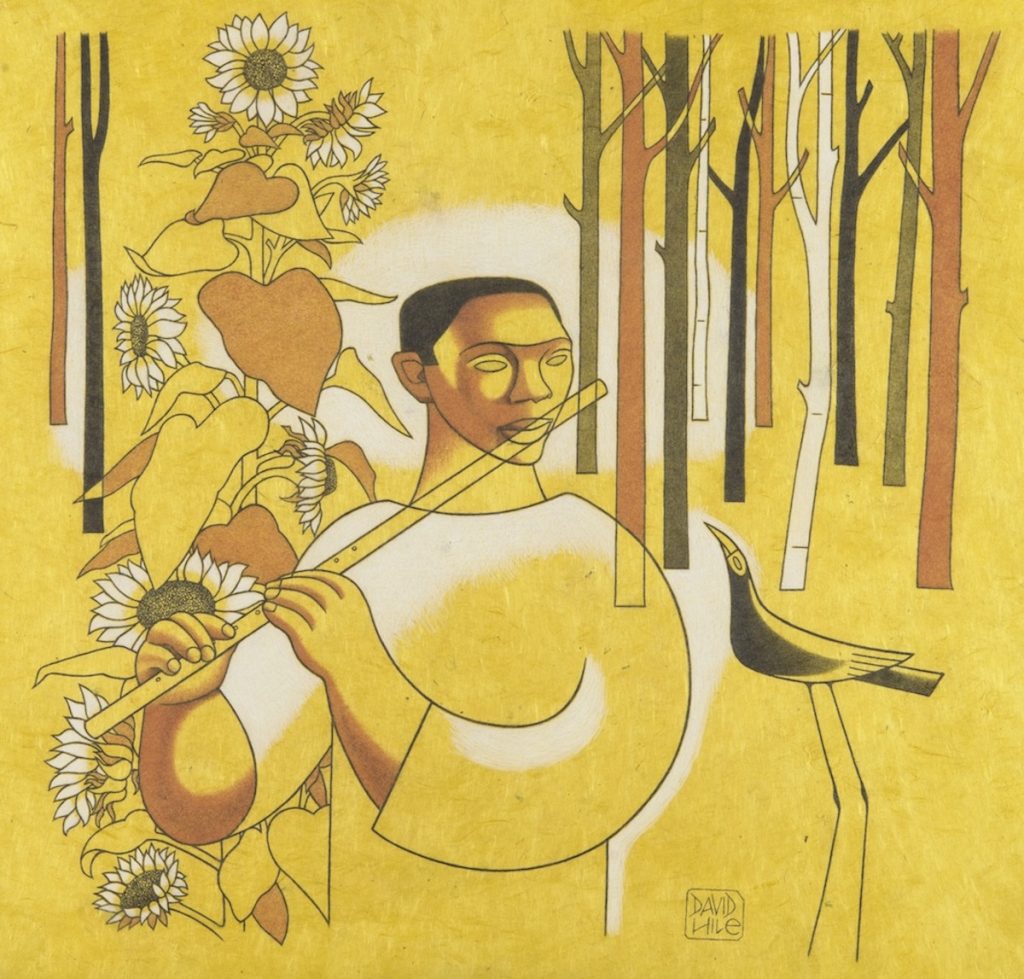
Thematically most of my work involves people integrated with nature in the idealistic way that I wish it could be, where humans, animals and all of nature share a peaceful bond. Drawings such as "Formal Introduction", Woodland Melody" and "Adoring Nature" express this. Another recurring theme is how we as humans deal with the choices we make about the way we perceive the world around us. Do we choose to dwell on past wounds and anger or do we look to the future with optimism? You can see this theme expressed in the drawing "Measuring The Distance Between Flowers and Thorns."
Describe your creative process.
I normally have three or four ideas for my drawings percolating in my head. My background includes over 30 years as a commercial illustrator. in terms of technique I use the same procedure that I used during my professional career. I work up each drawing on tracing paper - drawing, erasing and redrawing as needed. This process avoids mistakes while drawing the final image. When I have everything the way I intend, I transfer the sketch to my paper of choice which is yellow Lokta paper. I then create the final drawing by tracing and perfecting my transferred drawing using a mechanical pencil with 2B and 6B leads. After the line work is done I add white charcoal and terracotta pastel. While the line linear drawing is predetermined, the color is added on the fly.
What are the main influences and inspirations behind your art?
My work is inspired by the late 19th and early 20th century masters Modigliani, Casorati, Picasso, and
Schjerfbeck, as well as Japanese woodblock prints.
Schjerfbeck, as well as Japanese woodblock prints.
What is unique about your art? What do you consider the strongest aspect of your work?
From the beginning of my artistic life I've had a passion for drawing. I particularly love the immediacy of the medium, stripped down and bare. One of my favorite artist's quotes comes from Salvador Dali who stated "Drawing is the honesty of the work. There is no cheating. It is either good or bad." Although I've recently begun to paint in gouache, for the past eight years virtually all my work has been drawings with an intentionally limited palette. My goal has been to say the most with the least. I try to consider if each mark or color I put down adds to the image or is unnecessary. I view my drawings as fully realized artistic statements equal to a painting or sculpture. During my fine art career I haven't seen anybody else doing similar work and that's a good thing.
What message or emotion do you hope viewers take away from experiencing your art?
In my opinion there is too much negativity in art. Some artist feel if their art isn't dark or brooding then it isn't relevant Others make art that is so subjective that it's hard to understand. I am primarily a figurative artists since people can relate to recognizable imagery - in my case people and animals. I don't have any interest in realism per se preferring to take on a lyrical, stylized imagery. My hope is that people will be edified and reflect on the beauty of nature and the created world.
What is the biggest challenge for an artist?
What is the hardest part of your job?
What is the hardest part of your job?
My biggest challenge is perhaps what makes a good artist. I am never satisfied with my work. My wife has become upset with me at times because a piece that I put up in our home will suddenly disappear because I'm so self critical. Fortunately I have been successful in selling my work so I am happy to see it depart. I don't have any attachment to the art once it is completed. We do have a lot of other artists' work in our home and I am free to enjoy their work for decades.
What is the most rewarding part of being an artist?
After a career as a commercial illustrator it is wonderful to not have all the dictates of style, modifications and especially deadlines anymore. Other than the self satisfaction of working in my studio and enjoying the creative process, the most rewarding aspect of being an artist is when someone decides to purchase a work of art to enhance their life.
How do you balance tradition and innovation in your work?
My style is definitely traditional in the way I create my work. I am not interested in following any trends. I actually don't think about style, but prefer to just let things happens naturally. Some people have identified my work as mid-century and I suppose there is a kind of retro feel to my drawings, primarily because of the natural yellow Lokta paper I draw on. But for me it's just a great ground for the type of colors and line work I do.
What does "good art" mean to you?
What makes a piece of art great?
What makes a piece of art great?
Alberto Giacometti said "The object of art is not to reproduce reality, but to create a reality of the same intensity." And that says it all for me. Pure technique can be sterile and esoteric art can fail to communicate anything meaningful. An artist should offer a vision to their craft that elevates the viewer in some way. The artist has to interpret his work in a unique way - to not just paint another landscape or still life. There should be that magic "IT" factor that makes a person stop and be moved by something beautiful or thought provoking.
What is the role of the artist today?
I think it is the same role that has always been the artist's goal - to help people see the world in a new way, And in regards to my work to edify the soul of the society around me.
See More Art by David Hile Fine Art
This interview was published by Circle Foundation for the Arts © CFA Press ∙ Images are courtesy of the artist