
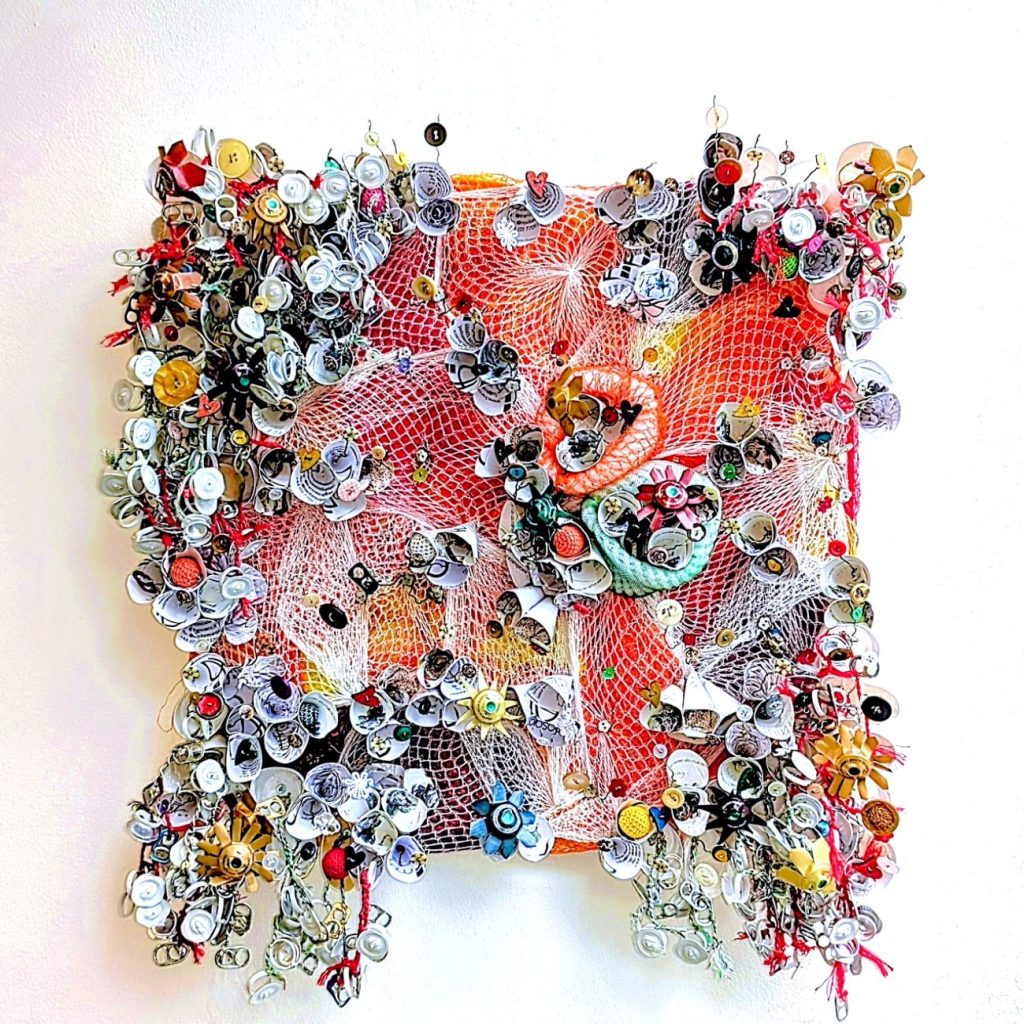
Garden of Seaden - 100% waste: Actimel bottles, fruit nets, food box strings, buttons, cork cages, business cards, coffee capsules, ring pulls and plastic caps 50 x 50 cm £850

Inquire
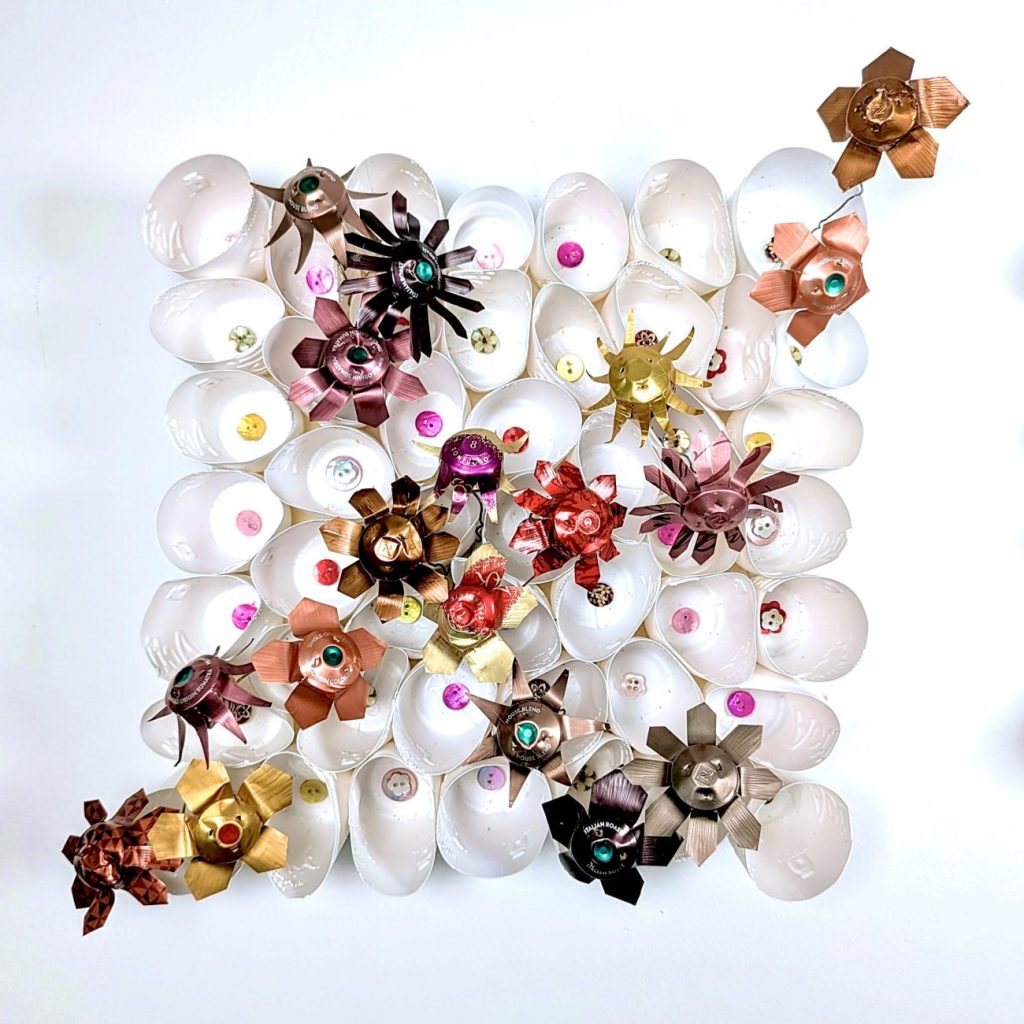
Meta Coral Orange - 100% waste: Actimel/Benacol bottles, coffee pods, cork cages and buttons 26 x 26 cm £200

Inquire
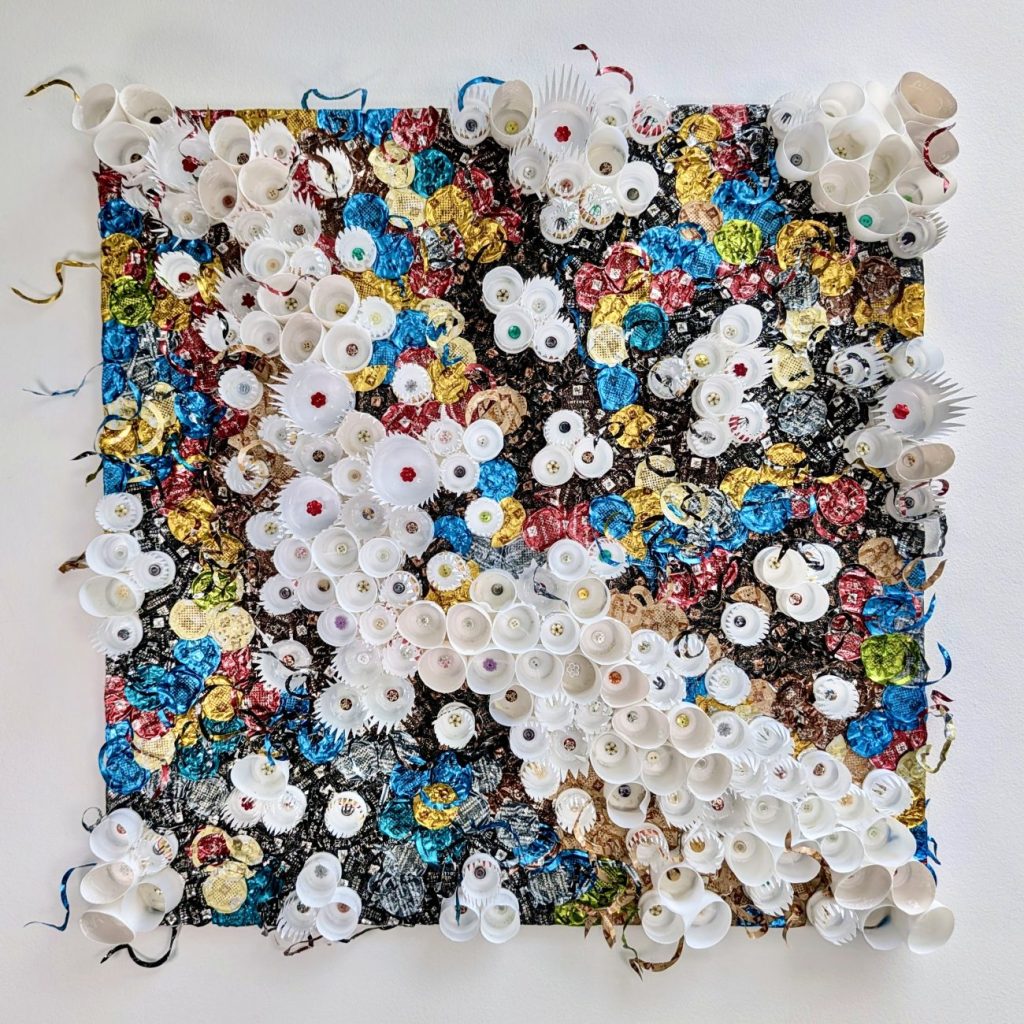
Sealysium - 100% waste: used Actimel bottles, coffee pods and leftover buttons 77 x 77 cm £1,500

Inquire
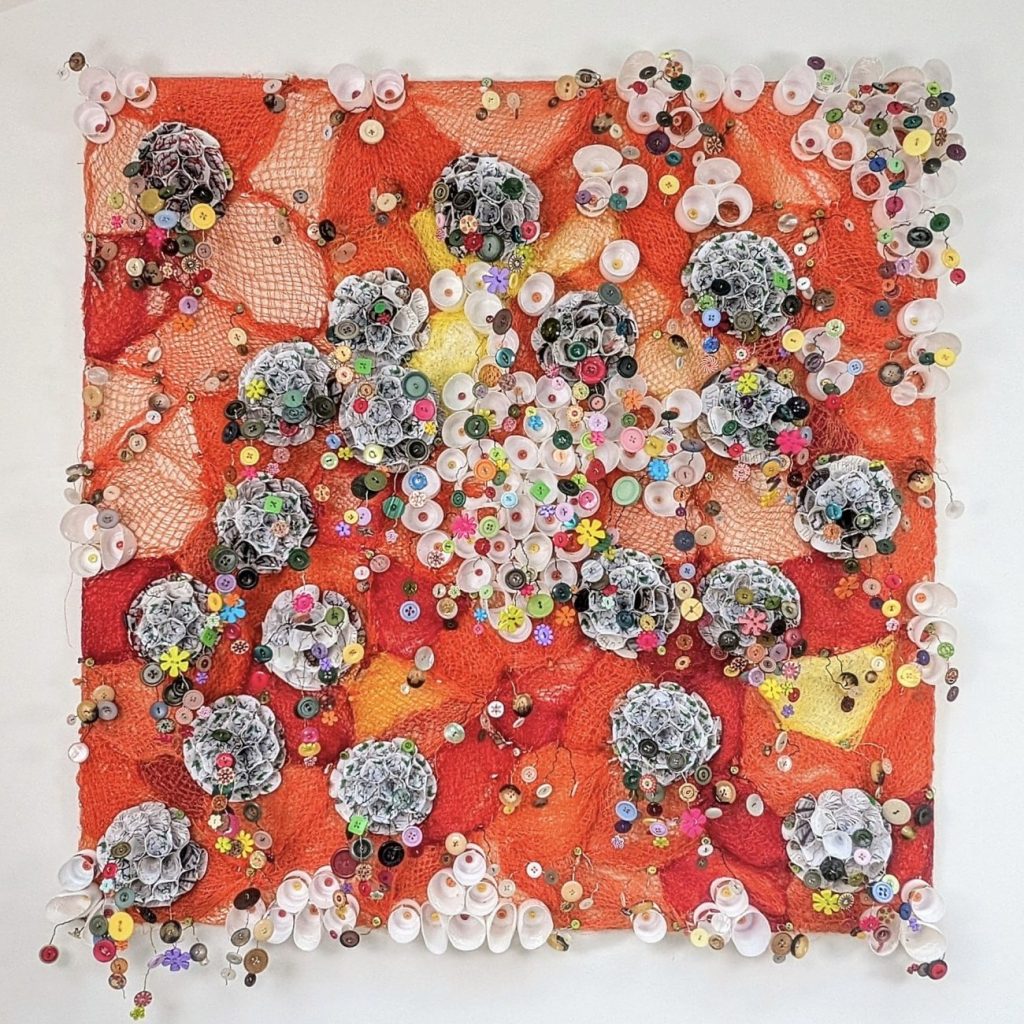
Paradisea - 100% waste: Actimel/Benacol bottles, fruit nets, buttons, cork cages and business cards 100 x 100 cm £1,750

Inquire
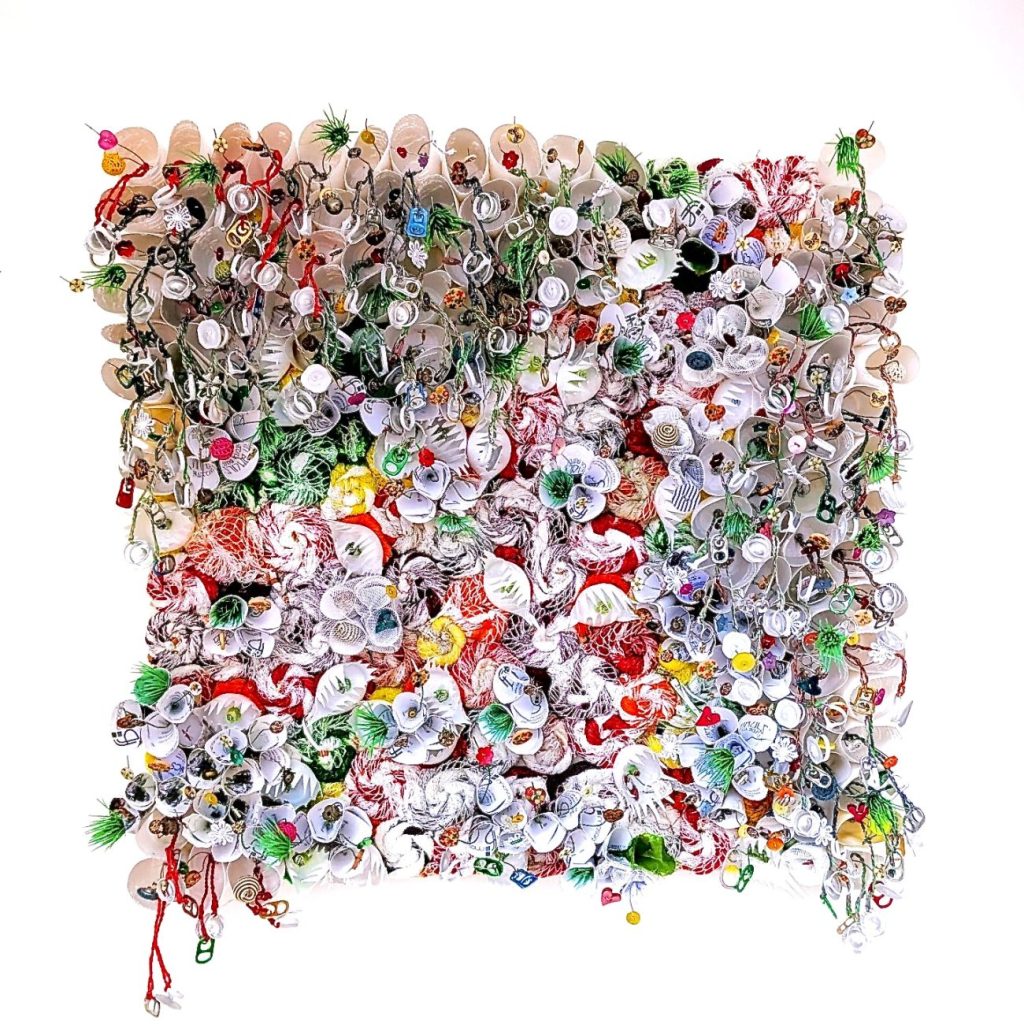
Elysean Fields - 100% waste: used drinking yoghurt bottles, old business cards, fruit nets, ring pulls, abandoned buttons and similar bits, found plastic grass, stock cube wraps and food box strings 70 x 70 cm £1,500

Inquire
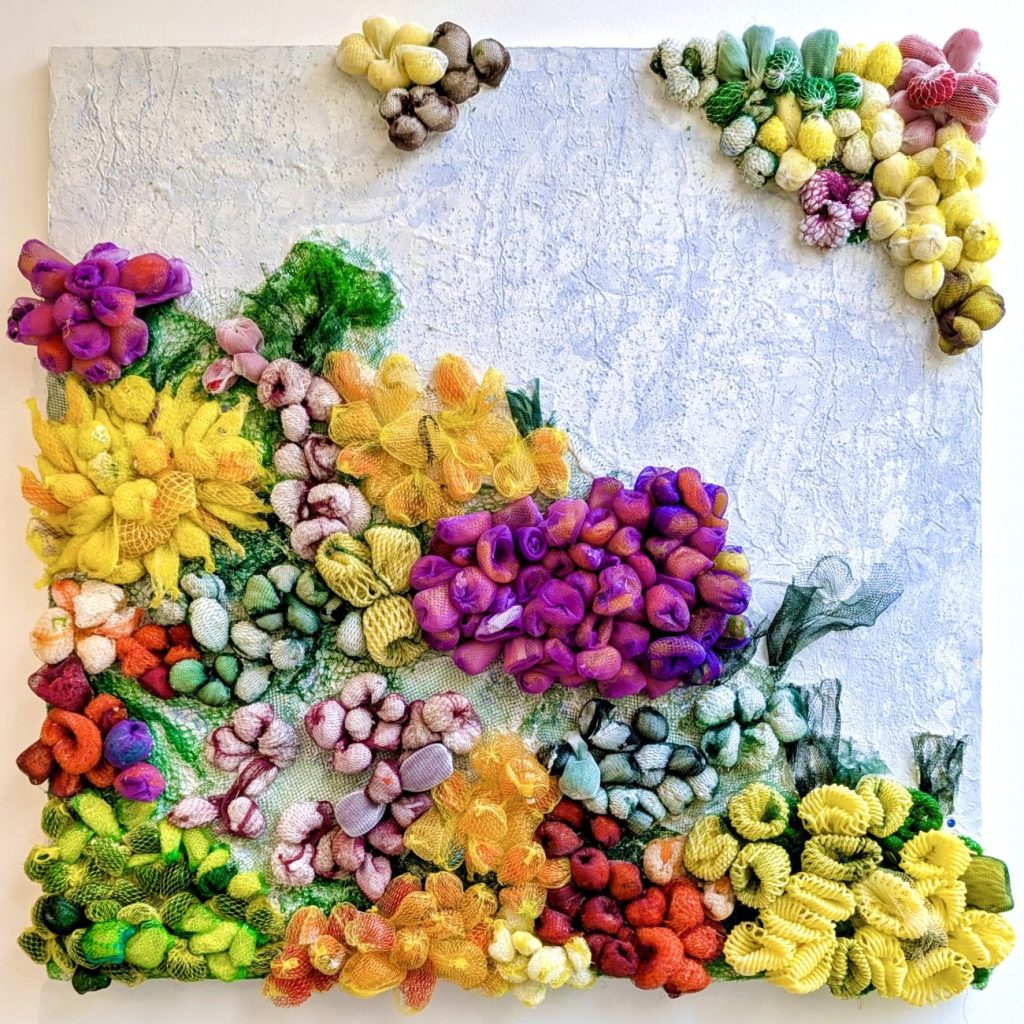
COral Gree - 100% waste: 1000+ fruit nets, collected in about 6 years' time 100 x 100 cm £2,750

Inquire
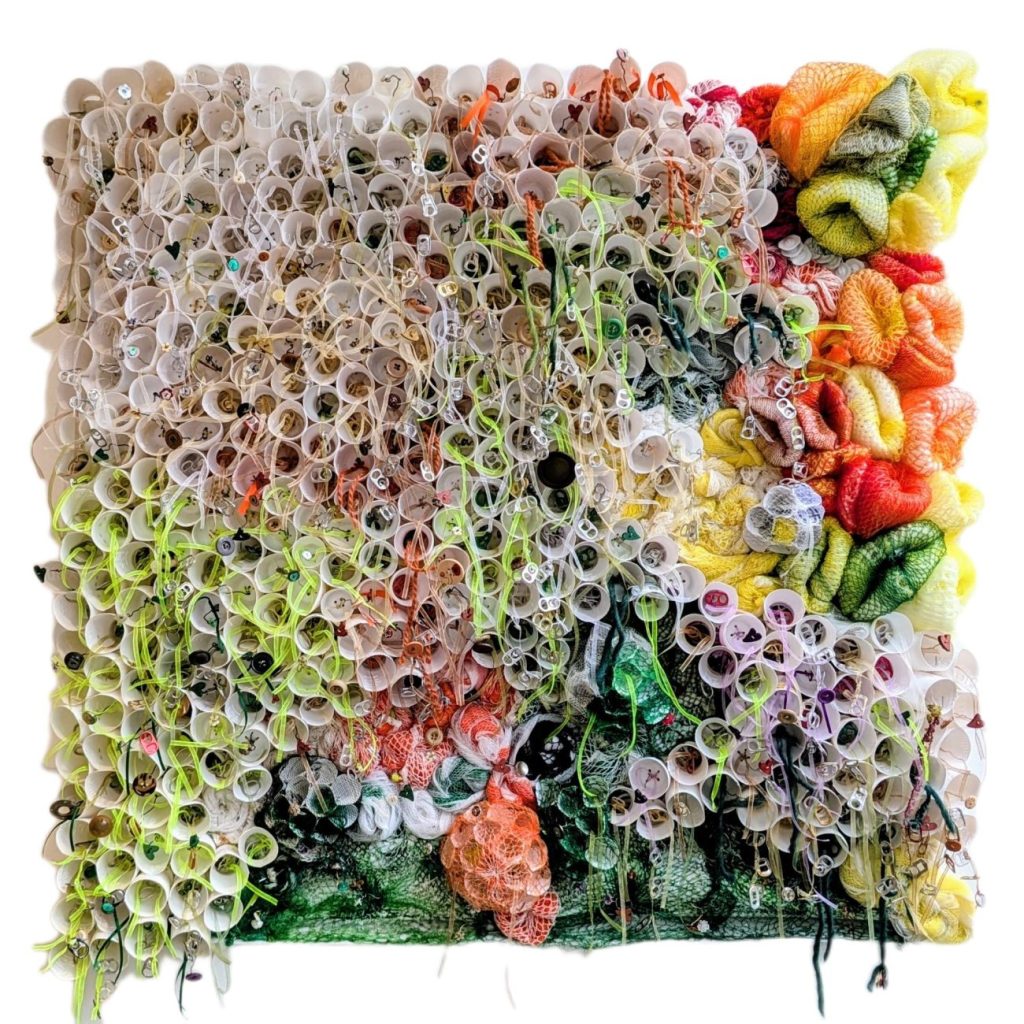
100% Waste - 100% waste: discarded Actimel bottles, leftover buttons, bits, bobs, fruit nets, ringpulls, old business cards, and a whole lot of stitching, crocheting, and loving on recycled fabric, on the eco-friendly print of its predecessor A Monument to Summer, it is entirely rollable and easily carriable under one arm, it is extremely light (less than 5 kg) 100 x 100 cm £1,750

Inquire
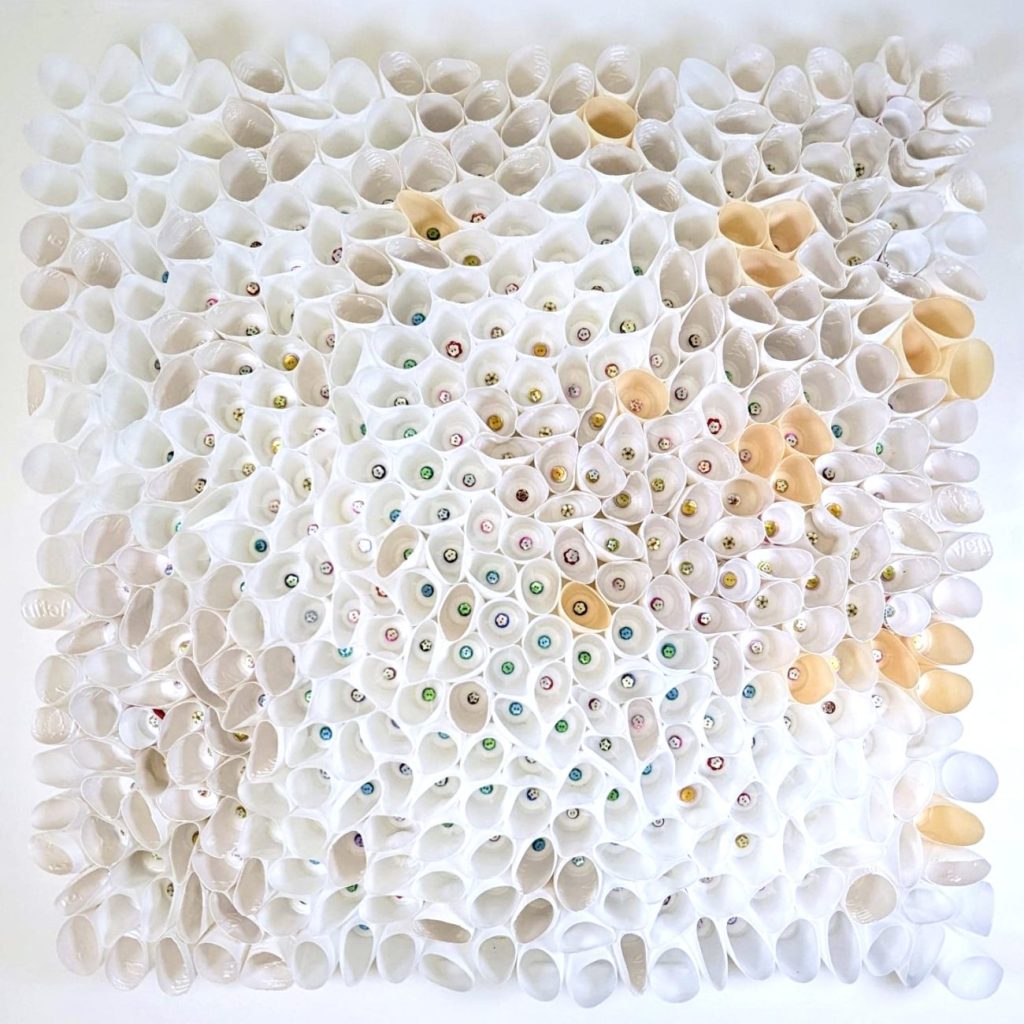
Metabarnacles - 100% waste: 417 discarded Actimel bottles and c.1000 leftover buttons 80 x 80 cm £1,500

Inquire
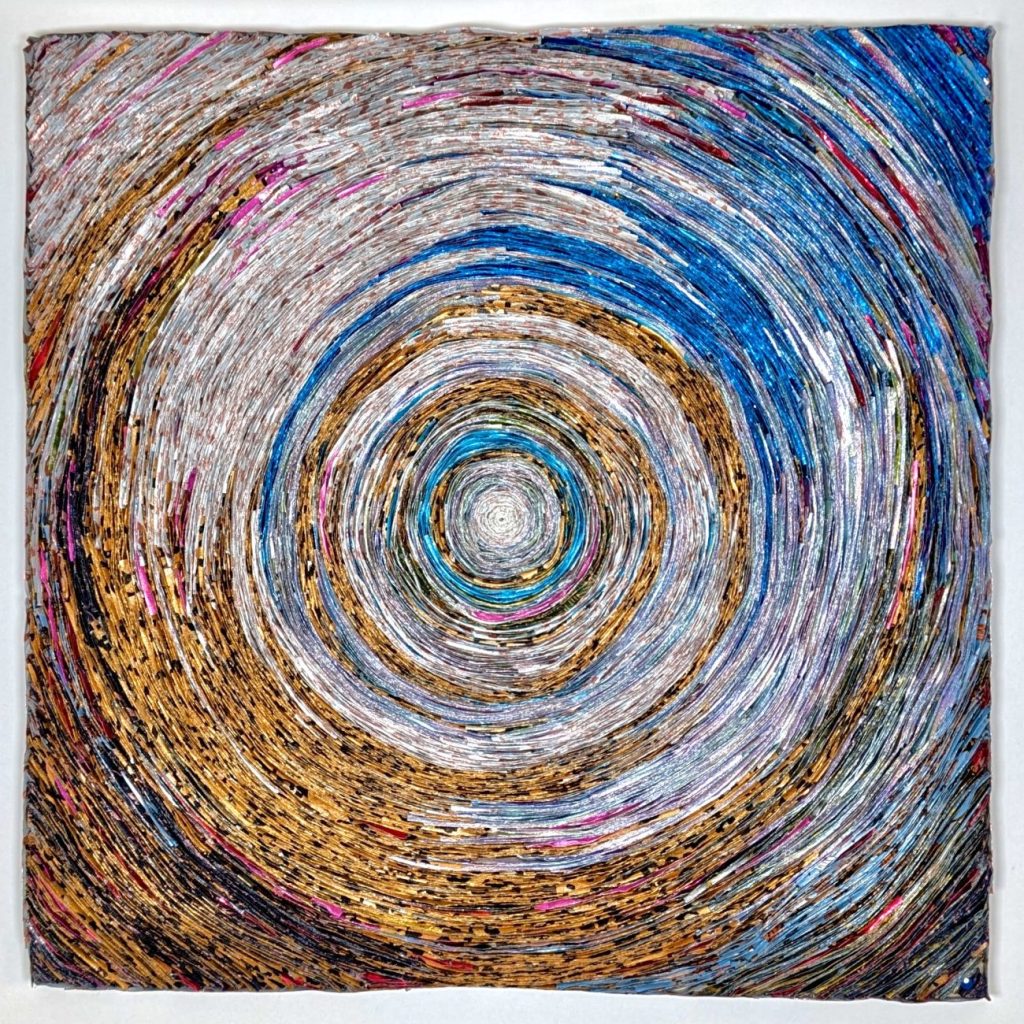
The Ping of a Pin on a Pebble in the Pond - 100% waste: hundreds of used hairdresser’s foils 76 x 76 cm £1,250

Inquire
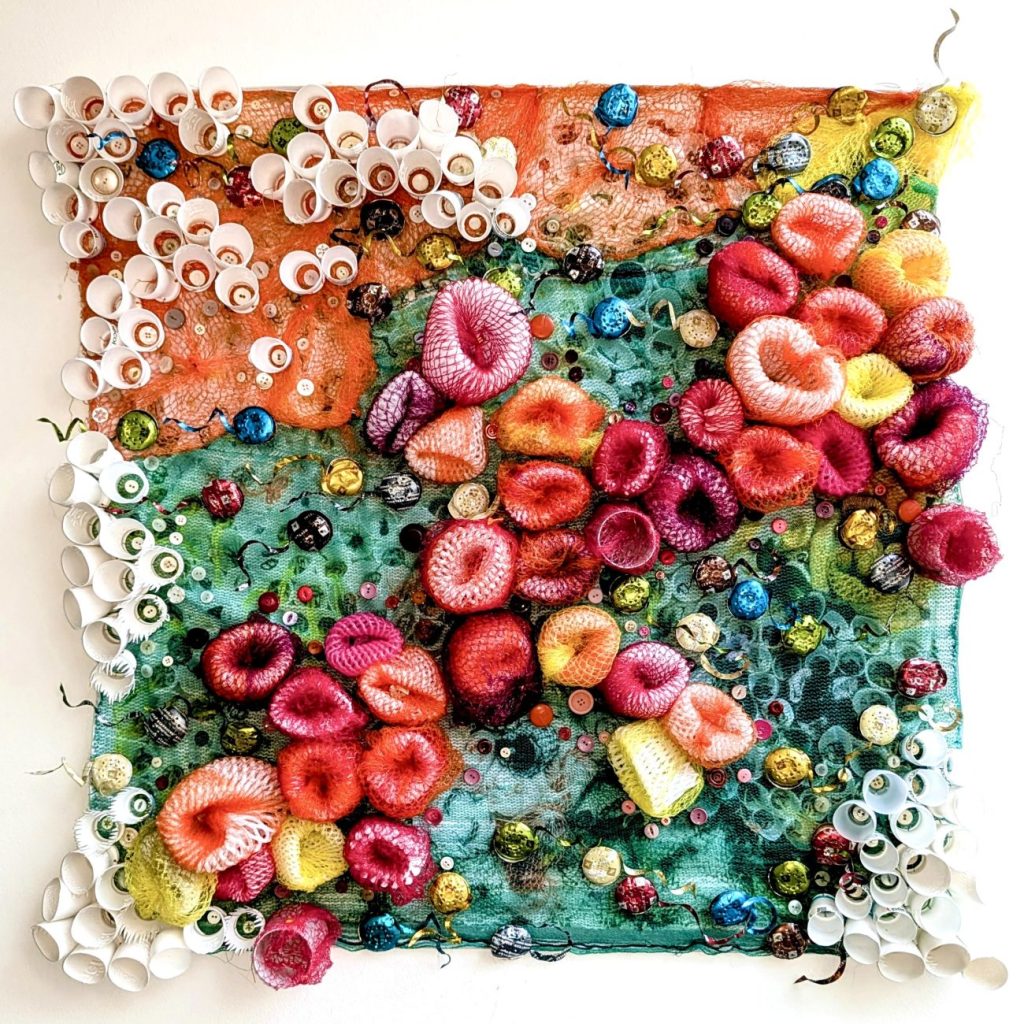
Heavensea - 100% waste: Actimel / Benacol bottles, fruit nets, coffee pods, buttons, builder’s net on recycled fabric 100 x 100 cm £1,750

Inquire
As an eco-artivist and Rubbish Artist, I create exclusively from waste, transforming discarded materials into "trashure"—protesting disposability while embodying hope. I believe art is a powerful dialogue and the fibre of empathy and connection, uniting society across sectors to foster systemic change.
Read a Q&A with Francesca Busca
Talk to us about your work featured here.
What are the main themes and ideas explored?
What are the main themes and ideas explored?
Paraflornalia reimagines underwater worlds as thriving gardens, transforming everyday items of waste like fruit nets and coffee pods into marine-inspired creations. This series continues my research on ways to make the viewer empathize with our seas, developing around our familiarity with everyday objects and the immediate connection we instinctively feel with beauty. By exploiting the symbolism of flowers to express the beauty of life underwater as a thriving, precious garden, it emphasises its richness and abundance. Connecting this imagery to historical depictions in mythology and religion as the ideal afterlife or paradise—the non plus ultra—these works invite us to remember that it is indeed something we could have here on earth if we learned how to take proper care of it.
Describe your creative process.
My creative process begins with community collaboration—friends, organizations, and partners collect waste materials that would otherwise reach landfills. I sort and clean my ‘trashure”, then arrange them in my studio by type and colour. Each piece involves extensive reworking. The process is meditative yet purposeful, transforming what most consider rubbish into intricate mosaics. I work intuitively, and most of the time the works are material driven - so I ‘have to make do”. And I love it, as it requires a constant adaptation, whilst thinking on my feet. I treasure the material limitations this process inovles, always struvin to find the most ecofriendly solution, rather than the quickest or prettiest.
What are the main influences and inspirations behind your art?
For my latest series, in the past couple of years, my primary inspiration comes from marine ecosystems. My residency at CNR-ISMAR in Venice deepened my understanding of marine science, bridging art and environmental research. Project One Wave, with Captain Paul Watson Foundation network focuses on marine cleanup campaigns, and inspires my mission to transform ocean waste into art. Through the GREENy bastARTs collective, which I founded as an international eco-artivist network of artists, scientists, activists and businesses, we create transformative artistic experiences bridging environmental understanding and action. Most importantly, I do not see how anyone could not be an activist at this stage of environmental collapse. There are so many ways to help!
What is unique about your art? What do you consider the strongest aspect of your work?
What makes my work unique is the complete transformation of waste into beauty while maintaining profound environmental messaging. I exclusively use 100% discarded materials, creating visually stunning pieces that force viewers to reconsider waste's value. Technically, I am absolutely unique in the way I rework waste items into beautiful mosaic tiles, creating waste mosaic rather than assemblages or textiles. My strongest aspect is the deep connection I invariably seem to create with the viewer both through my artworks and my eco-artivist talks, bridging the gap between emotion and intellect, and making scientific environmental content accessible. The community collaboration element adds shared purpose, creating an "ecosystem of care." My holistic approach gives it a rare authenticity.
What message or emotion do you hope viewers take away from experiencing your art?
I hope viewers experience wonder at the transformation—seeing beauty where they previously saw rubbish—then feel empowered to reconsider their own relationship with waste and consumption. The emotion should be hopeful rather than guilt-inducing; my work shows that simple acts can contribute to planetary health. I want people to recognise the extraordinary beauty of our oceans, both present and precarious, and understand their essential role in sustaining life: one cannot care about the unknown. Ultimately, I hope viewers leave with a not only a sense of possibility, —that change is achievable through collective small actions, and that art can be a catalyst for environmental consciousness and systemic re-thinking - but rather with the will to engage.
What is the biggest challenge for an artist?
What is the hardest part of your job?
What is the hardest part of your job?
The biggest challenge is balancing artistic integrity with environmental messaging without being preachy, and to stay true to my values. Creating compelling visual work that stands alone aesthetically while carrying deep ecological meaning requires constant refinement. Practically, working exclusively with waste materials presents technical challenges—each piece demands innovative solutions since traditional art supplies are off-limits. Financially, sustainable art practice is difficult; materials are free, but the time investment is enormous. The hardest part is witnessing environmental destruction daily while feeling the urgency to create meaningful change through art. Sometimes the scale of environmental crisis feels overwhelming compared to individual artistic impact.
What is the most rewarding part of being an artist?
The most rewarding aspect is witnessing transformation—both of materials and people's perspectives. When someone looks at a coffee pod differently after seeing my work, or when children at workshops suddenly understand waste's potential, that's magical. Collaborating with scientists at CNR-ISMAR and seeing art bridge disciplines brings immense satisfaction. The community aspect is deeply fulfilling—people bringing their waste, participating in the creative ecosystem. Most importantly, living authentically aligned with my values while creating beauty feels profoundly right. Every piece represents hope materialized, proving that change is possible through creativity, persistence, and collective action. And the people I do it with are brilliant, and keep me strong.
How do you balance tradition and innovation in your work?
I honour mosaic traditions learned at the London School of Mosaic while innovating with unconventional materials. Traditional techniques like careful composition, color harmony, and methodical assembly remain, but applied to waste instead of marble. The ancient art of storytelling through visual imagery continues, but with contemporary environmental narratives. Innovation comes through material experimentation, to minimise the plundering of Earth’s resources limited resources—discovering how fruit nets mimic coral structures or how coffee pods can be sea creatures. I respect craftsmanship traditions while pushing boundaries of what constitutes art materials. This fusion creates works that feel both timeless and urgently contemporary, honoring past while addressing present challenges.
What does "good art" mean to you?
What makes a piece of art great?
What makes a piece of art great?
Good art creates genuine connection—emotional, intellectual, or spiritual. It should evoke wonder, challenge perceptions, or inspire action beyond the gallery space. Great art transcends its materials and techniques to communicate universal truths through personal expression. For me, art should be accessible without being simplistic, immediate, inspiring. Great environmental art specifically must avoid preaching while inspiring change, balancing aesthetic merit with meaningful content. Ultimately, art becomes great when it lives beyond the artist's intention, continuing to generate new meanings and connections across time and audiences.
What is the role of the artist today?
Today's artist must be both creator and catalyst for change. We have responsibility to address pressing global issues—climate crisis, social justice, environmental destruction—through our unique ability to make abstract concepts tangible and emotionally resonant. Artists should bridge disciplines, connecting science, community, and culture. We must model the values we promote; authentic environmental art requires sustainable practices. Education is crucial—teaching through example and direct engagement. Most importantly, artists today should inspire hope and agency, showing that transformation is possible. We're cultural translators, making complex issues accessible while maintaining beauty and wonder. Art becomes activism when it empowers viewers to envision and create better futures.
See More Art by Francesca Busca
This interview was published by Circle Foundation for the Arts © CFA Press ∙ Images are courtesy of the artist