
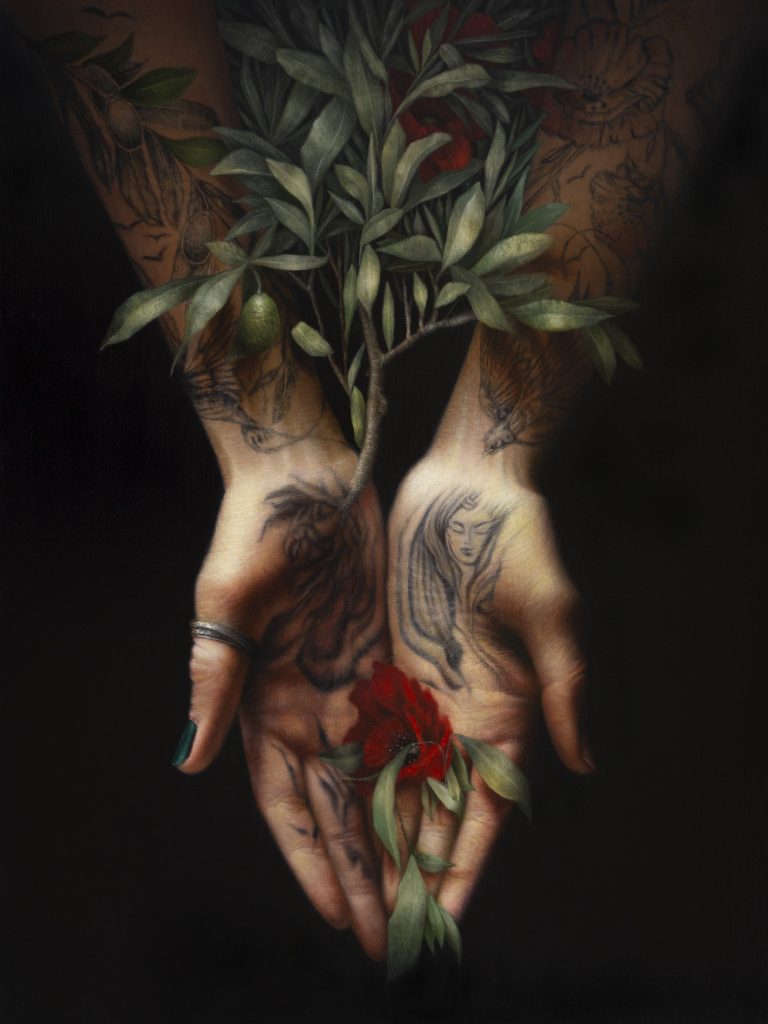
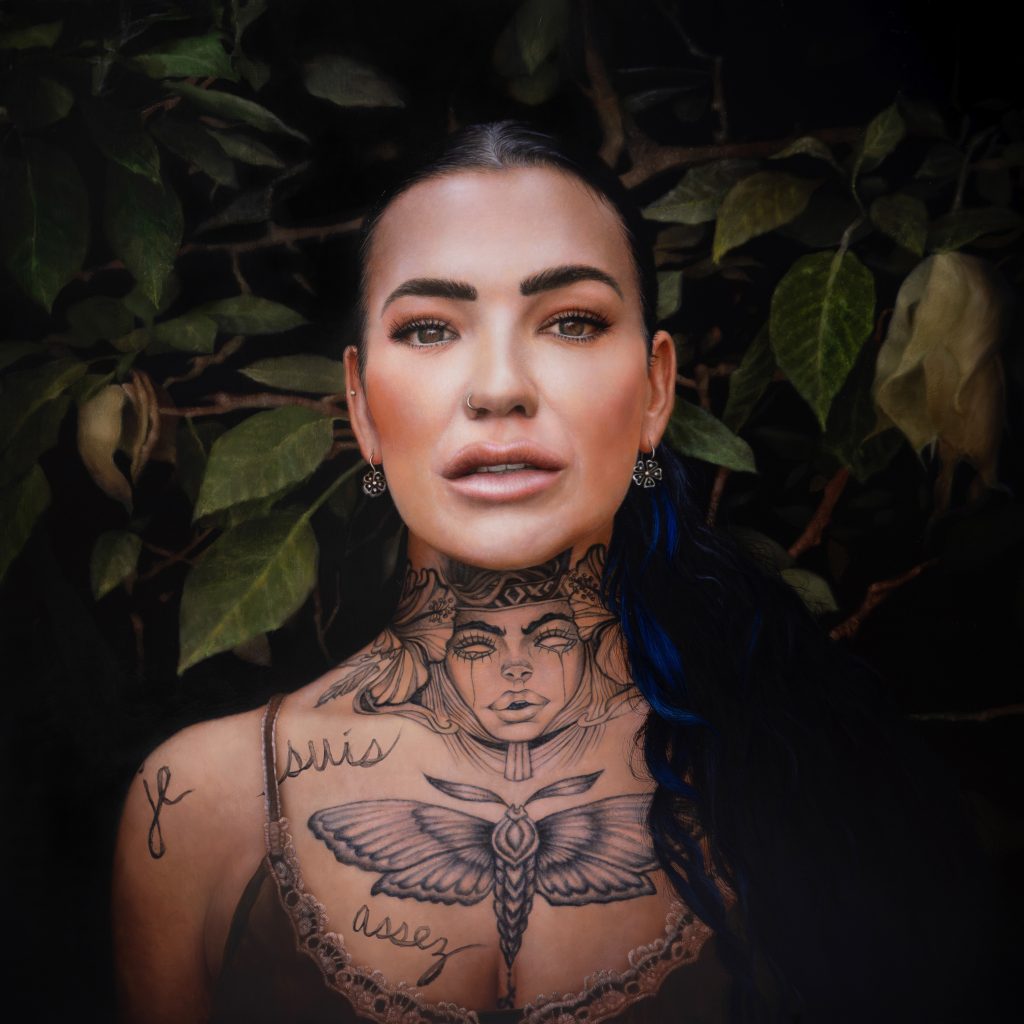
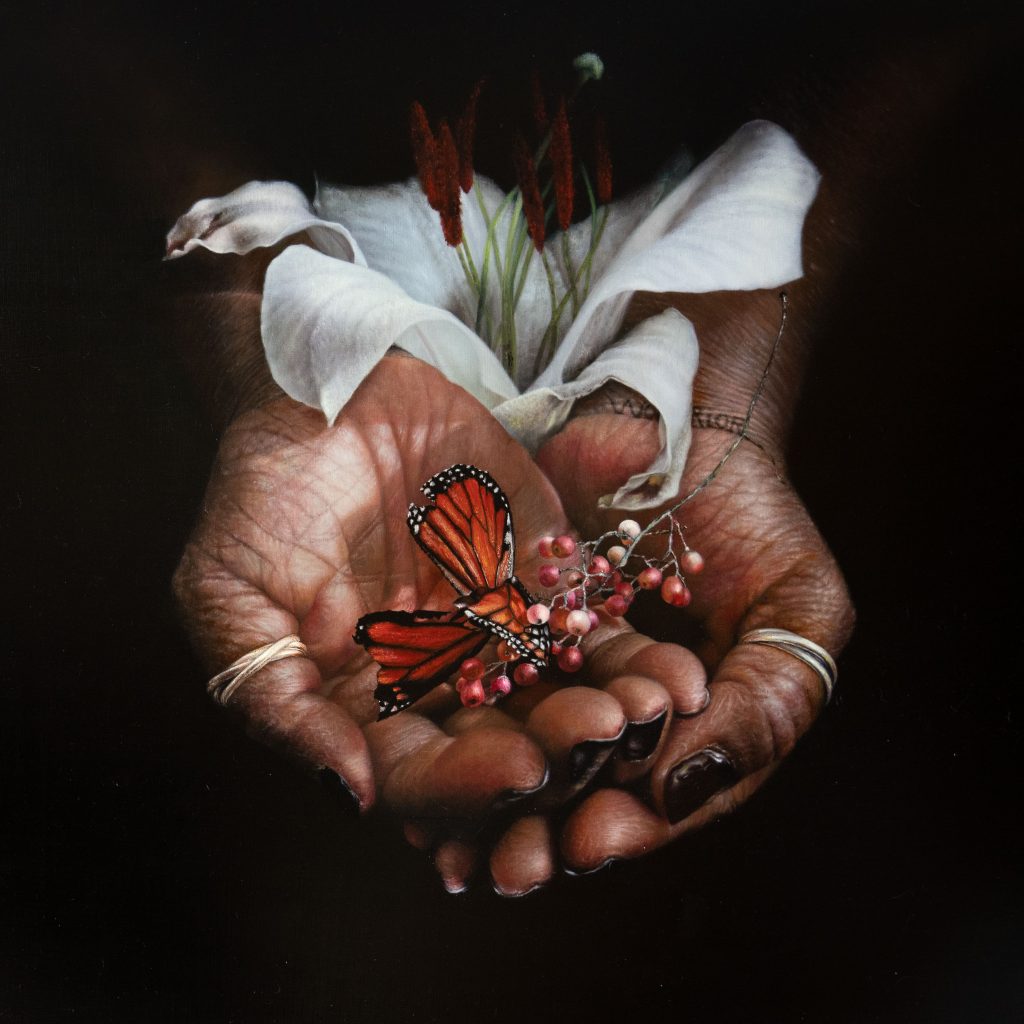
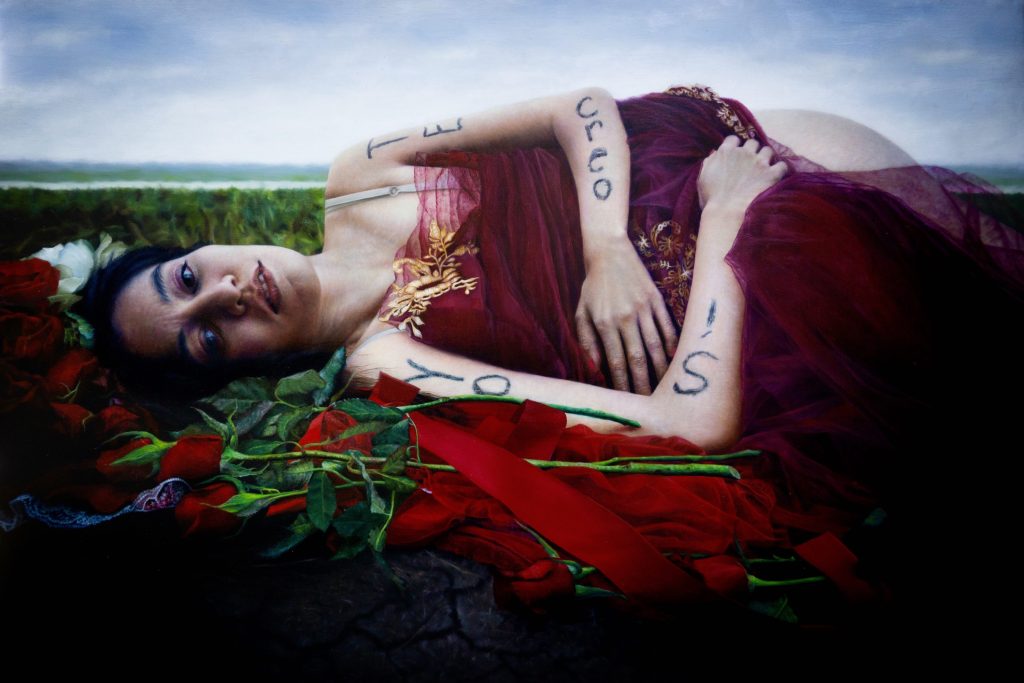
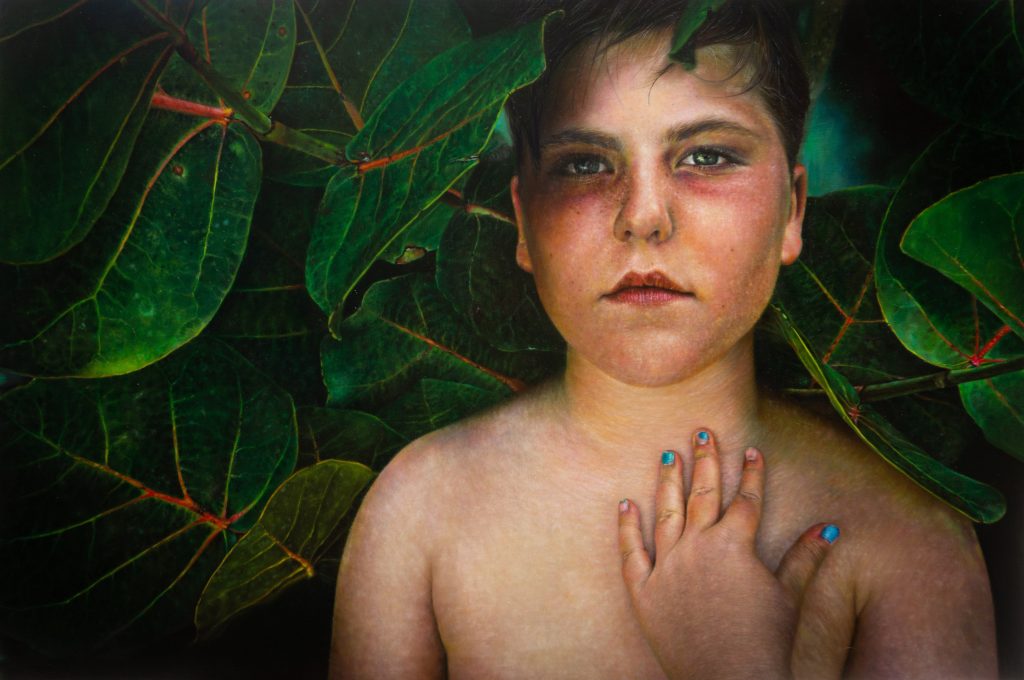
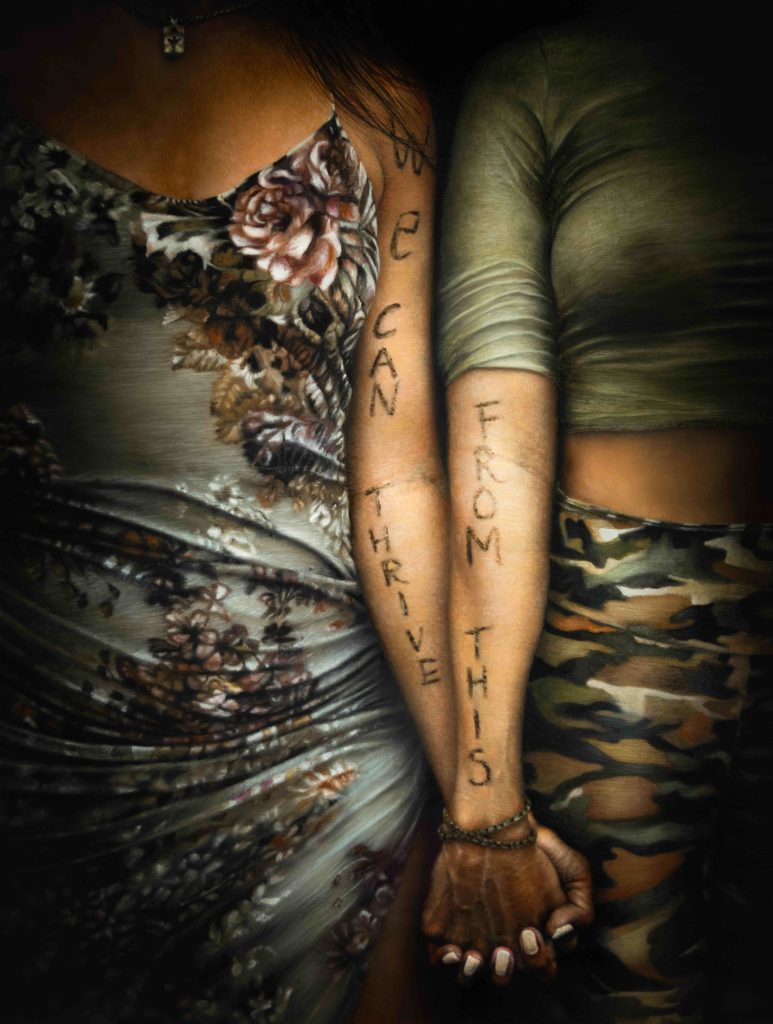
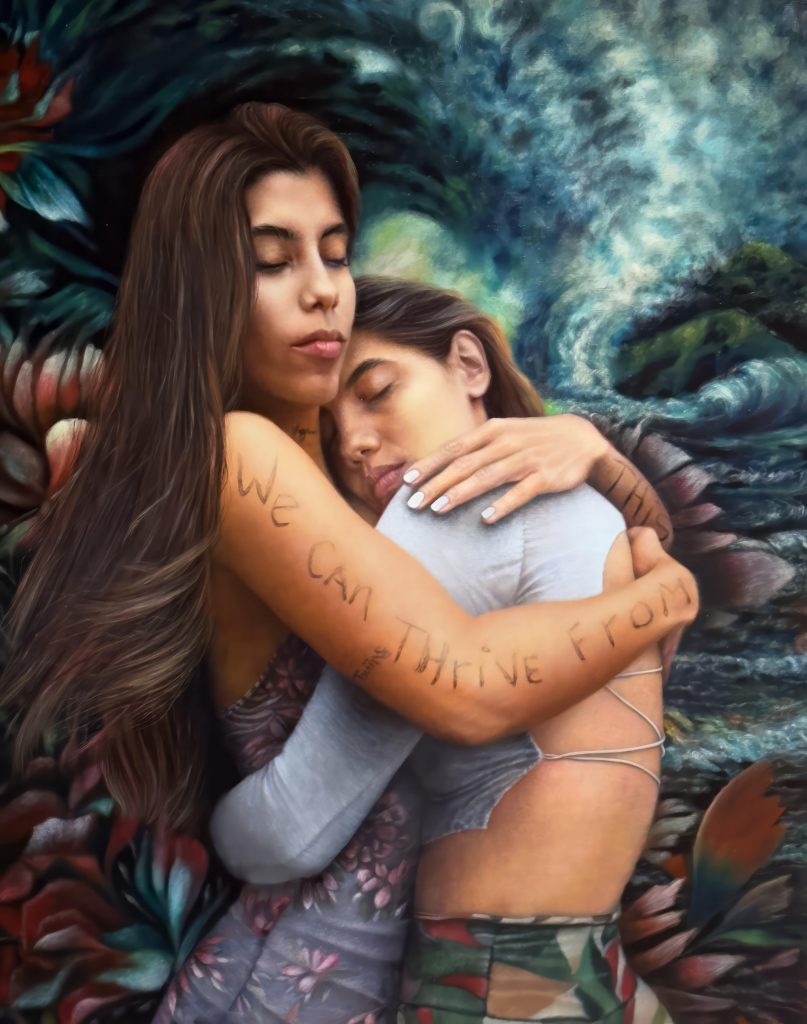
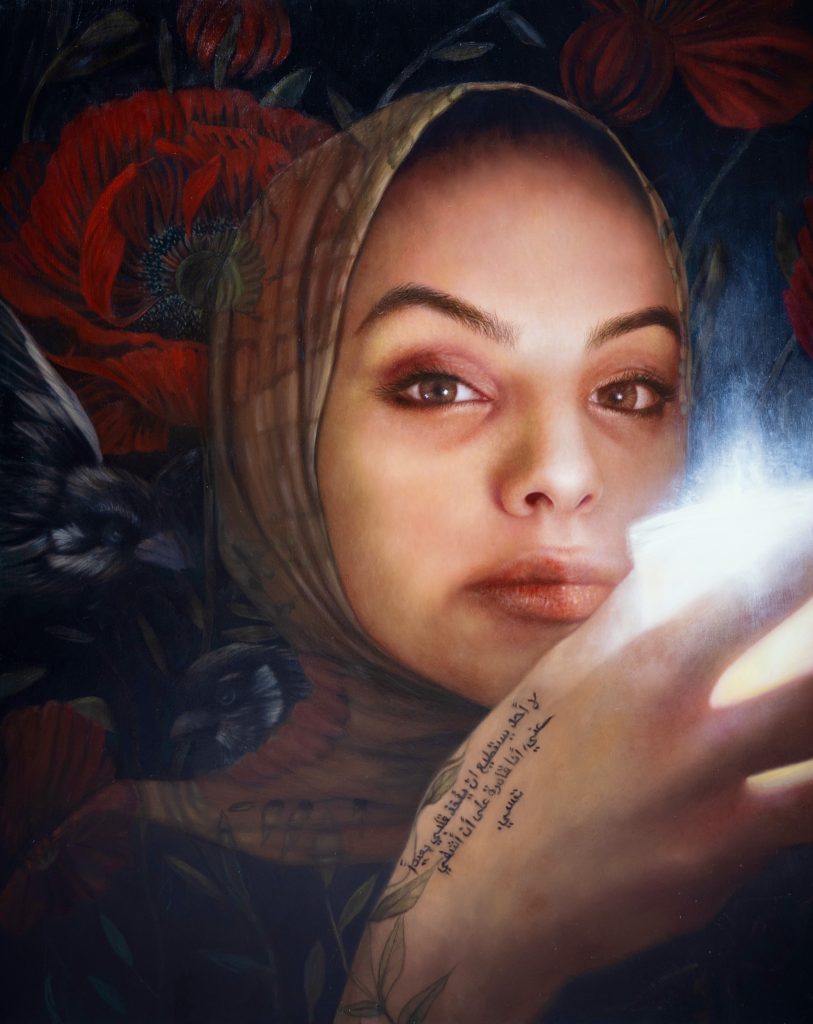
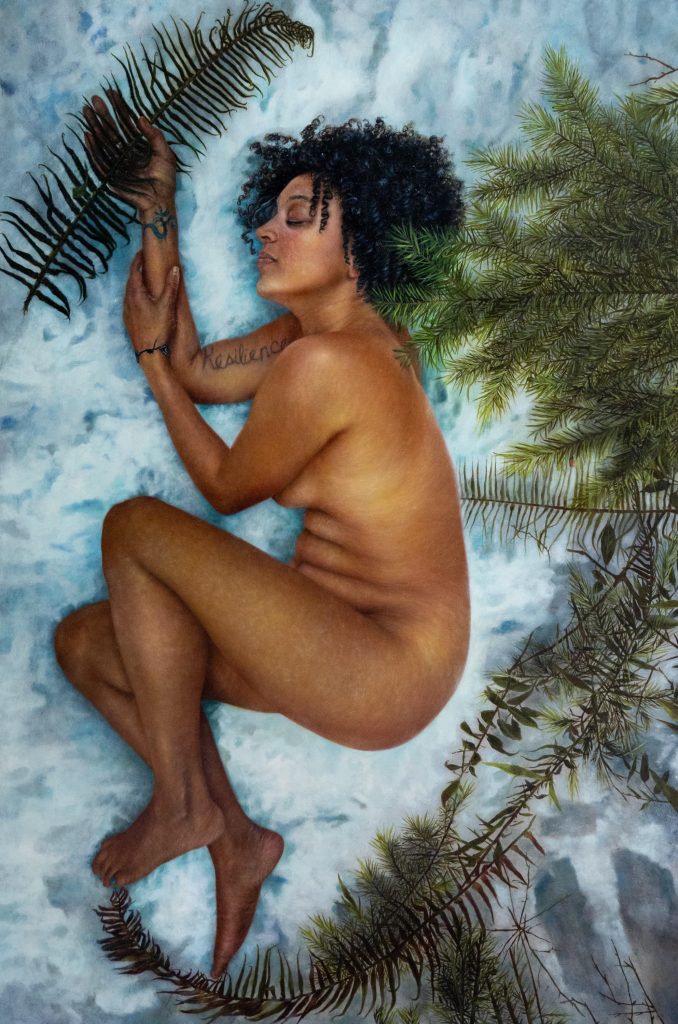
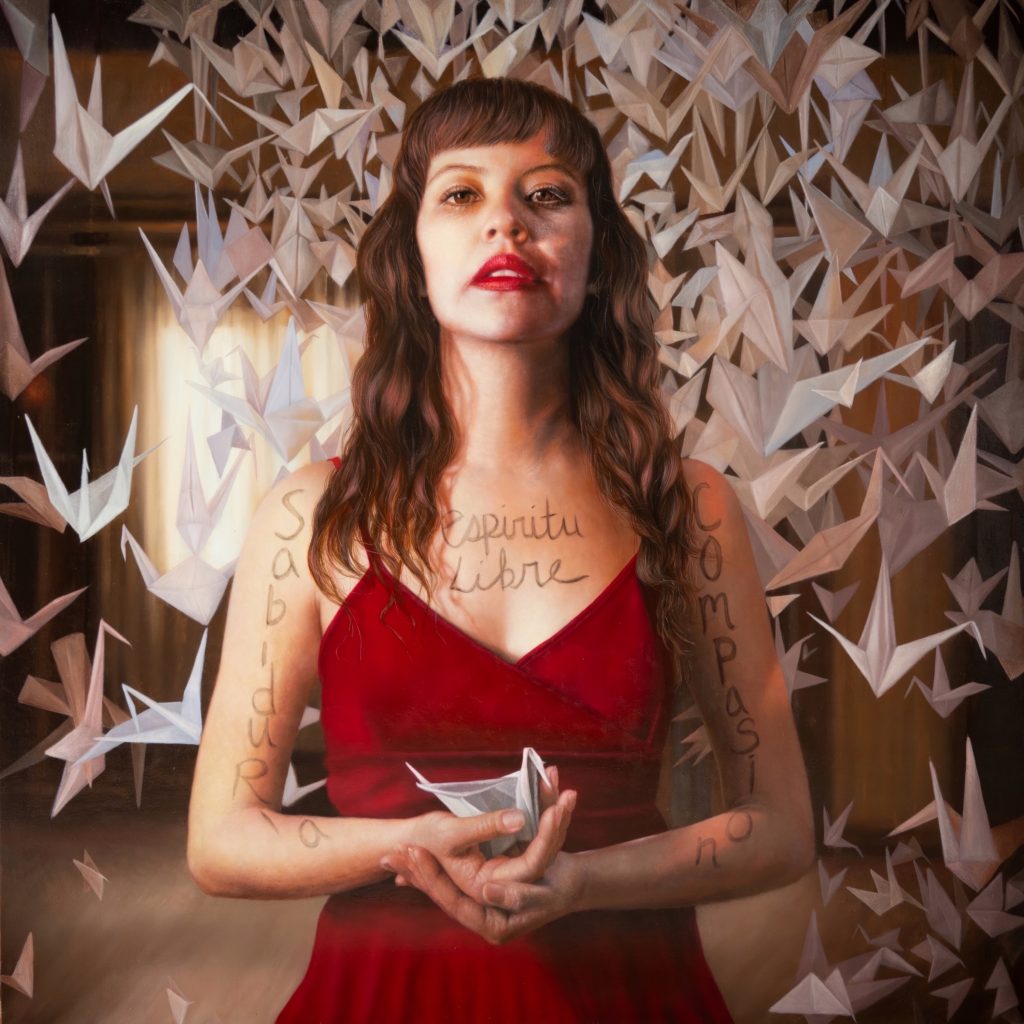


"I heal, you heal, we heal the world.' It is widely attributed to various sources but does not have a singular, verifiable origin. It aligns with themes found in holistic healing, collective well-being, and social activism."
Read a Q&A with Kate Van Doren
Talk to us about your work featured here.
What are the main themes and ideas you explore in it?
What are the main themes and ideas you explore in it?
My artwork explores resilience, empowerment, and the transformative power of storytelling. Through contemporary realism, I attempt to capture the raw strength and vulnerability of the human experience, focusing on women reclaiming their narratives. I explore themes of healing, identity, and personal growth, often incorporating nature and mantras as symbols of renewal and self-discovery. Each piece is both a reflection and an invitation—encouraging viewers to see their own struggles, recognize their capacity for healing, and connect with the universal journey of overcoming adversity through strength and wisdom.
Describe your creative process.
My art process is collaborative and rooted in storytelling. Through the *Healing Words Project*, I have photographed over 2,000 women, each selecting a personal mantra reflecting their healing journey, which informs my current painting series. I sketch, refine symbolism, and paint on metal Dibond panels, layering form and light while preserving expressive brushstrokes. My structured practice includes meditation, exercise, and focused, distraction-free work. As a registered art therapist, I balance motherhood, art, and therapeutic work, dedicated to creativity, resilience, and transformation through visual storytelling.
What are the main influences and inspirations behind your art?
My work is deeply inspired by the strength and resilience of women—those who have endured trauma and transformed pain into wisdom. I am drawn to the extraordinary stories of ordinary women, painting their journeys so their voices can be heard and honored. Through the Healing Words Project, I’ve worked with over 2,000 women, each reclaiming their own personal narrative through art. My goal is to capture their empowerment, showing that healing is possible and that their experiences matter. Their courage fuels my work, creating a visual testament to resilience, transformation, and hope.
What do you consider the strongest aspect of your work?
What sets my art apart is the depth of introspection gained from over 25 years as an art therapist, equipping me with the tools to work with women who have faced trauma. I strive to represent women from diverse cultural backgrounds, especially those from marginalized or endangered cultures. As a multidisciplinary artist, I integrate painting, photography, and video to create visual narratives. My background allows me to foster safe spaces for healing, using art as a vehicle for resilience and giving voice to women’s experiences through contemporary realism and deeply personal storytelling.
What message or emotion do you hope viewers take away from experiencing your art?
My hope is that the final pieces serve as reflections of strength, healing, and self-discovery. I want my subjects to see themselves fully—not just in the artwork, but in their own transformation. My goal is for viewers to connect, recognizing their own struggles and resilience, and understanding that healing and empowerment are possible for all.
What is the biggest challenge for an artist?
What is the hardest part of this job?
What is the hardest part of this job?
The hardest part of my work is the pressure to create a piece that truly encapsulates the essence of my inspirations. I want them to feel empowered and fulfilled in the experience of working together, but I also fear missing the mark—failing to fully honor their story in the way it deserves.
What is the most rewarding part of being an artist?
The most rewarding aspect of being an artist is the incredible connections I make with the amazing women I work with. I am forever grateful for their voices, wisdom, and trust. Their strength and stories inspire me daily, and I continue to learn from them with every piece I create.
How do you balance tradition and innovation in your practice?
I attempt to balance tradition and innovation by blending classical techniques with contemporary ideas and media. My foundation in realism and traditional painting methods allows me to honor timeless artistic principles, while my use of photography, video, and modern materials push my work into new territory. I incorporate personal mantras, symbolism, and layered narratives to bridge past and present.
What does "good art" mean to you?
What makes a piece of art great?
What makes a piece of art great?
A great piece of art carries the artist’s heart and authenticity. It should evoke emotion, create connection, and feel deeply personal. When creation comes from truth, it becomes an act of gratitude, honoring both the process and the story it tells. True art isn’t just seen—it’s felt.
What is the role of the artist today?
The role of the artist today is to challenge and deconstruct the colonial narratives embedded in art history. Artists come from a lineage where subjects were often stripped of their names and identities. I believe it is our responsibility to shift this dynamic by honoring those we depict. In figurative work, artists have a duty to name their inspirations, ensuring their stories are woven into the artwork. Art should not just capture but also empower, giving voice to those who have historically been marginalized or erased.