
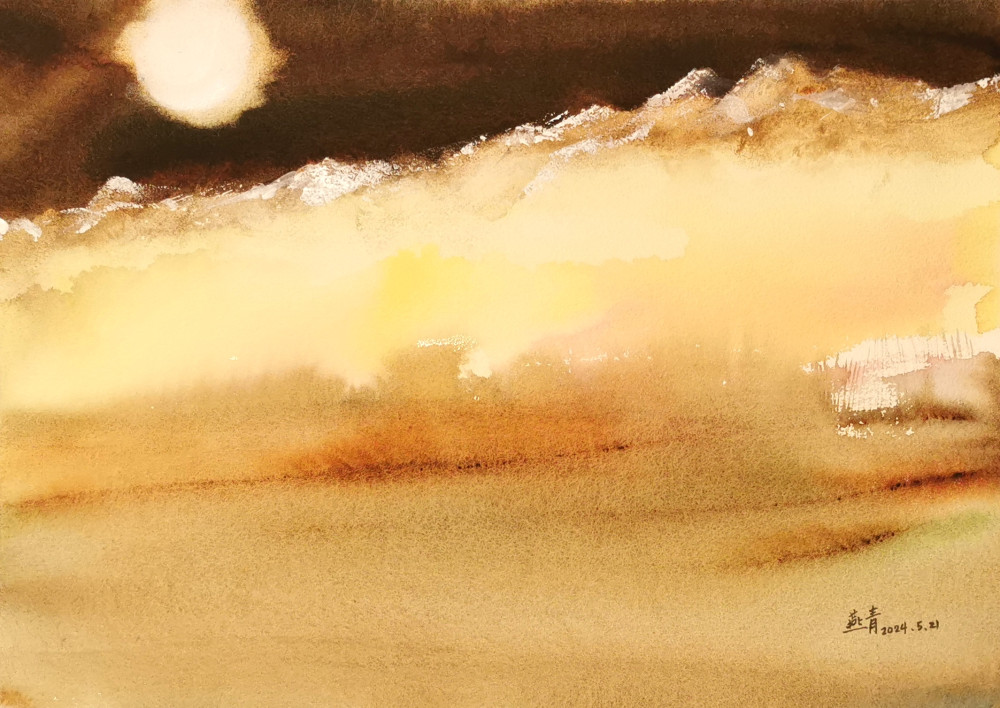
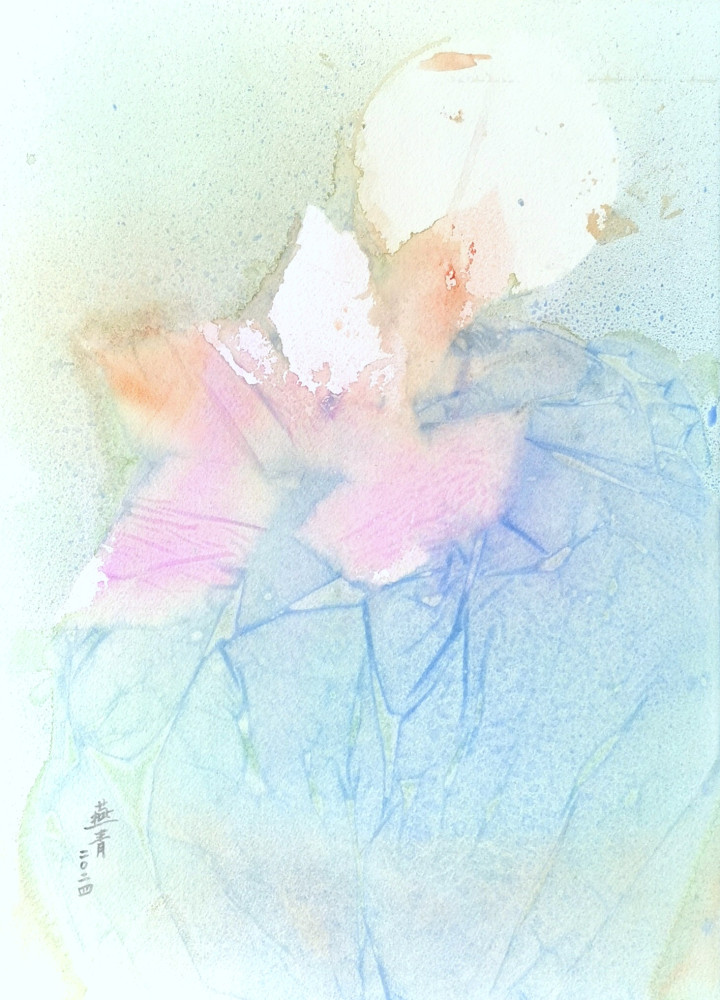
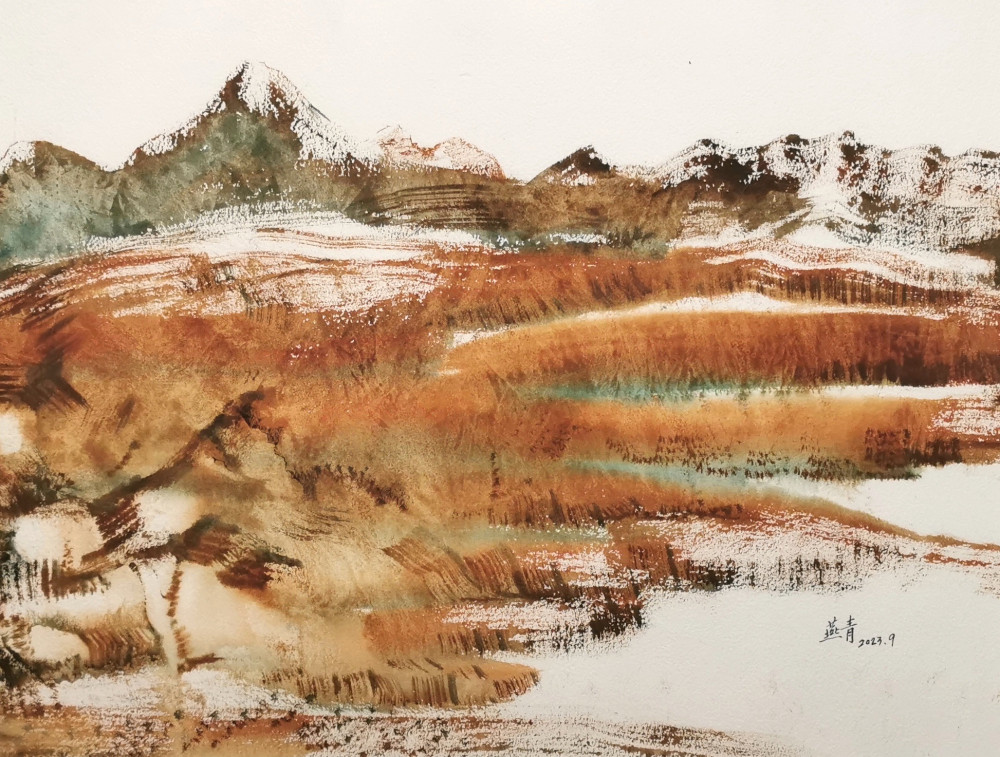
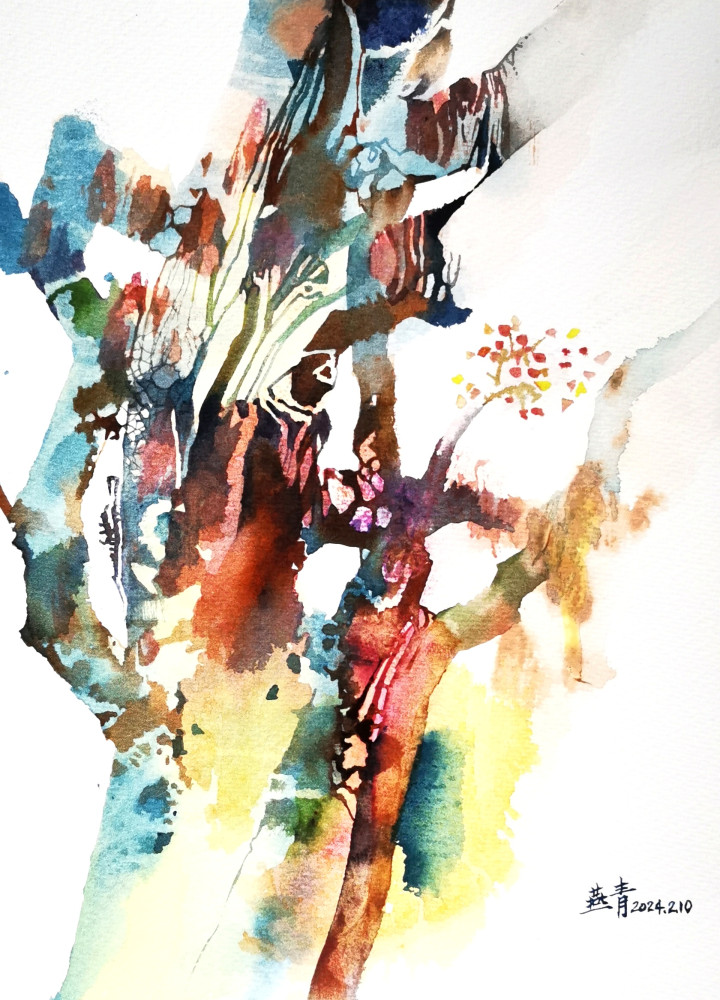
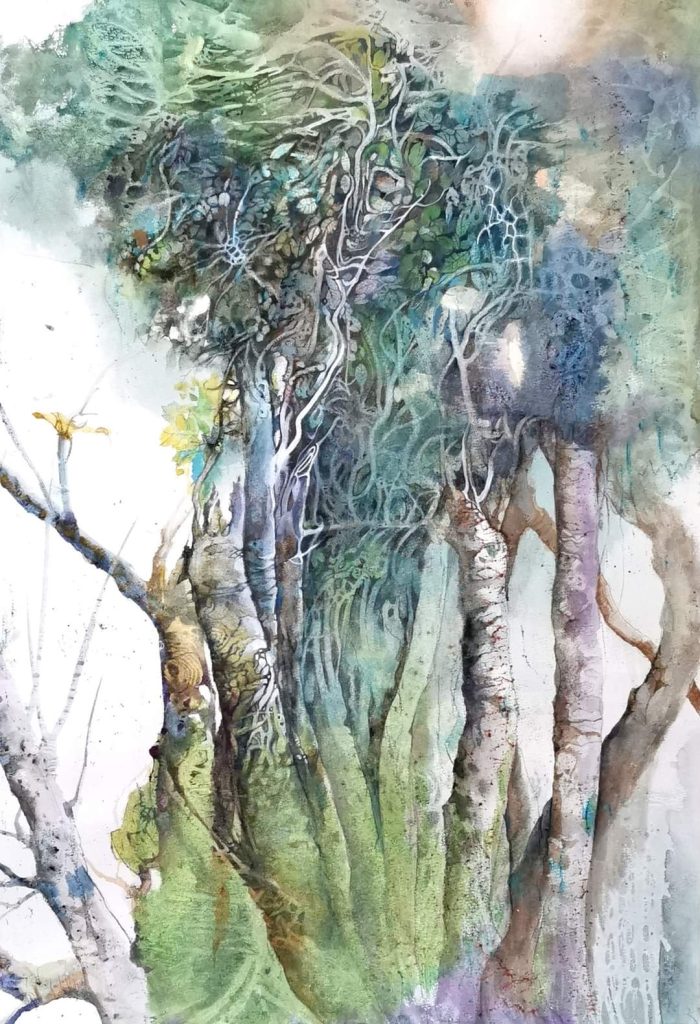
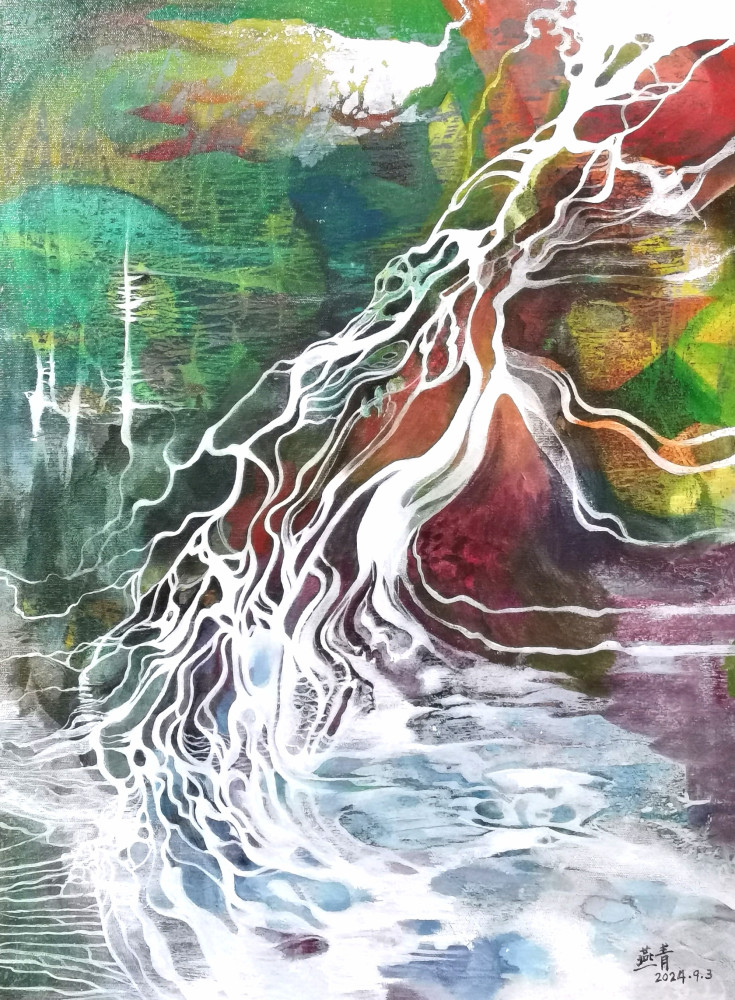


"I started seriously painting in 2014, while majoring in watercolor. I have held two solo exhibitions in 2021 and 2022. Another one will be held late 2024."
Read a Q&A with Wu Yin Ching
What themes does your work involve?
Chinese poetry scenes, Bible scenes, nature, literary images such as an old battlefield.
Describe your creative process.
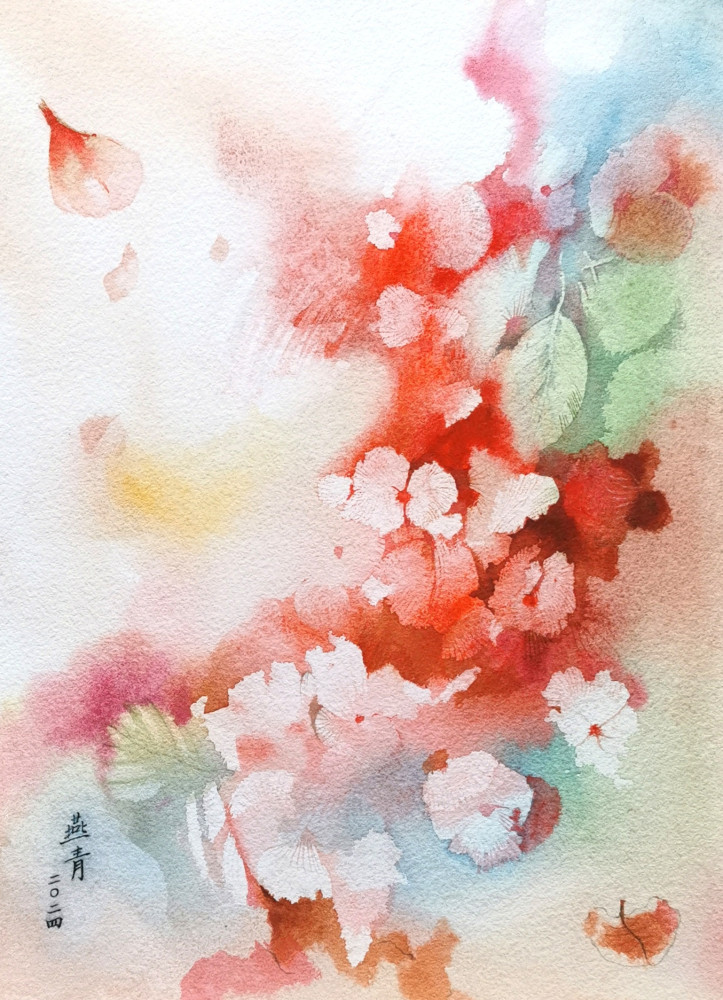
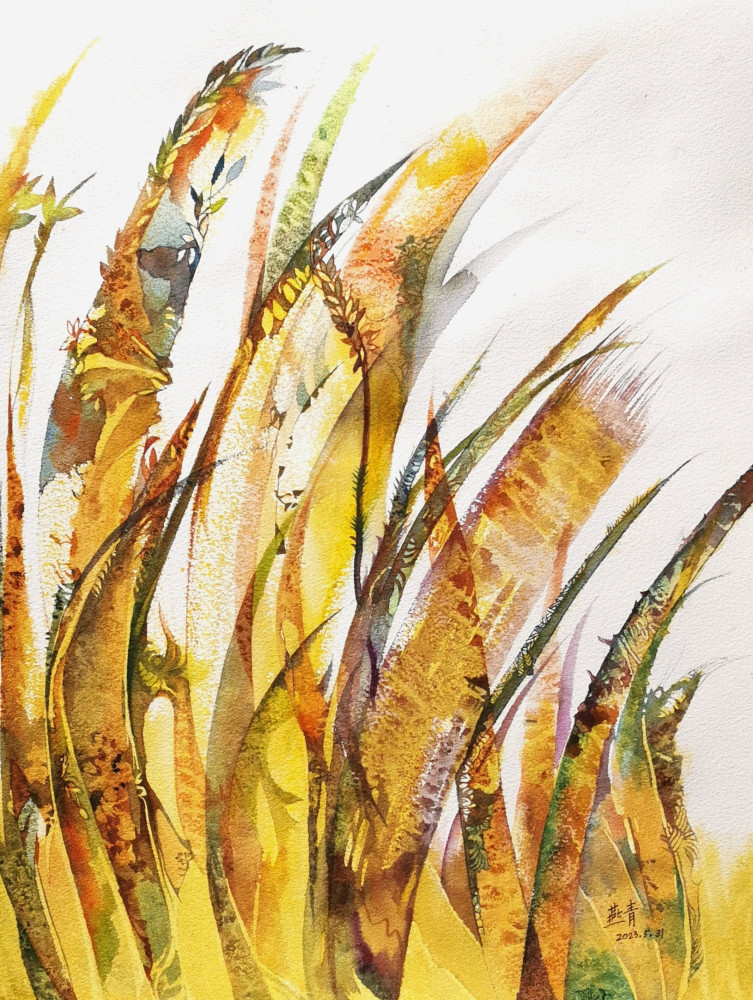
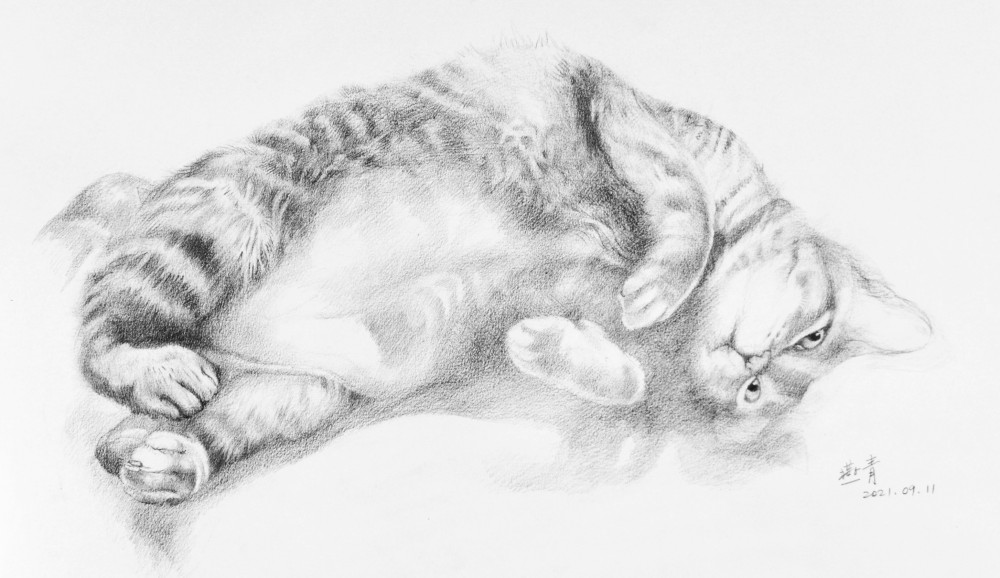
I started as a creative writer and have had a great career, having published more than 50 books. Some of my writings have been selected and used in the Chinese Language and Literature textbooks for high schools. I taught creative writing at Hong Kong Baptist University for 29 years. Then, at age 57, I began to see vaguely what my dream was as I prepared for retirement in a few years. I started learning to paint. By August 2014, I was practicing much more, and I now paint almost every day after falling in love with watercolor. Occasionally, I paint with acrylics and use colored pencils. I began, like most people, seeking to paint realistically. Then, about two years ago, I started creating freely, allowing my subconscious to flow into the colors and light patches.
What influences your work?
What inspires you?
Why do you make art?
What inspires you?
Why do you make art?
I am largely influenced by my training in poetry, both from Ancient China and the West. The Bible is another source of inspiration. Mr. John Wong, a teacher of New Ink Art in Hong Kong, teaches me how to draw feelings from my subconscious and transform them into lines and colors. I paint because I feel the joy of entering beauty and owning it. It makes me feel good.
What is good art?
What makes a piece of art great?
What makes a piece of art great?
Good art involves a deep understanding and the ability to express beauty. Beauty implies much more than just being pleasing to the eye. It serves as a direct bridge from the artist to the viewer, carrying emotions and keys to unlock one's memories without words. It helps one grow in appreciation of life while being critically aware of our brief existence compared to what is truly beautiful. A piece of good art is built on excellent technique but is not confined by it. It goes beyond to evoke empathy, complex feelings, and even admiration from its viewers.
What is the role of the artist today?
The artist is a sensitive person who receives what is deep and true and expresses it with ease, in a way that is kind and inspiring. Great emotions are channeled like a running river between tall gorges—no flooding, no violence, but with a clear direction.The role of the artist is to harvest Beauty and portray Being.