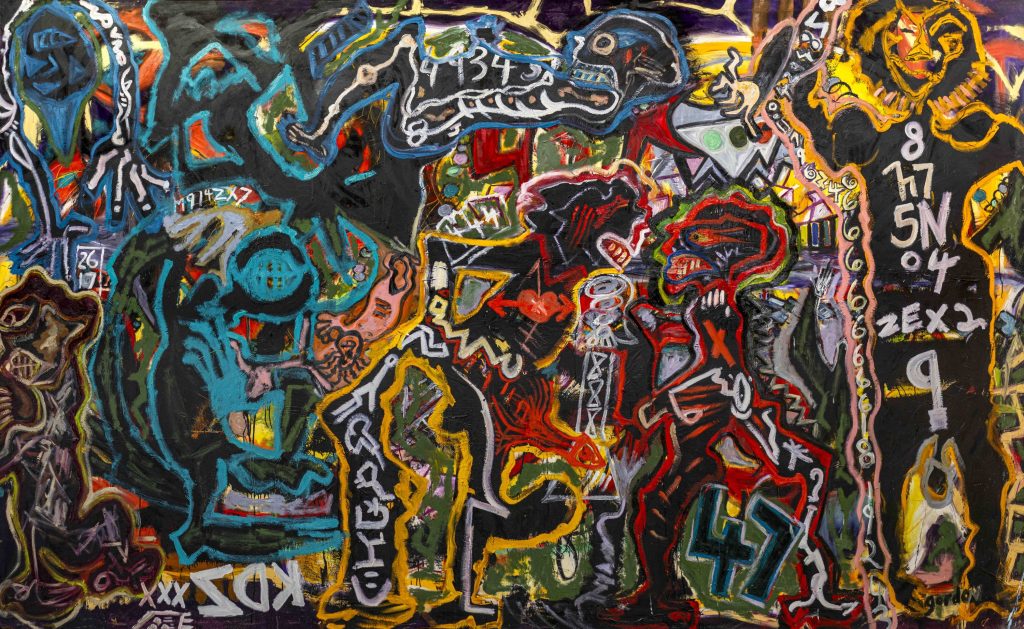
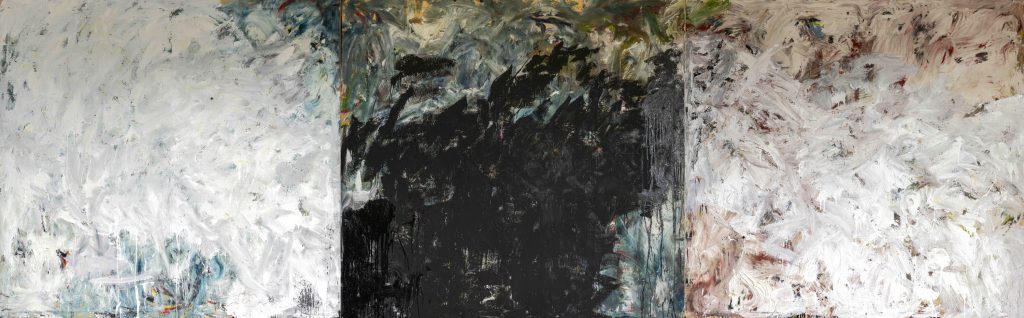
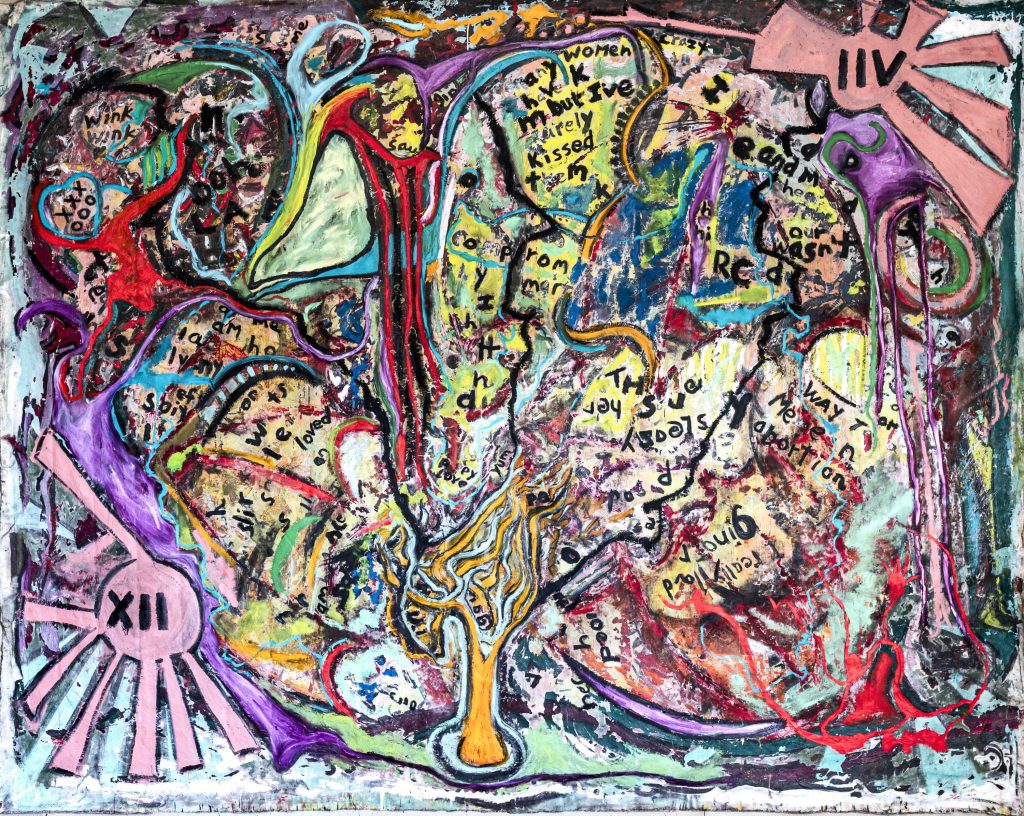


"I paint in oil my uncensored self primarily on large-scale canvases. I go as deeply as I can into my depthless being without inhibition or shame. Honesty cleanses."
Read a Q&A with Gordon Massman
Talk to us about your work featured here.
What are the main themes and ideas explored?
What are the main themes and ideas explored?
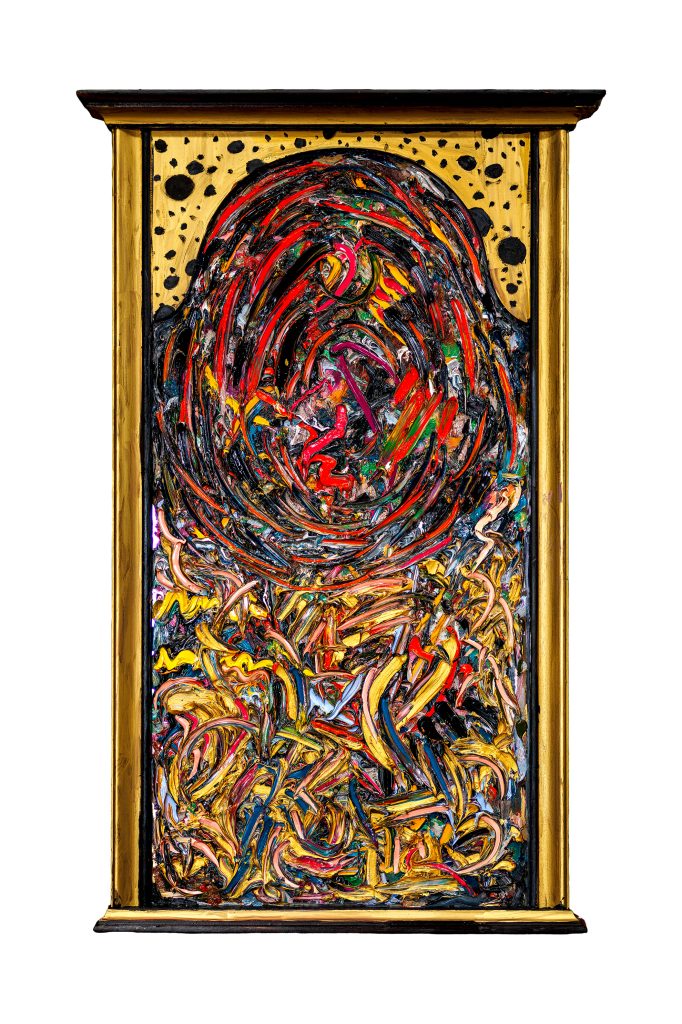
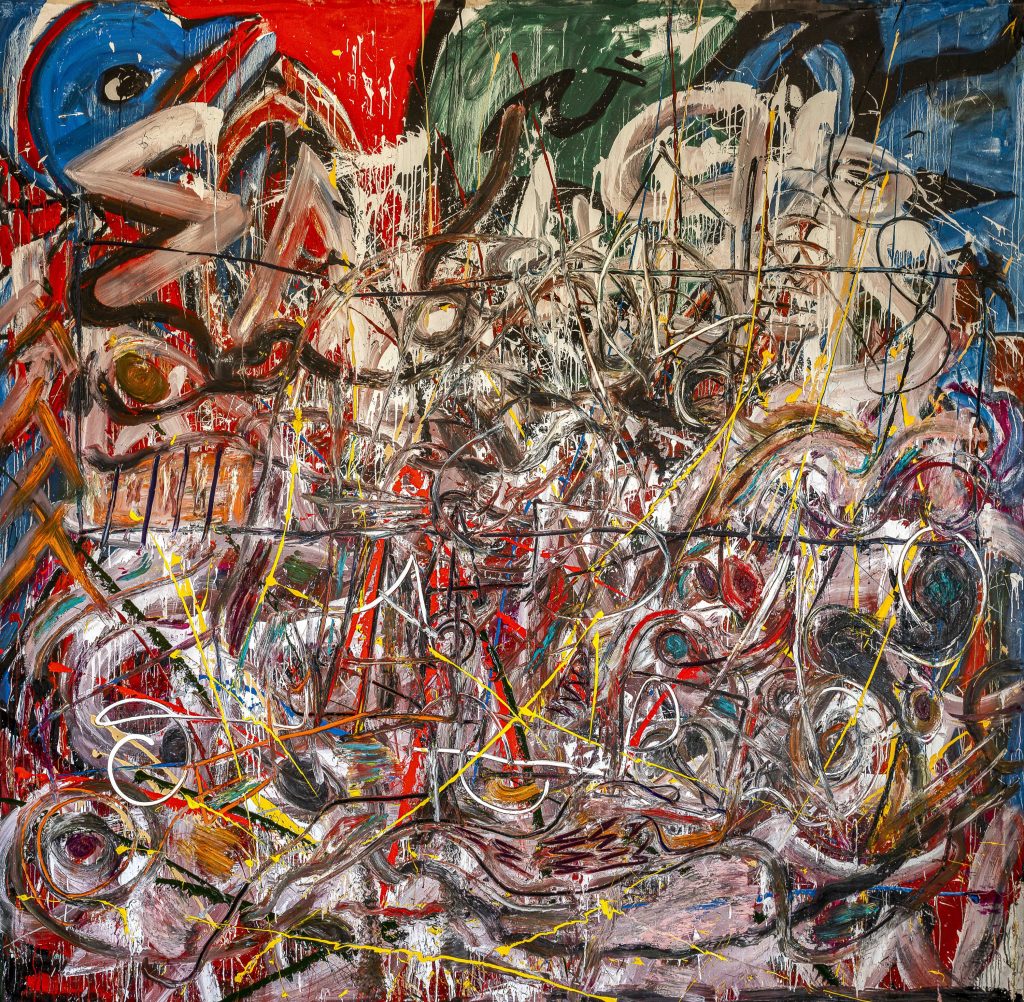
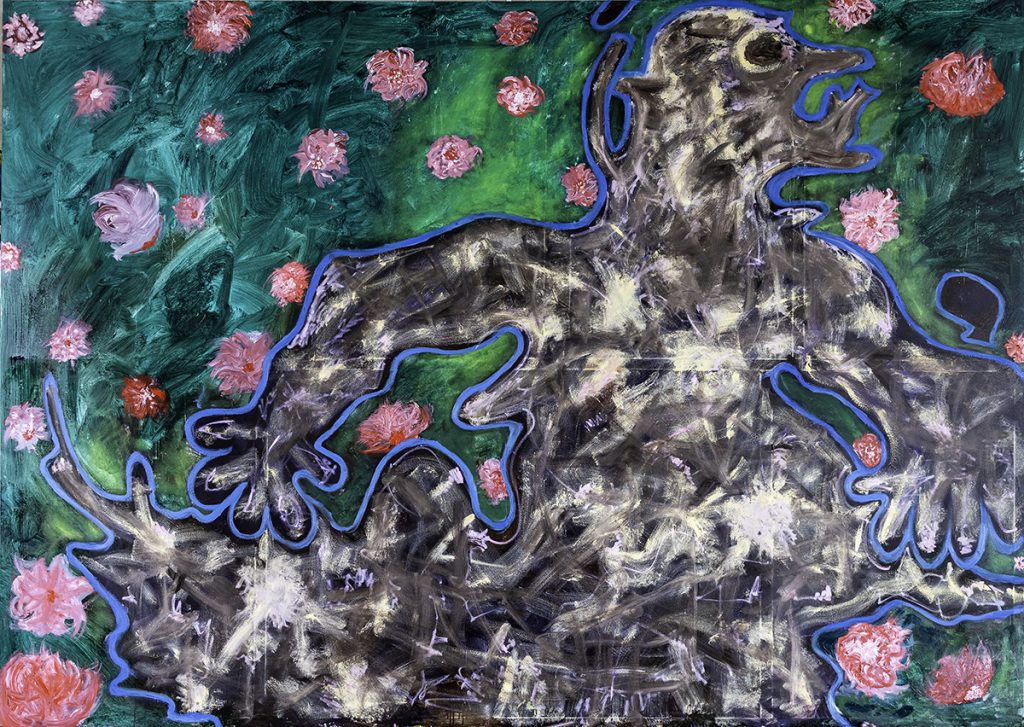
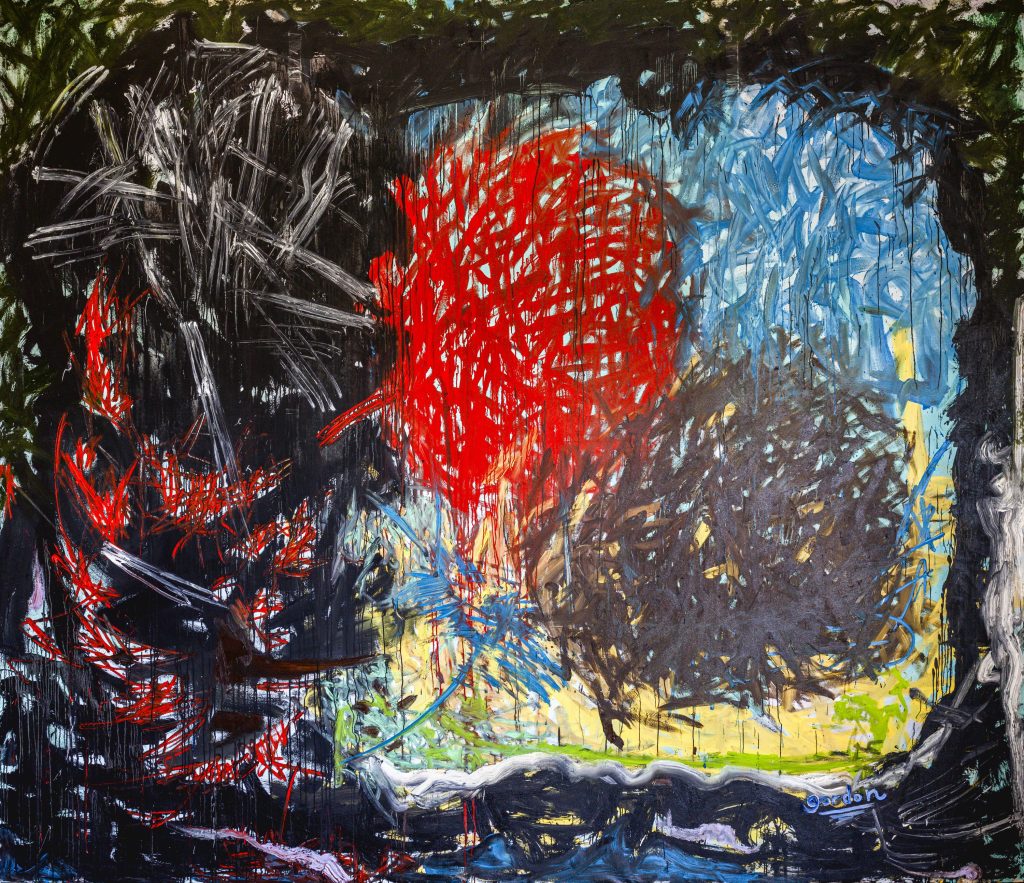
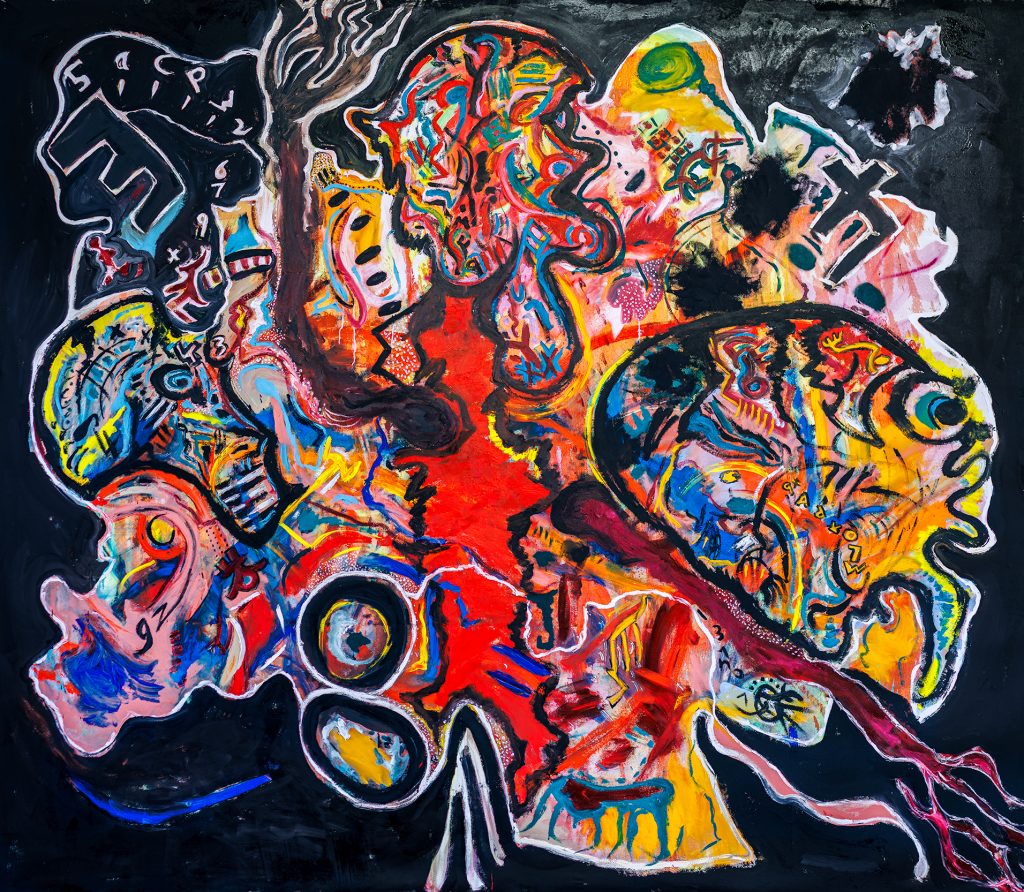
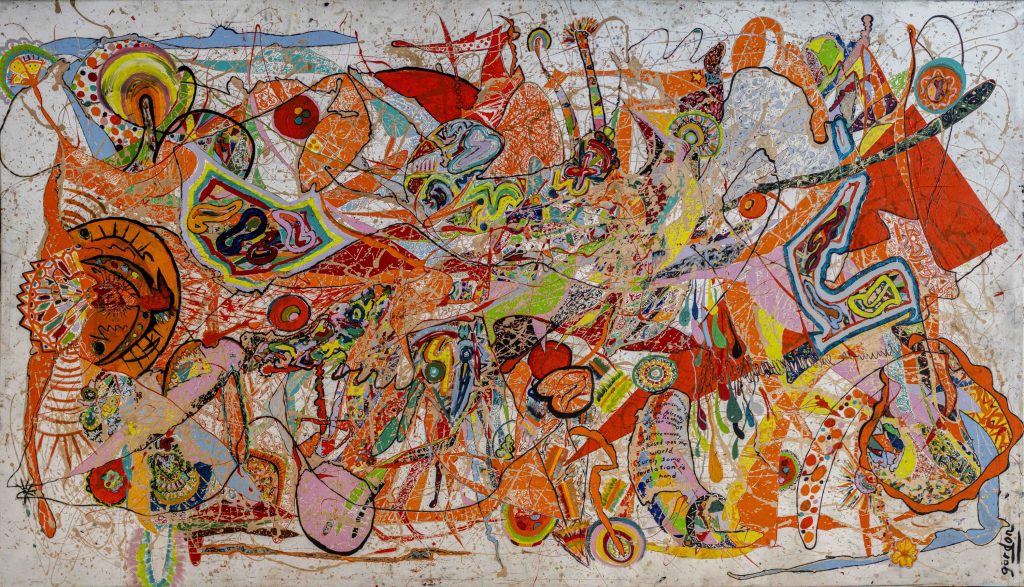
Bluebird Drowning reveals a fragile lifeform, a bluebird, sucked into the vortex of chaos, anarchy, and brutality, symbolizing both the harsh reality of survival which all living creatures face, but also the horrors of living within an authoritarian regime of fear and intimidation. It addresses both the human condition and current political exigencies. Likewise, The Valkyries unmasks the ludicrousness and buffoonery of those who sell themselves as omnipotent saviors. Note the goofy scribble upon the heads of three Valkyries who believe themselves omnipotent. The works I have selected here unearth primal uncensored rivers of emotion which flow through the deepest depths of human desire. I consider taboo subjects to be the most interesting and enriching. I paint interiors, not exteriors.
Describe your creative process.
When an interviewer asked Pollock how do you know when a work is finished, he responded “How do know when sex is over?” He speaks for me. When I collapse in ecstasy, the painting is done. When it floods dopamine into my brain, it’s done. When it’s open and most vulnerable, it’s done. I have no rituals. I remove my street clothes, change into cold stiff painting garb--jeans, socks, clogs, and long sleeve t-shirt—impolitely thrust my first stroke upon the canvas, and let my buffalo charge. I have no idea what the canvas beholds, and do not care. My creative process massacres emptiness, like blood massacres glass. Inspiration floweth over but discipline makes art. I work six days a week neglecting by definition partner and dog.
What are the main influences and inspirations behind your art?
There’s the tube of paint, the canvas, and the sum-total of your life. That is all. The degree to which an artist obliterates the internal wall of shame, guilt, and self-protection dictates the degree of his or her artistic power. I have been most influenced by creators who have gone “mad” revealing themselves in public, those being Pollock, Sexton; Rothko, Plath; Gorky, Berryman; Van Gogh, Mayakovsky. Only those who walk through fire can create fire. Only the purified can attain innocence.
What is unique about your art? What do you consider the strongest aspect of your work?
Painting can be taught; art cannot. A thousand painters can paint the same boat; only one painter can paint himself. My strongest work is a single shot to the brain, no aiming, no tradition, no skill, no caution, no training. Just a point-blank shot into the skull. I narrow the distance between myself and the canvas to the length of an instinct. I am a mammal devoid of subtlety.
What message or emotion do you hope viewers take away from experiencing your art?
If I can scrape the tendons off the cast iron floor of human nature, then I have shocked self-recognition in the hearts of viewers. The more repressed the victim the stronger the shock. I want to expose, like raw nerve, what “shames” us most: human fantasies of dominance and sexual predation; human insecurities, cruelties, addictions, deficiencies. I want to disturb complacency. Repression brings down marriages. I want to empty my—and hopefully the collective our—box of secrets. I want to hurt and, therefore, heal my audiences.
What is the biggest challenge for an artist?
What is the hardest part of your job?
What is the hardest part of your job?
Loving myself between paintings.
What is the most rewarding part of being an artist?
What does one love most about eating, drinking, and sexual gratification? My psychological survival depends upon making art, regardless its monetary or aesthetic value. People tumble out wombs like prisoners tumbling out cells of isolation. Paramount, and what every artist craves, is to connect with others, to be seen, recognized, and appreciated. “I exist, goddamn it; I am a person! See fucking me!” That is the most rewarding aspect of creating art. I call creation second nature. I call connection critical. The isolation cell destroys artists.
How do you balance tradition and innovation in your work?
Tradition disinterests me. I don’t care what history has painted. I love museums, biographies, and coffee table books but they have nothing to do with my studio work. On one side of my scale sits nothing, on the other side sits the iron block of originality. My great frustration lies with the limitations imposed by paint and canvas on originality. Because I am not an exhibitionist, an outrage, or an AI acolyte, I must grapple with concepts of “the new”. I ask myself after the millenniums of dead painters if new is even possible. One cannot reinvent the wheel, the bow and arrow, the plow. One must invent something never imagined. Easier to eat a rock. I’m eating rocks as I write these words. Sometimes, apropos of nothing, the question arises, like a billboard before my eyes: Is painting
What does "good art" mean to you?
What makes a piece of art great?
What makes a piece of art great?
Ink your fingerprint on a blotter: there lies greatness. The clearer the print, the greater the art. Greatness occurs solely between artist and artwork. A tiny distance. The gap a spark leaps. Self-knowledge coupled with complete disinhibition produces great art. The more self the artist pours onto canvas the more alive it becomes. The greatest art wears the living viscera of the artist. The emptier, the more vacant and depressed the artist is upon quitting the studio, the greater the artwork left behind. Such a piece glows. Only artists may determine the degree to which they succeed in this sacrifice. The public has no power to assess, whether Princeton or Harvard.
What is the role of the artist today?
To create beautiful insults.
A Postscript:
Believe nothing that I have said, I am a poseur. I paint like an animal ripping meat off fresh kill, brutally, guiltlessly, ravenously. Nature gave me that right. All the explanations, dissections, elucidations merely corrode the object. Art lives without justification or rationalization. It just is and that is enough.
A Postscript:
Believe nothing that I have said, I am a poseur. I paint like an animal ripping meat off fresh kill, brutally, guiltlessly, ravenously. Nature gave me that right. All the explanations, dissections, elucidations merely corrode the object. Art lives without justification or rationalization. It just is and that is enough.
See More Art by Gordon Massman
This interview was published by Circle Foundation for the Arts © CFA Press ∙ Images are courtesy of the artist