
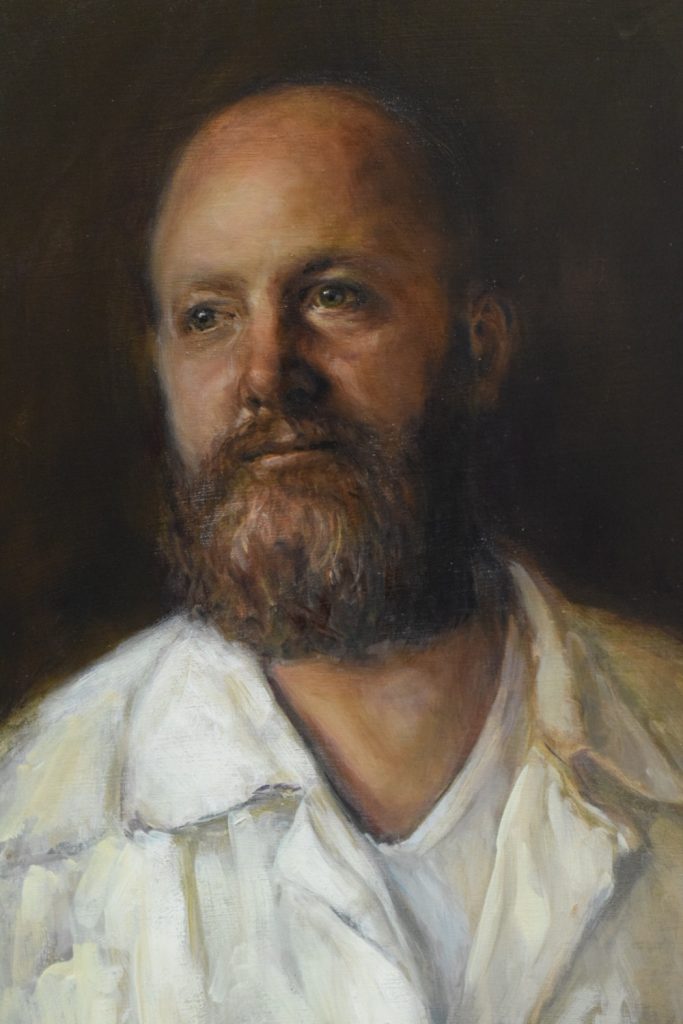
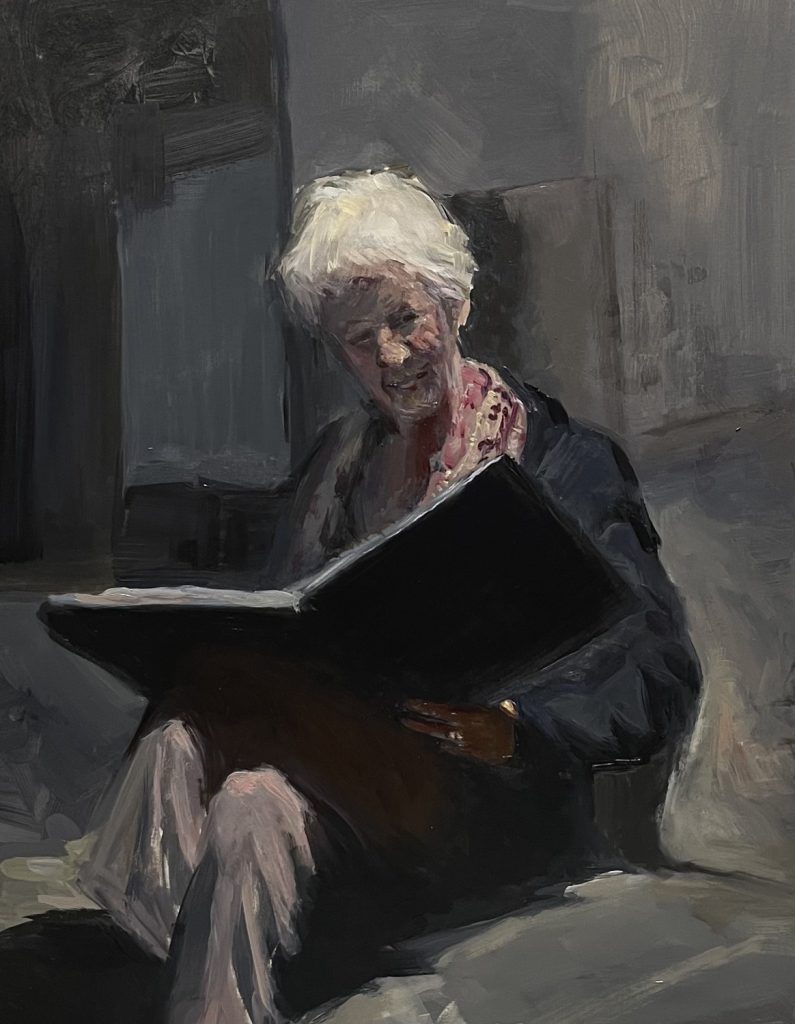


"A painting is not a photograph, a good photograph is my starting point. Inspired by the natural forms of shadow and light, in portraits, I try to reflect these in oil paint but gradually create my own color palette. Fascinated by someone's gaze and everything that could bring the person “to life” tangibly and eternally in a single painting."
Read a Q&A with Olette Voogd
Talk to us about your work featured here. What are the main themes and ideas you explore in it?
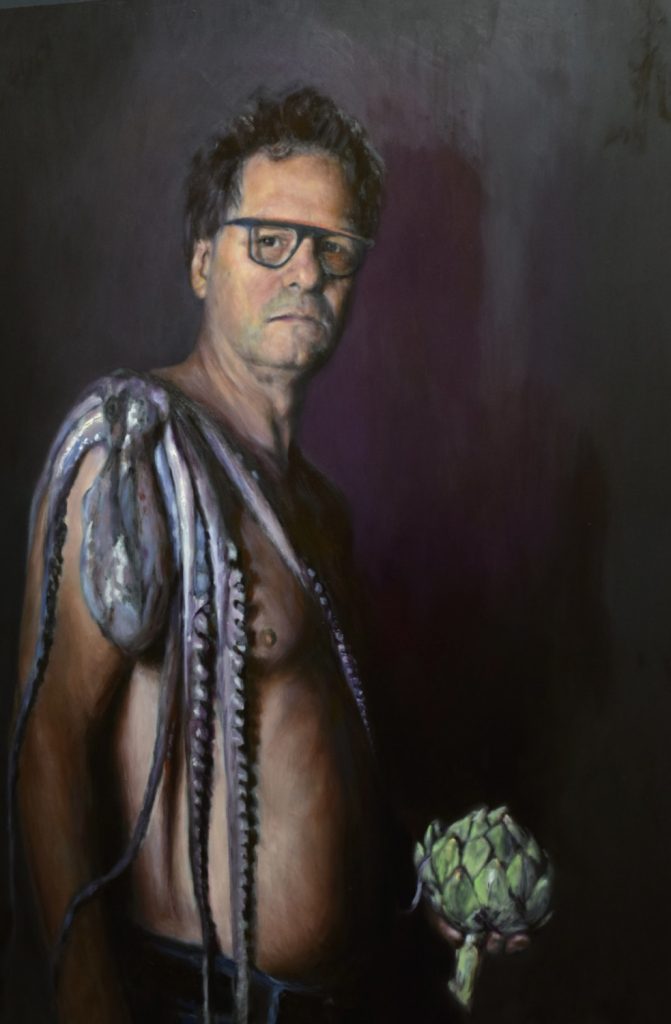
Peter Kesseler is a culinary entertainer from the Netherlands who has been cooking for over 35 years, surprising his guests with delicious and healthy food. He wanted a portrait painting posing with an octopus, lobster, or artichoke, and after much posing, he preferred the octopus draped over his shoulder and the artichoke in his hand. Peter has a strong connection with the ingredients he uses—that is how it comes across to me. He respects nature and food, composes, creates, and engages deeply with them. This is Peter in his essence. After preparing a wonderful meal myself and having a meaningful conversation with Peter about what drives him, it was time to capture the perfect photo. I knew exactly which colors and lighting I wanted and how I envisioned placing Peter on the panel.
Describe your creative process.
I organized a photoshoot with Peter and all the props, including the octopus, lobster, and artichoke, at Johan Michielsen of Affect Photography. Johan is my brother-in-law, and he knows exactly what I need as a foundation for my painting in terms of shadows and light. The result was a perfect photo that translated my vision. For painting, I use the techniques of the Old Masters, select my own colors, and emphasize the elements that should immediately attract the viewer’s attention when they first look at the painting.
What are the main influences and inspirations behind your art?
I have been captivated by the paintings of the Old Masters since childhood. How magnificently Rembrandt could portray people! You are literally drawn into his portraits, and understanding why that happens remains my ongoing journey of discovery. In everyday life, faces and expressions can move me and make me think. Recognizing people, allowing them to exist forever, making the inner self visible, and depicting it—that is my passion.
What do you consider the strongest aspect of your work?
My portraits, according to buyers, capture the essence of the person, and I am proud of that. I believe it is mainly the gaze that defines someone.
What message or emotion do you hope viewers take away from experiencing your art?
This painting leaves behind something 'tangible'—cherish the person forever, reflect on them, and remember what moved them.
What is the biggest challenge for an artist? What is the hardest part of this job?
To capture a true likeness in a portrait.
What is the most rewarding part of being an artist?
Recognition for my work happens when people pause before it, are moved by it, or reflect on it.
How do you balance tradition and innovation in your practice?
I use the techniques of the Old Masters as a foundation and starting point, but along the way, I integrate my own techniques and colors.
What does "good art" mean to you? What makes a piece of art great?
Art that moves others.
What is the role of the artist today?
Everyone can leave something tangible and meaningful behind for others.