
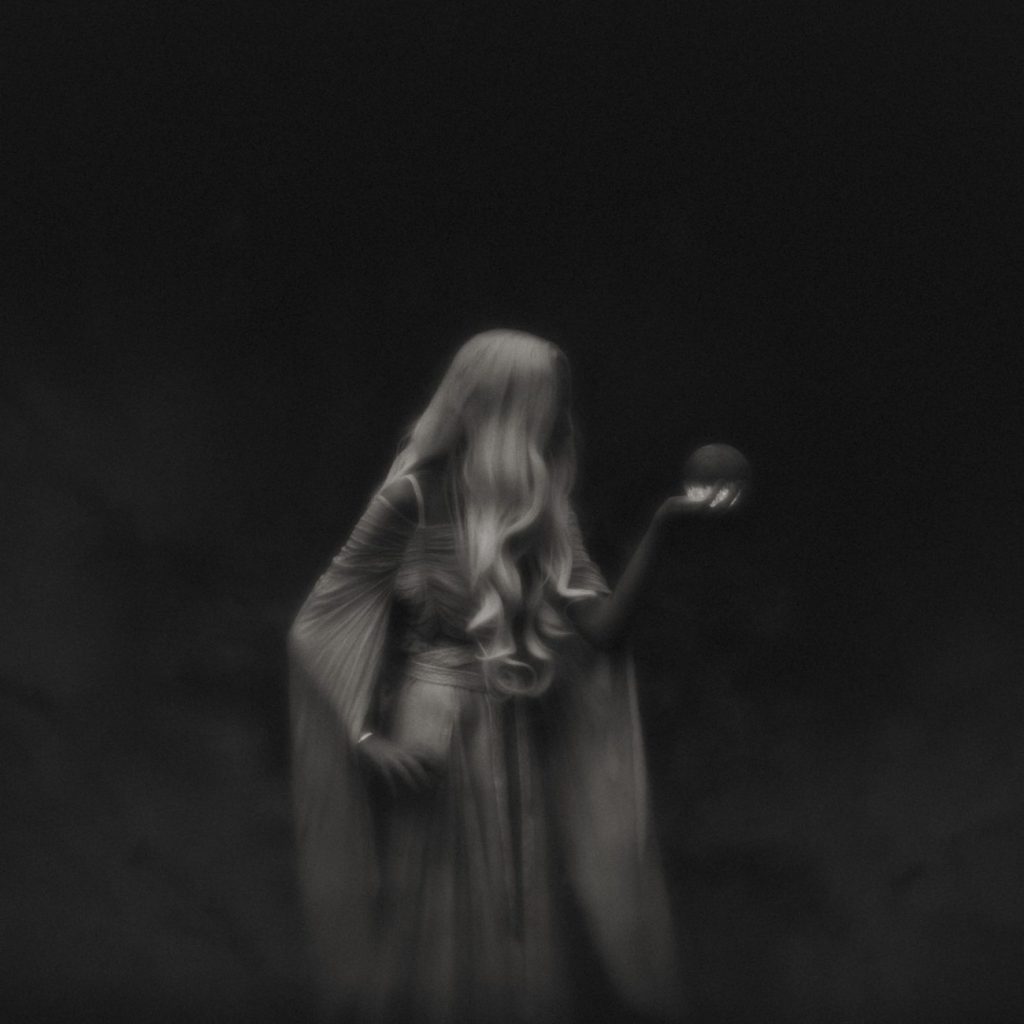
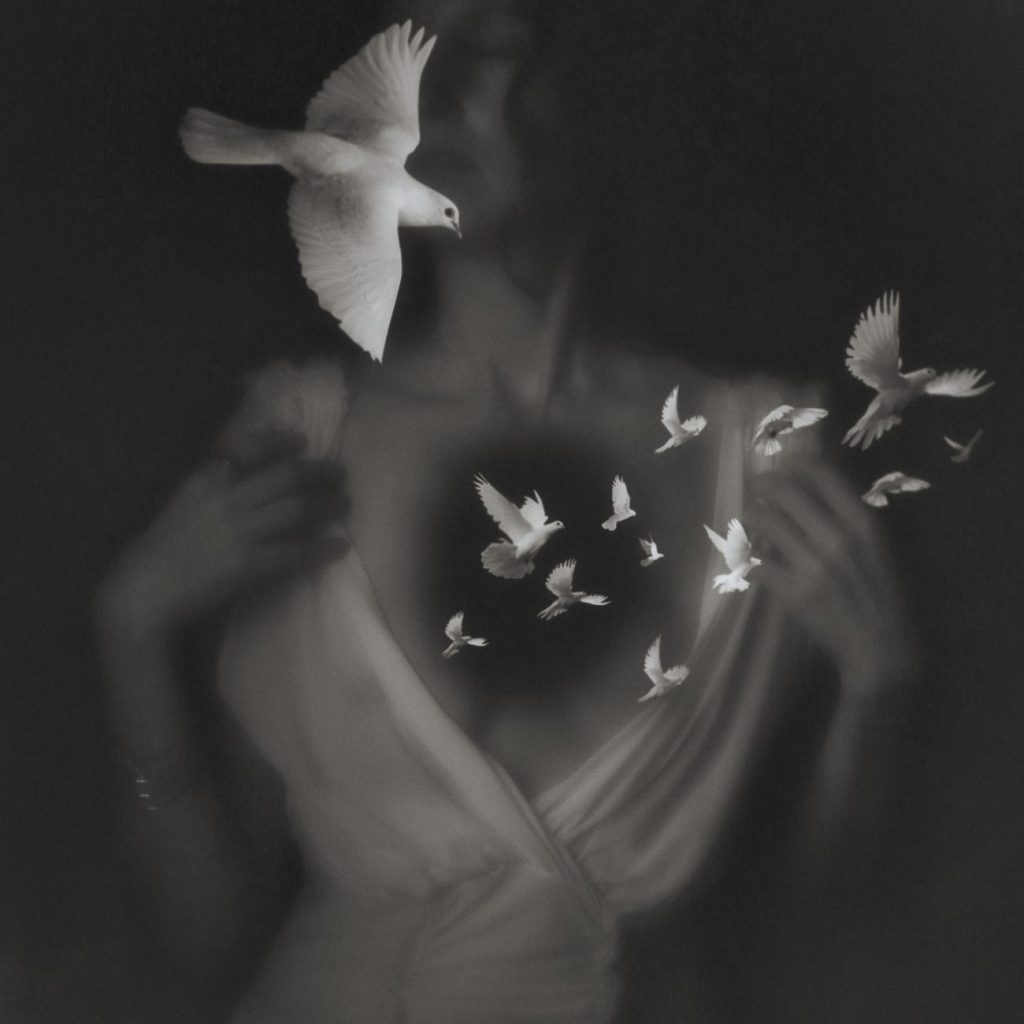
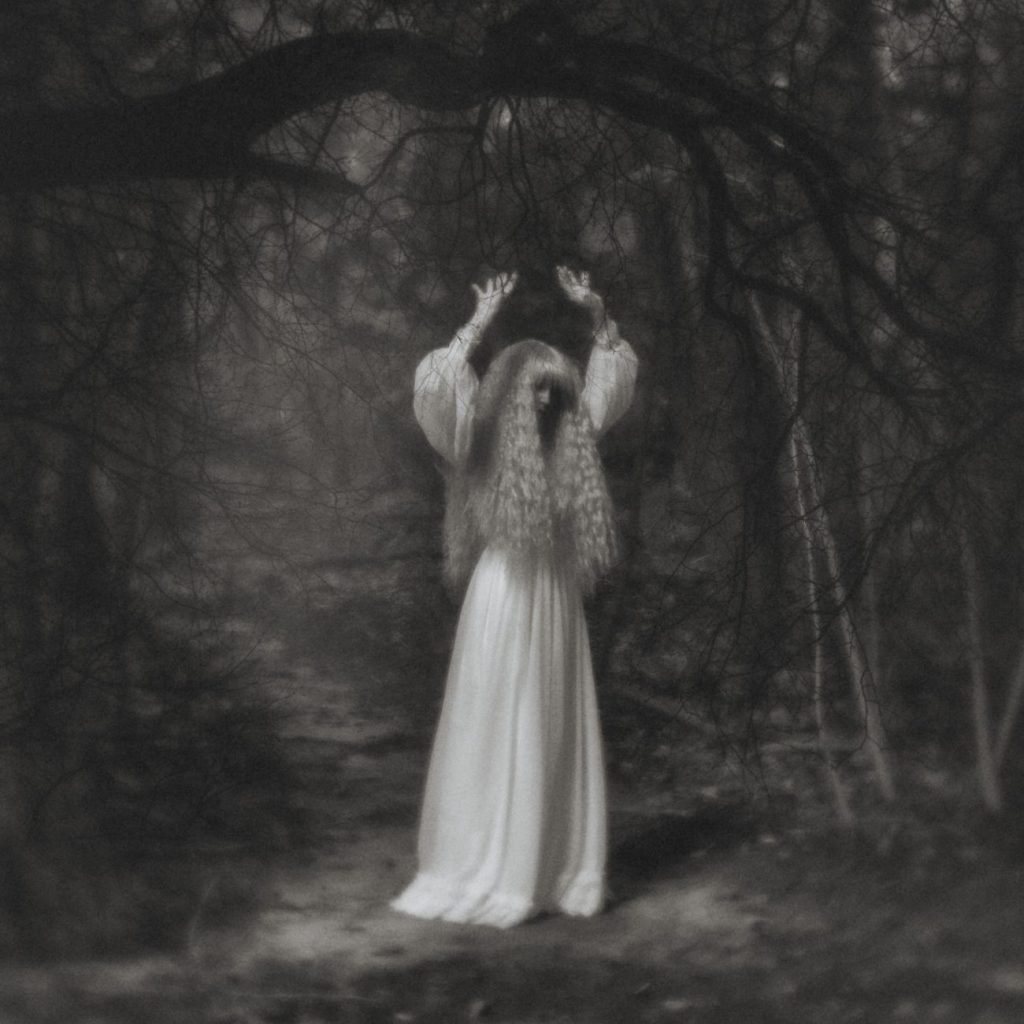
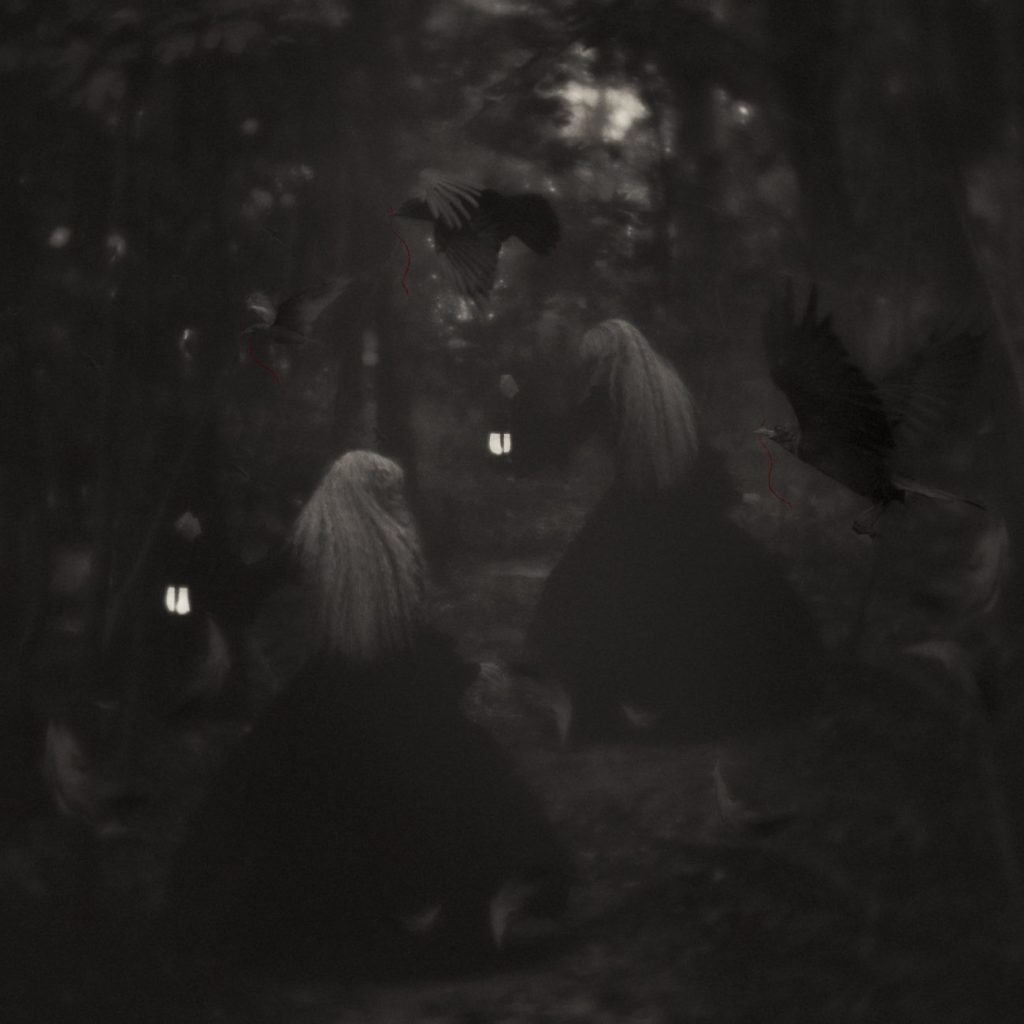
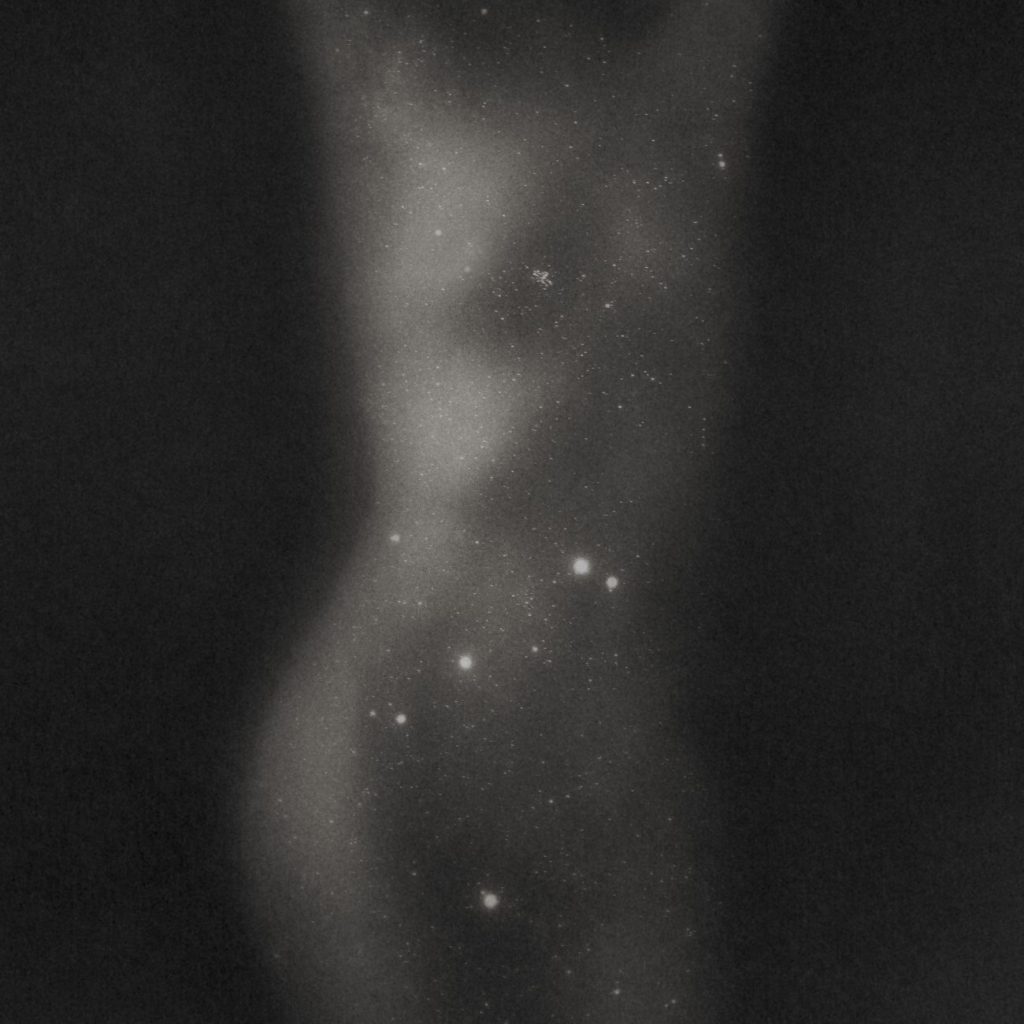


Sharon Covert creates haunting conceptual self-portraits inspired by dark fairytales, myth, and the unseen. Through symbolism and dreamlike surrealism, she explores hidden beauty within darkness. Her work invites viewers into intimate, otherworldly spaces where vulnerability, mystery, and quiet transformation unfold.
Read a Q&A with Sharon Covert
Talk to us about your work featured here.
What are the main themes and ideas explored?
What are the main themes and ideas explored?
The selected self-portraits all belong to my ongoing body of work, which explores the blurred line between the waking world and the realms of dreams and personal myth. Each piece threads together the language of old fairy tales, the poetry of darkness and light, and a quiet longing for belonging and transformation, allowing the hidden self to come forward. These self-portraits carry a deeply personal thread and are rooted in a love for unseen worlds and the timeless stories we carry within us. I am fascinated with what is hidden, what is sacred, and what we reveal and release when we let ourselves be fully witnessed. Symbolism plays a crucial role in my art, serving as a portal into the inner worlds and stories I want to share.
Describe your creative process.
My creative process is deeply intuitive and often begins with an emotional undercurrent that I need to express through visual language. I usually work alone, using self-portraiture as a way to express and process my inner world and stories. I often create in the wooded space behind my home or within a small corner of my house, using Lensbaby lenses and natural light. Post-processing is where I shape the atmosphere, blurring reality and allowing the surreal to emerge. Symbolism guides me and acts as a small portal to larger truths. Ultimately, my process is about self-expression, turning inward, surrendering control, and allowing the final image to reveal something I might not have known I was seeking or trying to express.
What are the main influences and inspirations behind your art?
Fairytales, folklore, and myths have deeply inspired me and my art. They shape not only the imagery in my work but also the atmosphere I strive to create, evoking a sense of wonder, mystery, magic, darkness, and transformation. More intimately, my art has always been my voice and a way to express what I might never say aloud. My work has held secrets, loss, grief, healing, transformation, hope, longing, and love. In this way, my influences are both ancient and alive: the myths we inherit and the hidden parts of the heart that come forward when we allow ourselves to trust.
What is unique about your art? What do you consider the strongest aspect of your work?
The uniqueness of my art is that I work with thin wire, spring-loaded elements and woven mesh. Furthermore, one work of art arises from the previous one, a kind of evolution takes place. All the pieces of work together actually form one work of art.
What message or emotion do you hope viewers take away from experiencing your art?
I hope that the viewer will see in my sculptures that creativity is a process and that one is touched by the fact that a lot can arise from one starting point, as happens in nature.
What is the most rewarding part of being an artist?
"The most rewarding thing about being an artist is that people indicate that they are touched by your work and appreciate it very much.
Creating art is an intimate journey, a conversation between the artist and their materials. Each stroke and bend is a decision that speaks volumes, a reflection of inner thoughts and emotions. There's a profound joy in seeing one's imagination take form, in giving life to ideas that once only existed in the mind."
Creating art is an intimate journey, a conversation between the artist and their materials. Each stroke and bend is a decision that speaks volumes, a reflection of inner thoughts and emotions. There's a profound joy in seeing one's imagination take form, in giving life to ideas that once only existed in the mind."
What does "good art" mean to you?
What makes a piece of art great?
What makes a piece of art great?
"Good art is art that grips you in terms of beauty and/or engagement. Chillida moves me because he treats steel plates like cardboard and makes beautiful monumental sculptures. Panamarenko because he created a world of his own.
Their works demonstrate the profound impact that innovative approaches can have on the art world, inspiring me to push the boundaries of my own creativity. The dialogue between materials, form, and the observer is where the magic truly happens, making art a powerful medium for expression and connection."
Their works demonstrate the profound impact that innovative approaches can have on the art world, inspiring me to push the boundaries of my own creativity. The dialogue between materials, form, and the observer is where the magic truly happens, making art a powerful medium for expression and connection."
See More Art by Sharon Covert
This interview was published by Circle Foundation for the Arts © CFA Press ∙ Images are courtesy of the artist