
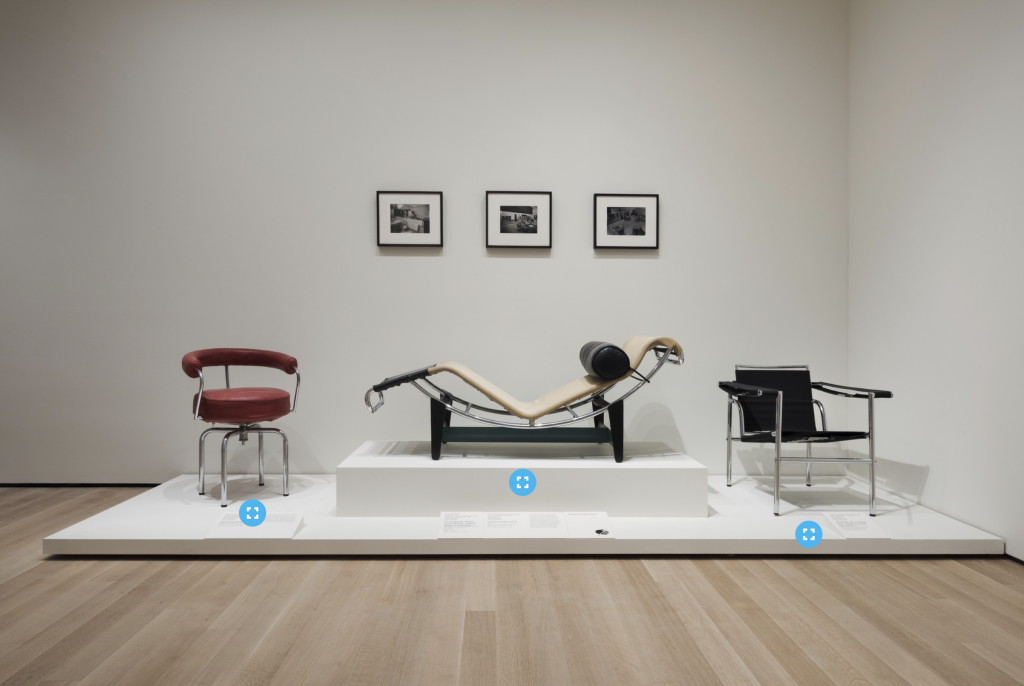
From October 1, 2016, to April 23, 2017, the Museum of Modern Art (MoMA) presented How Should We Live? Propositions for the Modern Interior, an exhibition that delved into the evolution of interior design from the 1920s to the 1950s. Curated by Juliet Kinchin, with assistance from Luke Baker, the show explored the interplay between design, daily life, and the broader socio-political context of the early to mid-20th century.
The exhibition featured over 200 works drawn from MoMA’s extensive collections, including Architecture and Design, Drawings and Prints, Painting and Sculpture, Film, and Photography. Rather than focusing solely on iconic masterworks, the curators emphasized the synthesis of design elements within specific environments—domestic interiors, exhibition displays, and retail spaces. This approach highlighted how aesthetic, social, technological, and political factors influenced the conception and realization of modern interiors.T
Notable installations included Eileen Gray’s furnishings for the house E-1027 (1929) and Charlotte Perriand’s study bedroom from the Maison du Brésil (1959). The exhibition also showcased collaborations such as Lilly Reich and Mies van der Rohe’s Velvet and Silk Café (1927) and Grete Lihotzky’s Frankfurt Kitchen (1926–27). These works underscored the contributions of women designers and the often-overlooked areas of textile furnishings, wallpapers, kitchens, and promotional displays in the narrative of modern design.The Museum of Modern Art+2The Museum of Modern Art+2The Museum of Modern Art+2
By examining the complex collaborations, materials, and processes that shaped modernist interiors, How Should We Live? offered visitors a nuanced understanding of how design choices reflect and influence the way we live. The exhibition invited reflection on the role of design in everyday life and its capacity to address the evolving needs and aspirations of society.The Museum of Modern Art+9The Museum of Modern Art+9The Museum of Modern Art+9
For more information, visit the exhibition page: moma.org