Louise Bourgeois (1911–2010) was a French-American artist whose groundbreaking work traversed sculpture, installation, drawing, and printmaking, addressing themes of memory, trauma, the body, and psychological tension. Born in Paris into a family of tapestry restorers, Bourgeois grew up surrounded by art and symbols of domestic repair. The emotional complexities of her early life, especially her relationship with her father, would come to define much of her later work. She studied mathematics and philosophy at the Sorbonne before turning fully to art, attending the École des Beaux-Arts and later the Art Students League in New York, where she relocated in 1938.
Bourgeois’s early work was marked by drawing and painting, but by the late 1940s she turned to sculpture as her primary medium. Her early sculptures were abstract and totemic, made from wood, and often explored themes of architectural structure and emotional instability. Over time, her forms became more organic, intimate, and charged with psychological symbolism. She explored bodily forms, sexual tension, gender roles, and familial trauma with raw intensity. Her “Personages” series from the 1940s and 50s, tall and ghostlike figures, are among her first major sculptural achievements and reference the absence and presence of those she left behind in France.
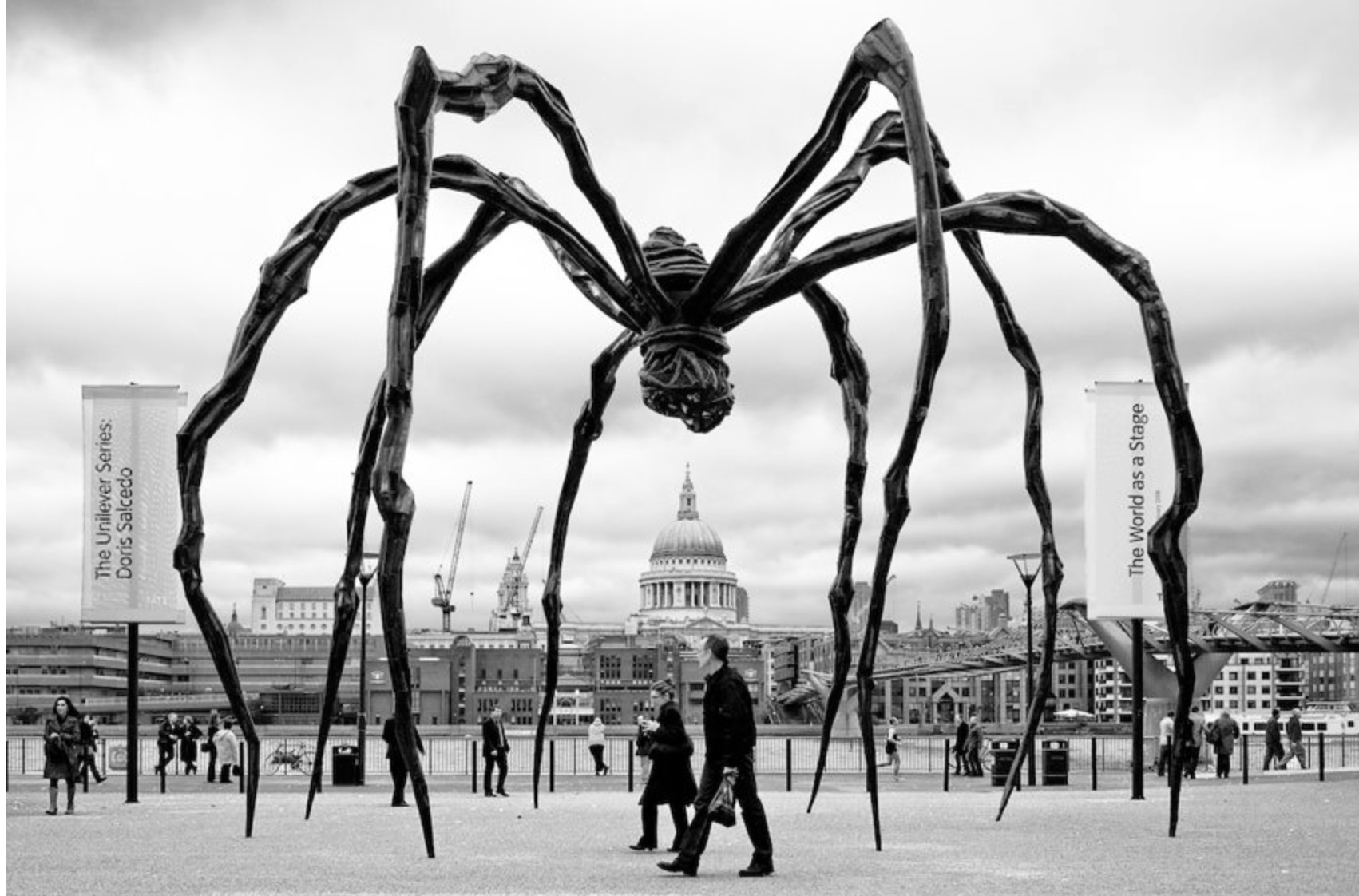
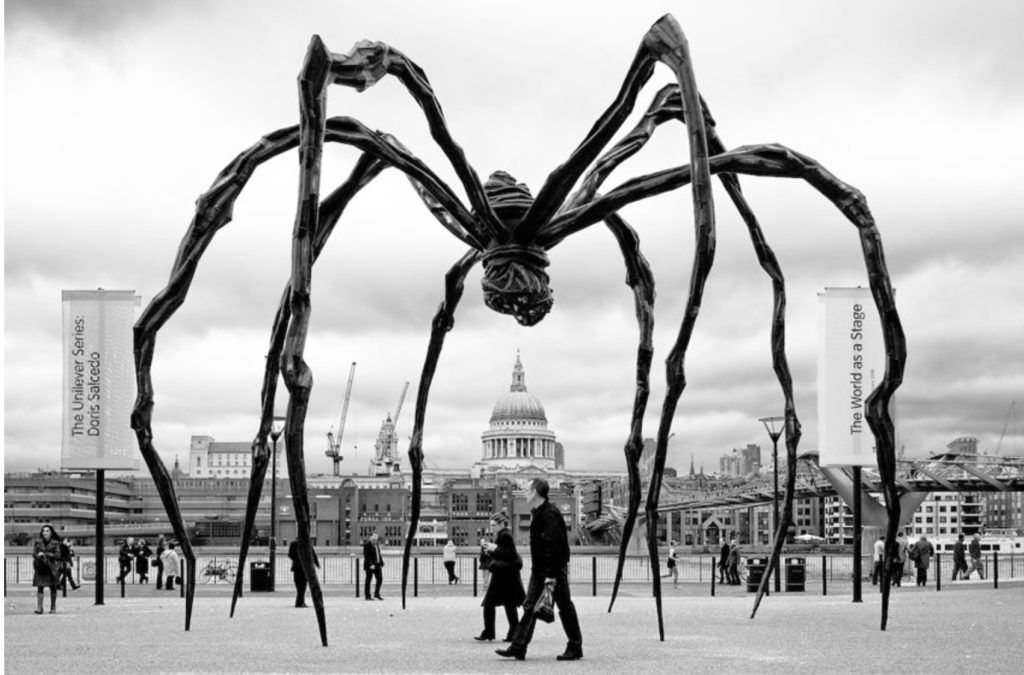
Her most iconic works, such as the monumental spider sculpture Maman, embody the emotional contradictions at the heart of her practice. The spider, often interpreted as a stand-in for her mother, symbolizes protection, labor, and repair, while also invoking fear and vulnerability. Bourgeois’s installations and “Cells” series confront the viewer with environments of psychological depth and personal symbolism. She used diverse materials such as bronze, latex, fabric, and glass to evoke sensations of exposure, concealment, and catharsis. Her work is intimate without being sentimental, personal yet universal.
Louise Bourgeois’s significance in contemporary art is monumental. Though she worked for decades in relative obscurity, her work was rediscovered and celebrated later in life, particularly after her major retrospective at the Museum of Modern Art in New York in 1982. She continued working prolifically into her nineties and became a towering figure in feminist art discourse. Her fearless exploration of emotional states, childhood trauma, and the female experience opened doors for generations of artists after her. Bourgeois remains a symbol of authenticity, longevity, and the power of deeply personal artistic vision. Her work speaks directly to the body, the psyche, and the viewer’s own sense of vulnerability, making her one of the most influential artists of the twentieth and twenty-first centuries.