

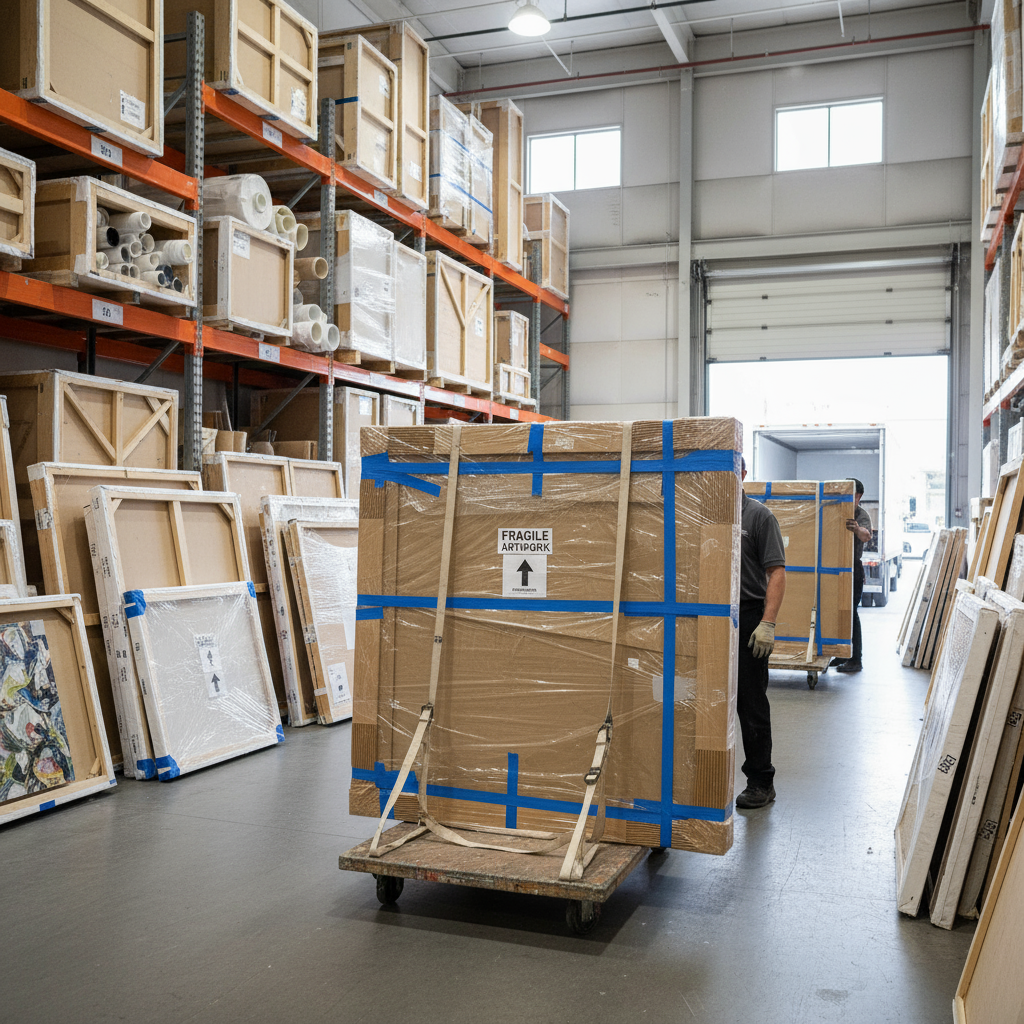
With the U.S. government’s recent tariff changes and the removal of the long-standing de minimis exemption, shipping art across the Atlantic now requires careful planning. Here’s what you need to know right now if you are preparing to send artwork from the EU to the USA.
What’s Changed?
Until recently, shipments under $800 could enter the U.S. without duties. That rule no longer applies. As of August 29, 2025, the de minimis exemption is gone, and every parcel—no matter its value—is now subject to tariffs or flat fees. For smaller packages, this means extra charges ranging from $80 to $200; for larger works, duties can climb from 10% to 50% depending on classification.
The U.S.–EU trade framework introduced in late August aims to cap tariffs at 15% for most goods, but this remains in flux. Adding to the uncertainty, ongoing legal challenges could reshape these policies again after October 2025.
What Artists Need to Watch Out For
Classification is Key
How your artwork is categorized by customs can mean the difference between duty-free entry and high tariffs. Works documented as original fine art (paintings, drawings, sculpture, limited-edition prints) fall under HTS Chapter 97, which historically enjoys exemptions. But if your work is described in functional terms—say, a table or lamp—it risks being reclassified as “design” or “furniture,” and taxed accordingly.
Why Some Artworks May Still Be Duty-Free
Artworks classified under HTS Chapter 97—paintings, drawings, original sculptures, and limited-edition prints—are treated as cultural goods and remain exempt from duties in most cases. The challenge is making sure customs sees your work as fine art, not as a consumer good.
- If you send a sculpture and label it “ceramic object,” customs could treat it as household ware.
- If you ship a print without stating its limited-edition status, it may be taxed like a poster.
To protect yourself, always:
- Use clear wording such as “Original Artwork” or “Limited-Edition Print.”
- Include the correct HS code (Chapter 97) on your paperwork.
- Provide a Certificate of Authenticity and edition details if relevant.
- Avoid vague or functional terms like “decorative” or “ornamental.”
Without this documentation, your shipment risks being taxed like ordinary consumer goods.
Documentation Matters
Prepare clear paperwork for every shipment:
- A detailed invoice with the title, medium, size, and declared value.
- A Certificate of Authenticity confirming originality and limited edition, if relevant.
- Correct HS (Harmonized System) codes proving it is fine art.
Who Pays the Duties?
With the U.S. now requiring Delivered Duty Paid (DDP) shipping, the burden falls on the sender—or at least must be clarified in advance. This means you, or the gallery in New York, must decide who covers the duties and taxes. Transparency avoids unpleasant surprises and ensures smooth delivery.
Logistics Are Complicated
Since the new rules came into force, many European postal services have temporarily suspended U.S.-bound shipments. Only specialized couriers and art shippers are navigating the new requirements successfully. Partnering with an experienced art logistics company is now more important than ever.
Practical Steps for Shipping Artwork to the U.S.
- Use the correct HS Code – Chapter 97 for original art.
- Prepare full documentation – invoice, certificate, and detailed description.
- Specify DDP terms – clarify upfront whether you or the gallery pays import duties.
- Choose the right shipper – work with carriers who specialize in fine art.
- Stay updated – tariff rules are evolving and may shift again this autumn.
Despite the turbulence, sending art from Europe to the United States is still possible. Success lies in careful classification, airtight documentation, and choosing logistics partners who understand the art market. For artists, the key takeaway is this: your artwork may still qualify for duty-free import, but only if it is clearly documented as fine art under Chapter 97.